Every MVP teaches you something.
Sometimes it teaches you that the product you imagined in your head needs to become much simpler before it can become real.
While working on an AI-powered Digital PR Assistant product, I learnt several lessons that go beyond the technical side of building an app for Digital {PR.
This is not a post about the tools used to build it. It is about the product thinking behind the build.
Here are seven lessons I took away from creating the first version.
1. The First Version Should Be Small Enough to Finish
An idea always feels bigger at the beginning.
You start with one feature, then another idea appears, then another, then another. Before long, the “simple MVP” starts looking like a full company roadmap.
That is dangerous.
The first version has one main job: it needs to get finished.
Not perfect. Not complete forever. Finished enough to show, test, and improve.
That mindset helped keep the product grounded. Instead of trying to build the complete future version, I focused on building the first useful version.
This made progress visible. In other words, the process seemed less daunting.
Completion is worth more than any amount of work.
2. Visual Appeal Changes How People Feel About the Product
Design affects trust.
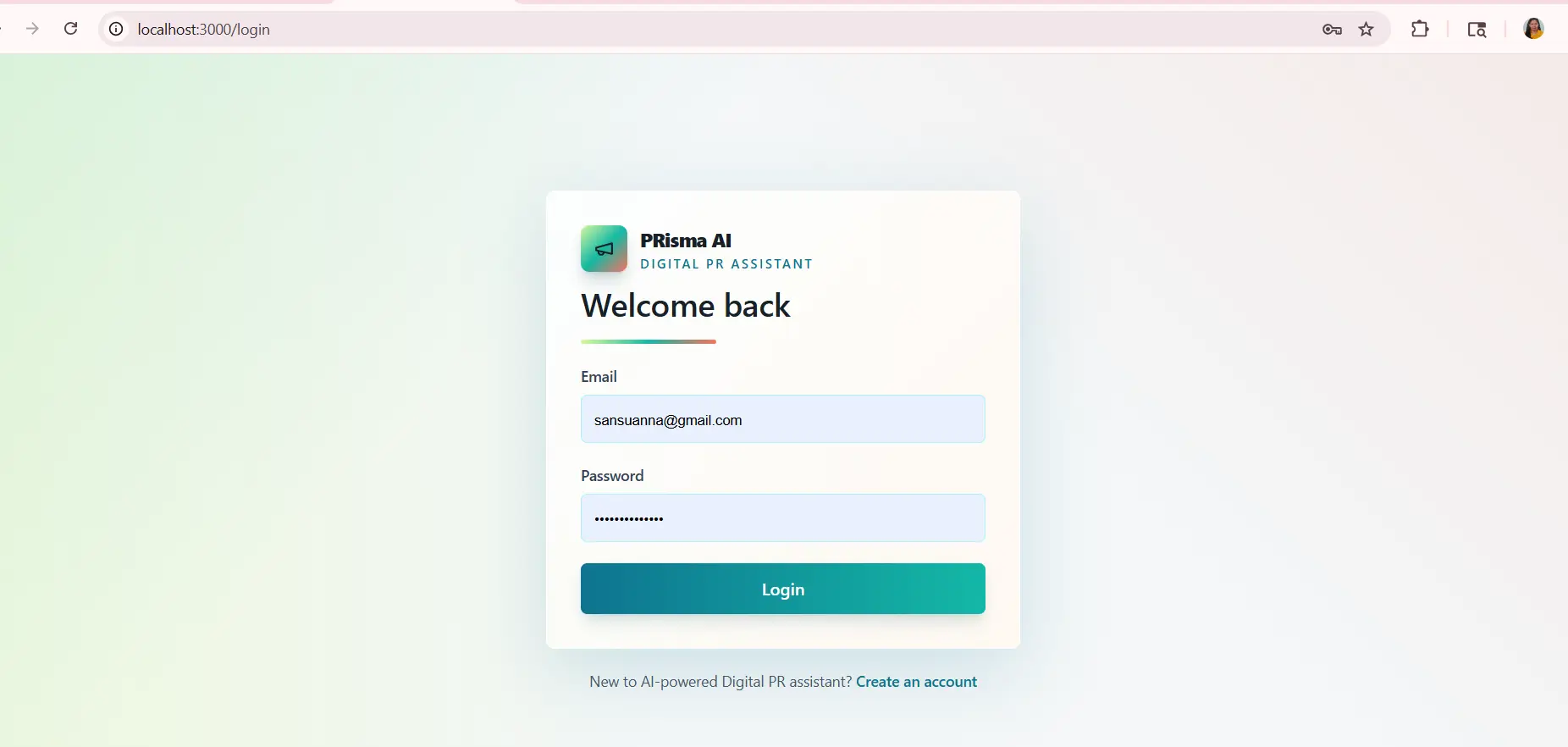
Even when a product is early, people still respond to the way it looks. A plain interface can make a good idea feel unfinished. A thoughtful interface can make an early product feel more serious.
That does not mean an MVP needs expensive branding or perfect design.
But it does need:
- Clear spacing
- Good colors
- Readable text
- Consistent buttons
- A recognizable name
- A simple logo or identity
Small visual tweaks may make a huge difference.
Once the interface got its makeover, the product looked like a real-life SaaS tool and not some experimental idea.
This is another important takeaway: design plays a huge role in user experience.
3. AI Works Best When It Has a Specific Job
When you build an AI-powered Digital PR Assistant, the temptation is to go crazy with using technology throughout your product.
However, doing so will only confuse the user.
In the case of our MVP, it would have been wrong to go all-in on AI and try to implement it everywhere.
The use of AI needs to bring some value to the user’s experience.
That lesson is important for any AI SaaS product.
The question should not be, “Where can I add AI?”
The better question is, “Where does AI reduce friction for the user?”
That difference changes the product.
4. Simplicity Makes the Product Easier to Trust
Simple products are easier to understand.
They are also easier to test, explain, sell, and improve.
During the Digital PR Assistant MVP process, I realized that every extra feature creates more decisions for the user. Too many decisions can make the product feel heavy.
Keeping the product simple made the user journey clearer.
The product did not need to be everything for everyone. It needed to do a few things well enough for Version 1.
This is one of the most practical lessons from the build: simplicity is not a lack of ambition. It is a strategy.
A simple first version creates room for better future versions.
5. Documentation Saves the Product From Becoming Confusing
Documentation became more important than expected.
Initially, it was all about developing the product. However, as soon as the Digital PR Assistant app was coming together, it became evident that the product would also require explanation.
Documentation helps answer questions such as:
- What is this product?
- What does Version 1 include?
- What is the purpose of the MVP?
- How would someone else use it?
- How could it be handed over?
- What should be built next?
It is particularly crucial if there is a possibility that the product might eventually be resold, distributed, or upgraded by another party.
In its absence, information remains within one individual’s knowledge base.
Thanks to documentation, the product becomes comprehensible and sustainable.
That made documentation feel less like admin work and more like product development.
6. Build the First Version of Digital PR Assistant Like There Will Be a Second Version
It needs to be simple, but it cannot be reckless.
Being small doesn’t equate to being shortsighted.
The initial offering must be straightforward, but it must also have room to evolve.
That means thinking about future upgrades from the beginning:
- What could be improved later?
- What features might become important?
- What parts of the product may need to expand?
- How can Version 1 stay clean enough to build on?
This does not mean adding every future feature immediately.
It means building the first version in a way that does not block the second version.
That mindset made the Digital PR Assistant MVP a basis rather than an expendable experiment.
7. Momentum Matters More Than Perfection
This lesson was on momentum.
When building a product, it is easy to stop and overthink every detail. The name, colors, wording, layout, feature order, future plans, and possible improvements can all become distractions.
Some of those decisions matter. However, not everything needs to be perfect the first time around.
It all comes down to momentum.
An MVP grows through progress. The approach involves building the product, analyzing it, improving it, documenting it, and choosing where to go next.
This is a better approach compared to the wait-for-the-perfect-version strategy.
Momentum also builds confidence. Each improvement makes the product feel more real.
After all that, the MVP was not a vision anymore. It became tangible and had been named, structured, designed, documented, and was ready for further updates.
Conclusion
Working on an AI-based Digital PR SaaS MVP helped me understand that the first version does not have to be large-scale.
It needs focus.
It needs clarity.
It needs enough polish to feel trustworthy.
It needs documentation.
And it needs a path toward the next version.
The seven lessons I would carry into any future MVP are:
- Keep the first version small enough to finish.
- Make the UI attractive enough to build trust.
- Use AI only where it clearly helps.
- Keep the product simple.
- Document the product early.
- Plan for scalability.
- Prioritize progress over perfection.
That is what made the MVP feel real.
Not because it was perfect, but because it became a foundation that could grow.