

How AI Is Changing Patient Search Behavior: Google vs ChatGPT Compared
I recently did the same search on Google the traditional way and on ChatGPT the AI way.
The difference was far greater than I expected. The two search experiences were like two extremes.
I wasn’t looking at this as an SEO professional. I wanted to experience it the way an actual patient would. I simply wanted to find a good dentist.
Search 1: Traditional Keyword Search
Like a normal customer, I searched for “top dentists in Los Angeles” using both Google and ChatGPT to see how the two platforms would help me make a decision.
You can view the conversation with ChatGPT here.
You can view the search I did on Google here.
Google gave me hundreds of options to explore while ChatGPT tried to give me an answer.
That’s when I realized just how much AI is changing patient search behavior.
Here’s What I Found on Google
The moment I searched on Google, I was presented with a wealth of information.
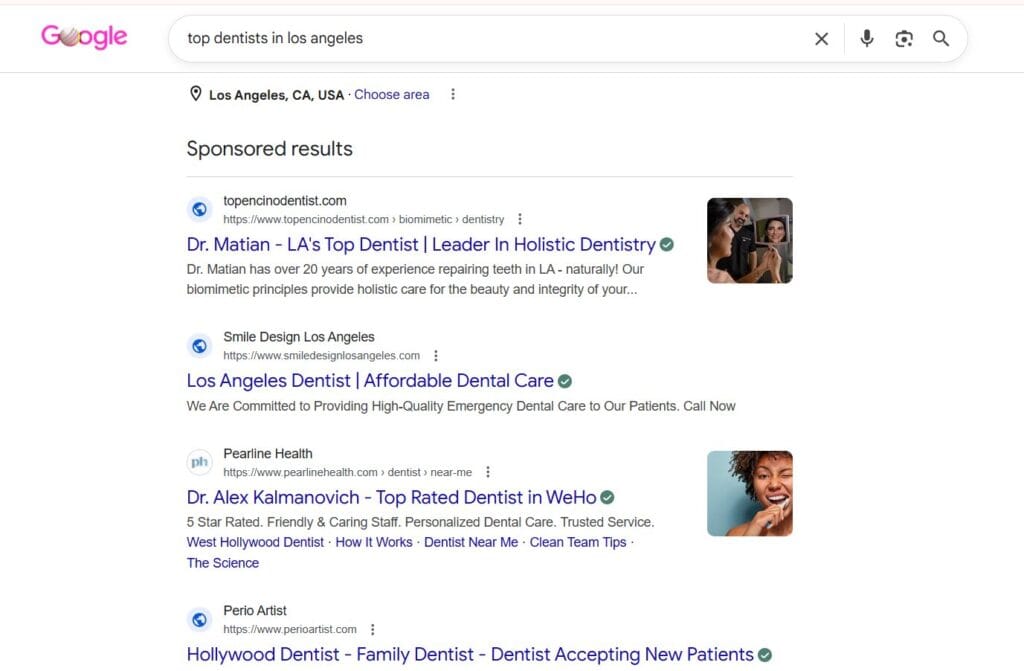
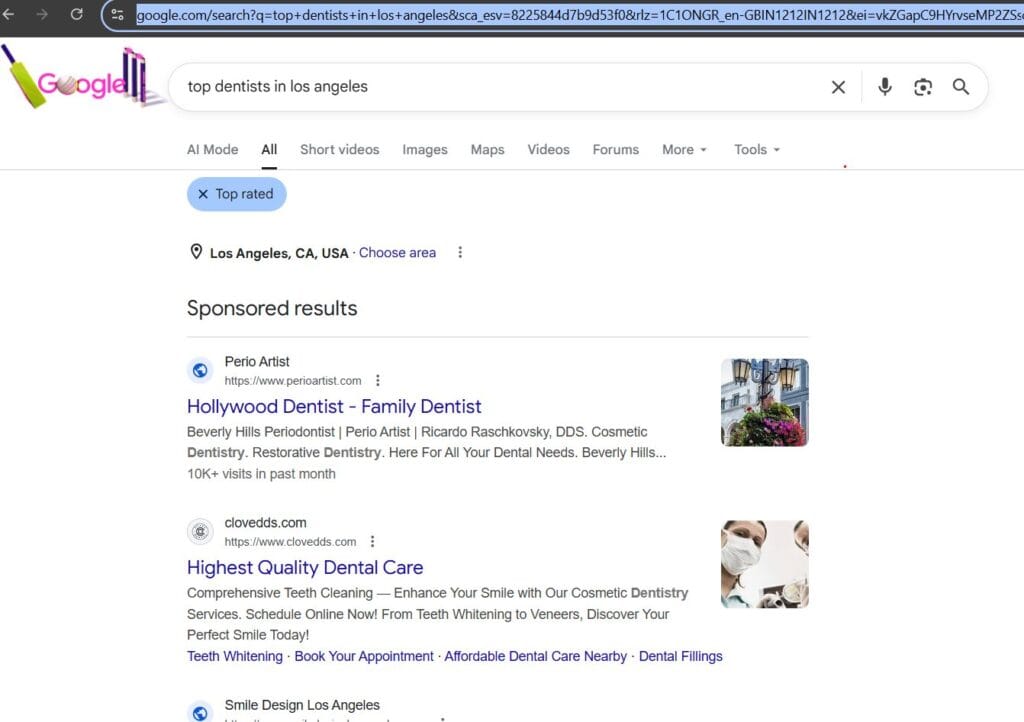
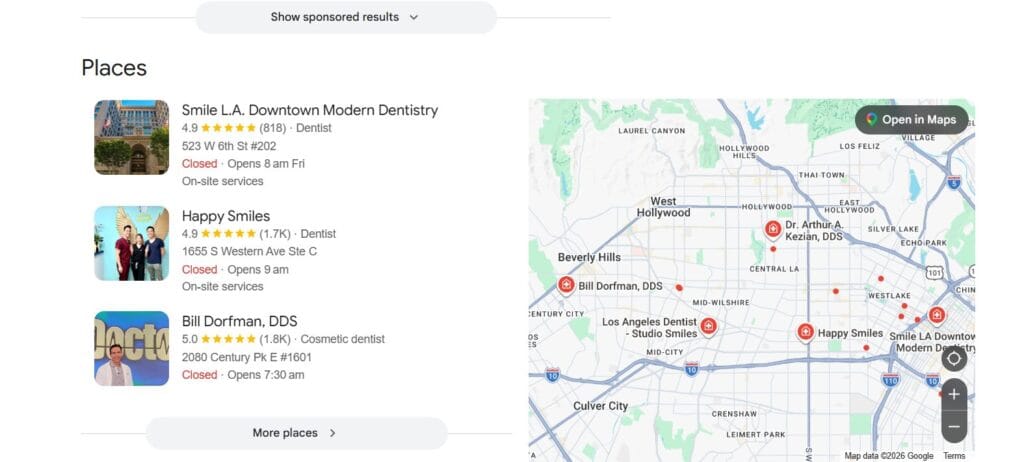
The first thing I noticed were sponsored listings, followed by Google Business Profiles showing dentists, ratings, reviews, maps, contact details, and directions.
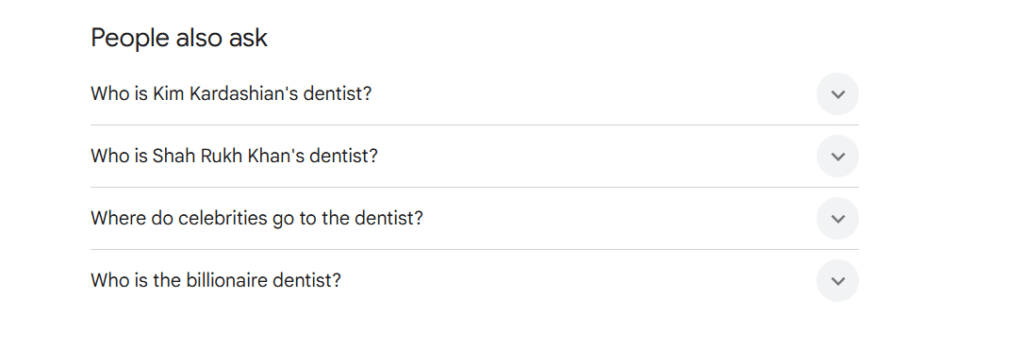
Then came the People Also Ask section. One question that drew my attention right away was, “Who is the dentist of Kim Kardashian?”
This question was not among those I intended to ask while looking for the best dentist in Los Angeles.
Below that were three listicles featuring the “Best Dentists in Los Angeles.”
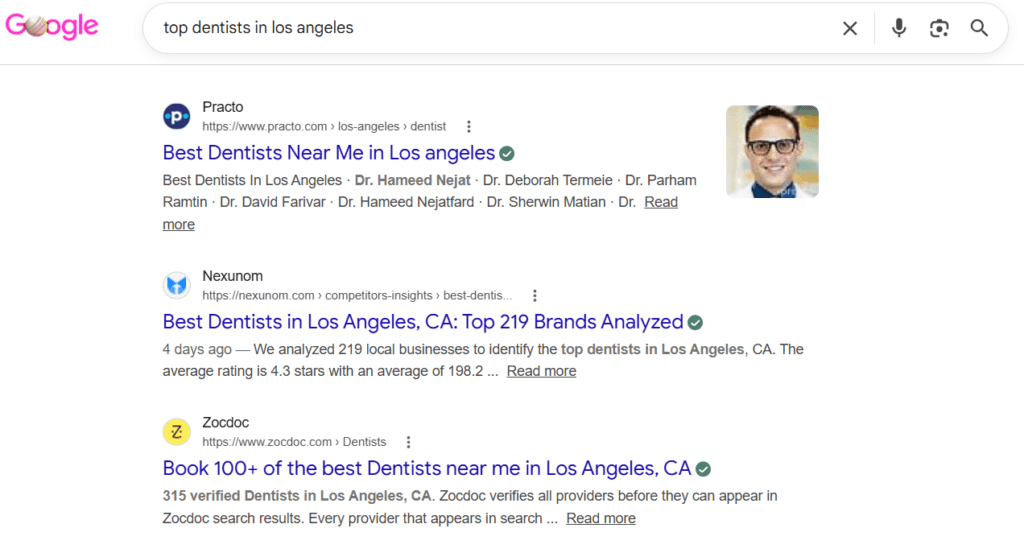
Then came another set of sponsored listings. (To be fair, Google does provide an option to hide sponsored results.) Only after scrolling further did I reach the regular organic search results.
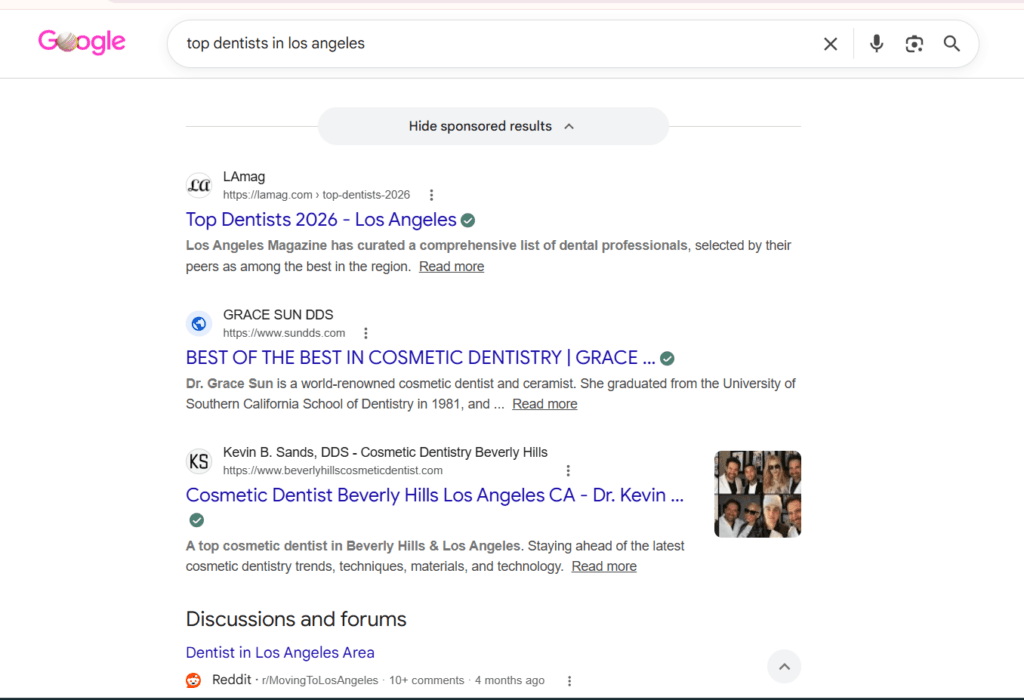
Among them were discussions on Reddit, blogs, dental clinic websites, and various review platforms. There was certainly no shortage of information.
But as a patient, I had to compare ratings, reviews, specialties, locations, and websites before deciding which dentists deserved my attention.
There was also a lot to process. Google wasn’t helping me make the decision. It was giving me every possible resource so I could make my own decision.
There is absolutely nothing wrong with that. In fact, Google is excellent when you want to research thoroughly.
The only drawback is that it takes time.
Then I Asked ChatGPT
I entered the exact same query into ChatGPT.
The experience was completely different.
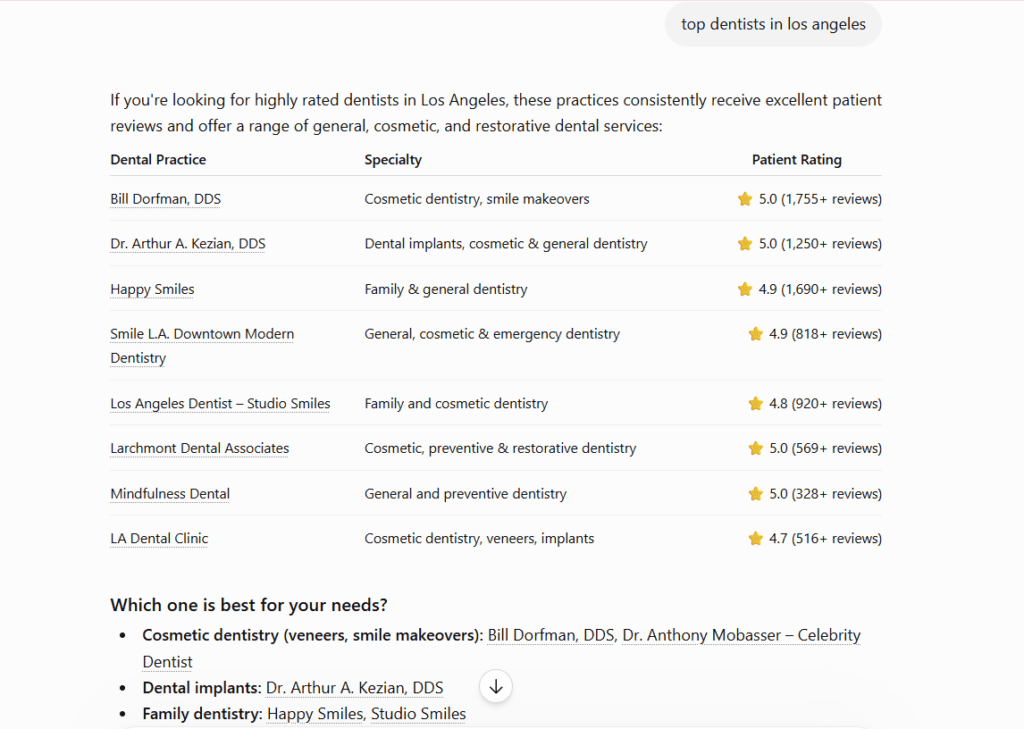
Instead of giving me pages of links, ChatGPT summarized everything into a neat table. It listed dentists, their specialties, and patient ratings. Within seconds, I had a shortlist instead of hundreds of search results.
But what really impressed me came next.
ChatGPT didn’t stop at giving me a list. It tried to help me choose.
Why Didn’t Google Show an AI Overview?
One thing I noticed during my search was that Google didn’t generate an AI Overview for “top dentists in Los Angeles.”
The reason is the intent behind the query. Google sees this as a local commercial search.
My intent appears to be “Show me dentists in this city so I can choose one.“
For this type of search, Google prefers to show the following:
- Sponsored ads
- Local Map Pack
- Google Business Profiles
- Reviews
- Organic results
because local businesses are constantly changing, and Google wants users to explore nearby options.
The query had a strong local intent. I wasn’t asking a general question about dentistry. The query was for finding a service provider nearby. In this case, Google will usually prefer sponsored results, Google My Business listings, maps, reviews, and organic results before showing the AI Overview.
Whether the AI Overview is displayed or not depends upon the nature of the query, user location, search history, and Google ranking algorithm.
Ironically, ChatGPT immediately summarized the information and even categorized dentists based on different patient needs.
That contrast perfectly illustrates how traditional search and AI search are beginning to serve users differently.
Google still encourages users to research and compare options. AI increasingly tries to shorten that journey by organizing information into a recommendation that helps users make a faster decision.
Which One Is Best for Your Needs?
After summarizing the results, ChatGPT organized the recommendations according to different patient needs.
For example:
- Cosmetic dentistry (veneers and smile makeovers): Bill Dorfman, DDS, and Dr. Anthony Mobasser
- Dental implants: Dr. Arthur A. Kezian, DDS
- Family dentistry: Happy Smiles and Studio Smiles
- Downtown Los Angeles: Smile L.A. Downtown Modern Dentistry and Downtown Dental
- Emergency or same-day care: Smile L.A. Downtown Modern Dentistry and Restore Dental
As a customer, I honestly found this incredibly useful.
Instead of opening ten different websites and comparing specialties myself, ChatGPT had already categorized them based on what different patients might actually need.
Whether every recommendation is perfect is a separate discussion.
What fascinated me was the experience.
It felt less like searching and more like asking someone knowledgeable for advice.
Search 2: Patients Are Asking Questions, Not Typing Keywords
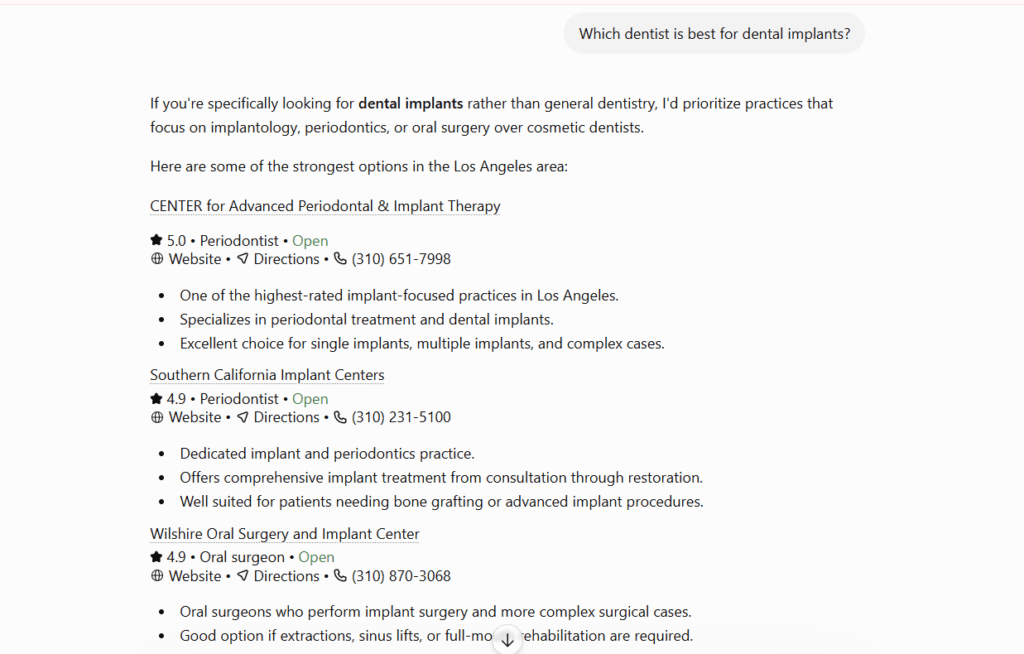
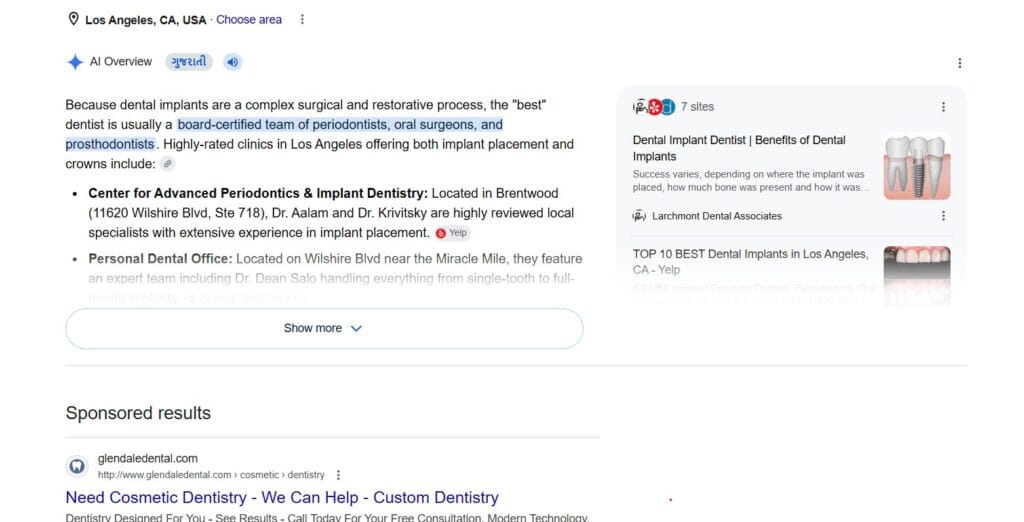
After comparing the results for “top dentists in Los Angeles,” I decided to try another search. This time, I searched the way many patients naturally ask questions today: “Which dentist is best for dental implants?”
Interestingly, this time Google generated an AI Overview, unlike my previous search. The overview summarized key information and highlighted a few dentists, along with factors to consider when choosing one. But even after that, I couldn’t help but scroll through the remaining results that seemed no different from my earlier search—that is, sponsored links, Google business pages, and organic search results. Though the AI Overview helped a lot in this process, there was some more work to be done in terms of comparing clinics, reading reviews, and collecting information.
In contrast to this, ChatGPT was more into helping me make a decision. This system shortlisted around five to seven dentists, even recommending them depending on different scenarios and patient needs. It listed down who should be consulted for implants, cosmetics, family, or emergencies, among other useful information like specialties, patient rating, address, and contact information. As a consumer, I felt I had almost everything at my disposal right here on the same platform.
It helped me appreciate the evolving nature of patient behavior while searching. If you were to do the same five years ago, you could have been searching for “best dentist Los Angeles,” “dentist near me,” and “dental implants Los Angeles.” However, today people are more likely to ask a whole question like “Which dentist is best for dental implants?”, “Who is good with nervous patients?”, “Which dentist has the best reviews for Invisalign?”, and “Where can I get emergency dental treatment?”
It is clear that whether we are talking about Google’s AI Overview or ChatGPT’s conversational answers, the focus is on understanding intent instead of matching keywords. Rather than asking customers to sort through numerous search results, they are trying to find out their intentions and give responses.
Once again, the difference between Google and ChatGPT was striking.
This is one area where AI definitely has an upper hand. This technology is built to comprehend the conversation, understand the user’s intention, and give a relevant answer. In other words, it tries to answer the questions directly instead of using a keyword matching technique.
- Search 1: “Top Dentists in Los Angeles” – Google presented traditional search results, while ChatGPT presented summarized recommendations.
- Search 2: “Which Dentist Is Best for Dental Implants?” – Google generated an AI Overview followed by its usual search results, while ChatGPT provided detailed, situation-based recommendations.
Google generated an AI Overview for this search because I asked a conversational, advisory question rather than using a traditional keyword search. It appears Google is more likely to summarize information for question-based queries before presenting its usual search results.
Patients Want Faster Answers
We live in such times when everyone wants to get answers immediately. There are not many people who would have enough time—and patience—to check several sponsored websites, compare their information, read numerous reviews, and choose someone they would like to trust. No matter whether it is choosing a dentist, restaurant, or any other professional, we want to choose the fastest way to make our decision. And that is precisely what makes AI search so attractive.
The Biggest Difference I Noticed
After trying both platforms, I came away with one clear observation.
Google helped me research. ChatGPT helped me decide.
That is a significant shift.
For years, search engines have focused on helping people discover information.
AI is increasingly focused on helping people make decisions.
AI Is Reducing Decision Fatigue
As patients, we don’t always want hundreds of options. Sometimes we simply want someone to narrow the field.
AI is trying to reduce the effort involved in making decisions, and for busy patients, that can make a huge difference.
The Patient Journey Is Changing
Traditionally, the patient journey looked something like this:
Search on Google → Visit multiple websites → Read reviews → Compare clinics → Make a decision
AI is beginning to shorten that journey. Now it increasingly looks like this:
Ask AI → Receive recommendations → Verify details → Book an appointment
The research stage hasn’t disappeared.
It has simply become much shorter.
Visibility Is No Longer Just About Rankings
For years, dental SEO focused on one goal: ranking on the first page of Google.
But AI introduces another dimension.
A dental clinic may rank well on Google yet never appear in AI recommendations.
Patients may never scroll through ten blue links if AI answers their question immediately.
Being visible wherever patients search is becoming just as important as ranking well.
Trust Is Becoming the New Ranking Factor
Why did ChatGPT recommend those particular dentists? The answer probably wasn’t based on keywords alone.
AI is likely looking at multiple trust signals, including:
- Patient reviews
- Online reputation
- Consistent business information
- Website quality
- Professional expertise
- Trusted mentions across the web
- Clear explanations of services
The more confidence AI has in a practice, the more likely it is to recommend it.
Patients Want the Right Dentist, Not Just the Best Dentist
Another thing I appreciated was that ChatGPT didn’t simply recommend the “top dentists.” It recommended dentists based on patient needs.
Someone looking for cosmetic dentistry doesn’t necessarily need the same dentist as someone looking for emergency treatment.
Patients don’t just want the best dentist. They want the best dentist for their situation.
That is a subtle but important shift.
What This Means for Dentists
If patient behavior is changing, dental marketing has to change too.
Dentists should focus on much more than rankings.
That includes:
- Building a strong online reputation
- Collecting authentic patient reviews
- Clearly showcasing areas of expertise
- Publishing educational content
- Keeping business information accurate and consistent
- Earning mentions from trusted websites
- Demonstrating real expertise rather than simply targeting keywords
Practices that consistently build trust are likely to have a significant advantage in both traditional search and AI search.
Key Takeaways
Both Google and ChatGPT serve different purposes.
Despite the fact that Google is still a great tool for research, AI is fast turning into a great means of making choices easy.
As a consumer, I truly felt that the use of AI made decision-making easy by reducing the workload before choosing.
It does not mean that conventional searching methods are obsolete. It simply means patient search behavior is evolving.
The dental practices that understand this shift today won’t just rank well on Google. They’ll become the practices that patients and AI feel confident recommending.
Related Reading