Important Website Pages Every Site Needs for Better SEO and User Trust
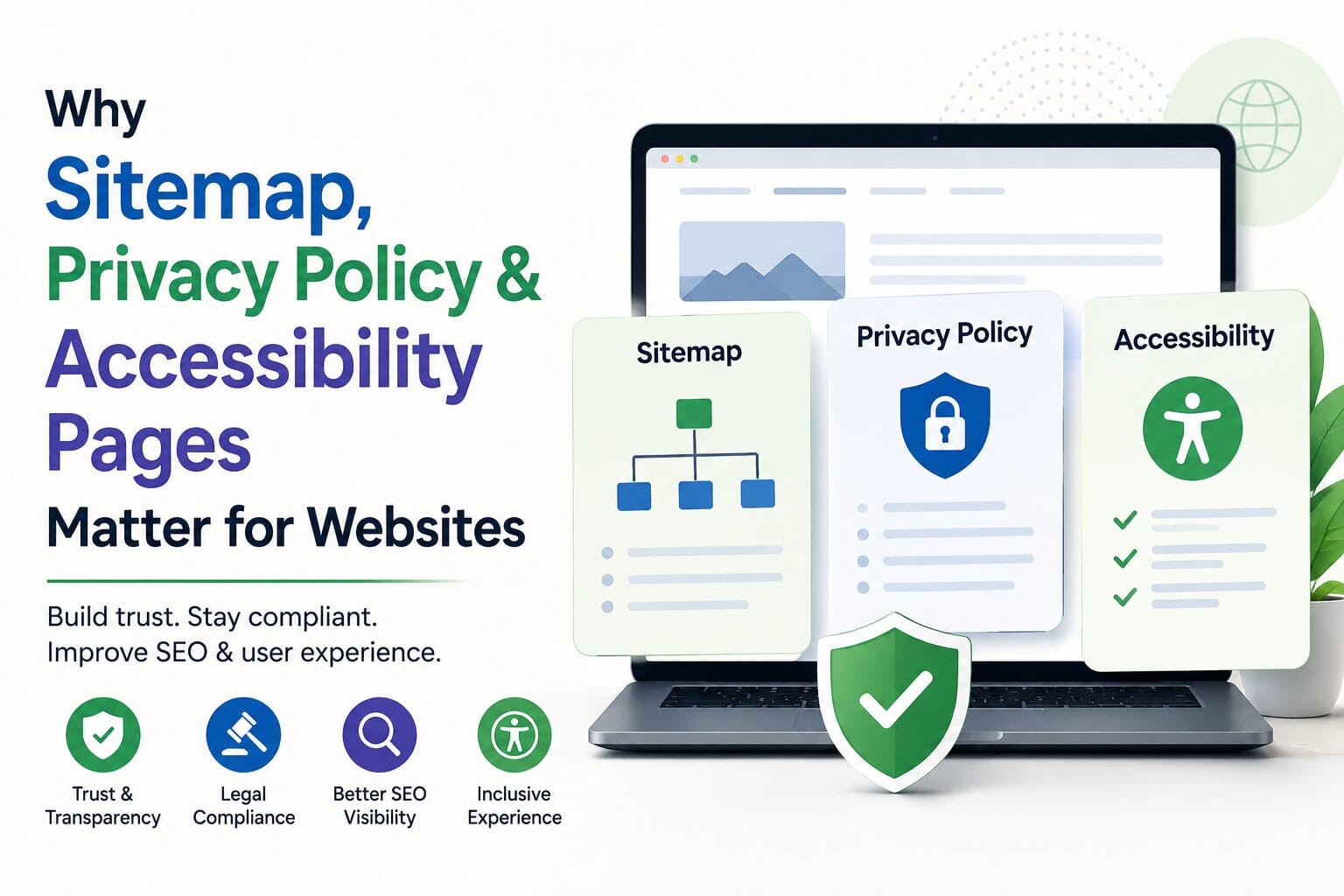
When creating a website, most focus naturally falls on the homepage, service pages, blog content, and design. After all, these are the pages that visitors engage with most frequently. Yet a handful of pages frequently remain unnoticed in the footer by most visitors, though they significantly contribute to a website’s success and credibility. I’m referring to the Sitemap, Privacy Policy, and Accessibility pages. While they might not drive traffic or directly lead to conversions, they contribute to building a website that is trustworthy, easy to find, and pleasant for users.
The Importance of a Sitemap
A sitemap functions as a guide for search engines. It offers a structured overview of your website’s pages and assists search engines in grasping how your content is arranged. As websites expand, certain pages may become harder to capture during crawling. A sitemap assists search engines in finding those pages and indexing them more effectively.
For website owners who frequently post blogs, revise service pages, or introduce new content, a sitemap helps search engines more easily detect those updates. Although a sitemap by itself won’t boost rankings, it contributes to a website’s overall SEO health by helping search engines find key pages.
Consider it as helping search engines navigate your website more easily.
Why a Privacy Policy Matters
Trust is among the most valuable assets any website can cultivate. Today, even a basic contact form gathers personal details like names and email addresses. Numerous websites also employ analytics tools, cookies, and third-party services to collect visitor data. A Privacy Policy outlines what information is gathered, the reasons for collecting it, and how it is utilized. It ensures transparency and gives visitors confidence that their information is being managed responsibly. In addition to trust, privacy policies are gaining growing legal significance. Privacy laws in different countries mandate that businesses and website operators reveal how they collect data. Even a small website benefits from a clear Privacy Policy, as it shows professionalism and respect for your visitors.
Accessibility Is About Inclusion
A key area in website development that requires greater focus is accessibility.
Individuals use various methods to access websites. Others depend on screen readers, keyboard navigation, voice controls, or other assistive tools. A website that is easy to access helps make sure visitors can reach the content no matter their abilities.
An Accessibility page or statement details your dedication to providing an inclusive online experience. It can outline the accessibility features on the website and offer users a means to report any challenges they face.
Accessibility goes beyond just meeting standards. It’s about ensuring that no one feels left out when it comes to accessing information, products, or services online.
The Bigger Picture
While the Sitemap, Privacy Policy, and Accessibility pages may not be the most thrilling elements of a website, they play an important role in the bigger picture. They assist search engines in understanding your content, build visitor trust in your website, and help ensure a broader audience can access your information.
These pages show that the website was crafted with attention to detail, designed not only for search engines but also for actual users.
Sometimes, the most crucial pages on a website are those that operate behind the scenes, subtly enhancing how everything else works.