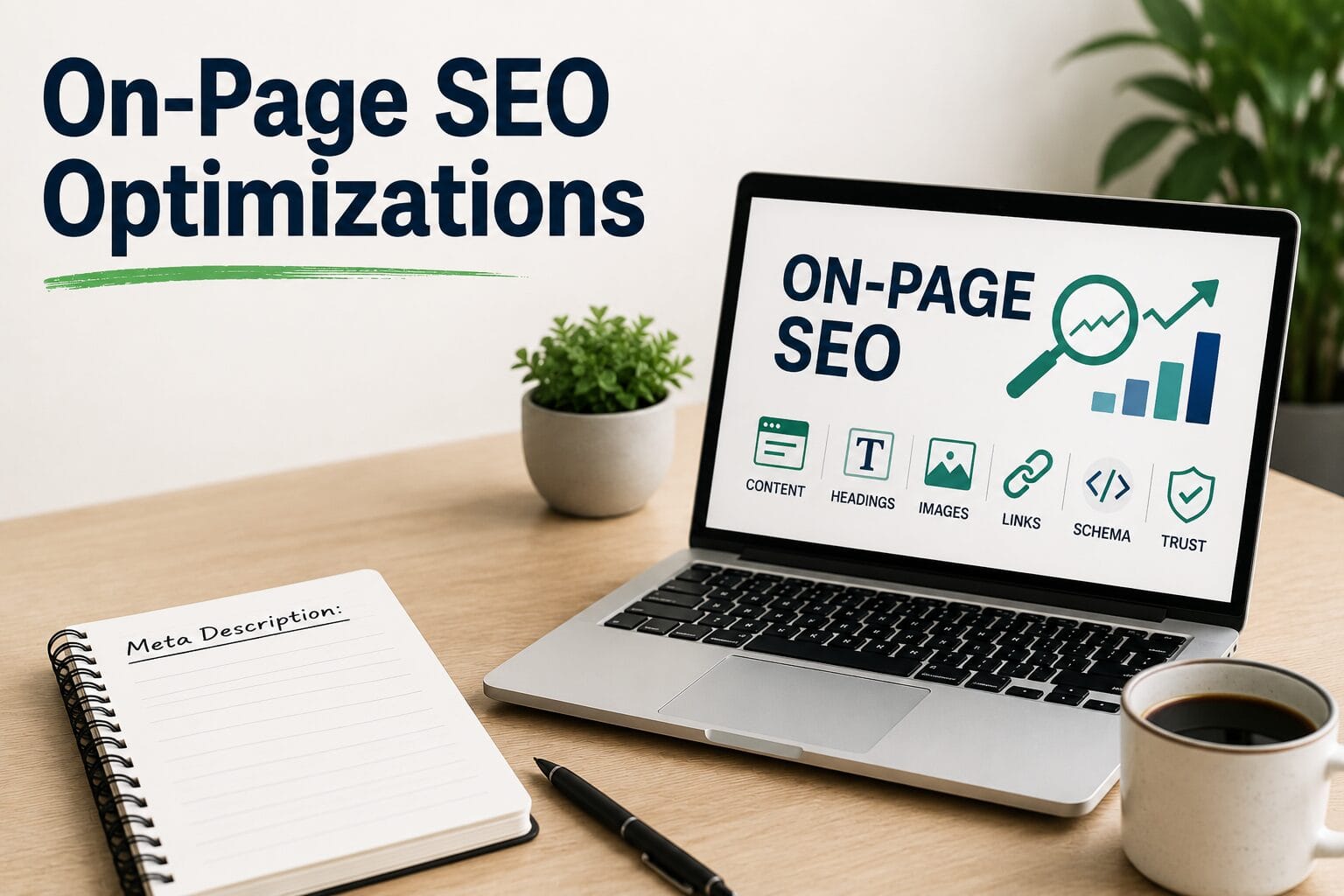
On-Page SEO Optimizations I Made on SimplySansu.com (And Why They Matter)
Whenever people talk about On-Page SEO Optimizations, it is usually in regards to backlinks, keywords, or Google rankings.
Nonetheless, while developing SimplySansu.com, I realized that my website should also be optimized. How could it be possible to optimize a website if search engines and even users could not comprehend my website’s content?
For the last few months, I put some effort into optimizing on-page SEO. In fact, some tasks did not require too much time, but others needed to spend some time doing some research first. All of those tasks were quite small on their own, but combined, they made an excellent base for my website.
Improving Titles and Meta Descriptions
The very first thing that I analyzed is the page titles and descriptions.
Mostly, my older posts had generic titles or lacked meta descriptions written properly. So I decided to rewrite them thinking from the user’s perspective.
Rather than concentrating on using particular keywords, I aimed at making titles informative. It was quite a straightforward goal. Would you know what my post was about if you found my page in a search engine?
Creating Better Heading Structure
I also gave attention to headings tags.
Several pieces of writing had inconsistent heading structure. Some went from H2 to H4, whereas others utilized headings for design only.
The process of creating structure for my work was gradual. Here is what I came up with:
H1 for the title
H2 for major divisions
H3 for sub-divisions
This not only improved readability but also helped search engines better understand the content.
Optimizing Images
Imaging was one more aspect where changes were required.
I began naming the uploaded files with descriptive tags rather than uploading images tagged as IMG_1234.jpg. What mattered more, however, was the examination of image alt tags.
One intriguing insight came from the PageSpeed Insights tool, which kept telling me about a missing image alt tag for an image that I just could not locate anywhere in my WordPress Media Manager. After a little sleuthing, it turned out that the image was actually hardcoded in a widget with HTML code.
The problem went away after I added the missing alt description and cleared the cache.
Strengthening Internal Linking
As my website progressed, I noted that there were many articles which stood on their own.
I started adding internal links within articles when appropriate.
For instance, if I was writing an article on speeding up my website, I would add a link to another article which discussed the basics of SEO or technical SEO.
External Linking
Links were also optimized during the review process. Links to credible sites that added more value to the existing content were included wherever necessary. Where there was any link with an affiliate relation or was sponsored, the right use of nofollow or sponsored attributes was done. Broken links on external sites were fixed wherever possible, and in cases where that wasn’t possible, these links were deleted from the content to maintain a great user experience.
Technical On-Page SEO Elements
Technical On-Page SEO Elements
Several technical SEO elements were also analyzed and optimized during the on-page SEO audit. I made sure that canonical tags were used appropriately in order to allow search engines understand which of the pages should be considered as the correct version in cases of duplicates. I also ensured proper use of robots meta tags that allowed me to index those pages that required indexing and to exclude those that should not be indexed. An XML sitemap was created and submitted in order to assist search engines in crawling the site, and at the same time an HTML sitemap was created.
Moreover, breadcrumb navigation was applied to the pages, allowing users to go back to parent pages easily. Pagination was also optimized. Paying attention to mobile-friendliness was another important aspect in the process of optimization because nowadays most users visit sites using their mobile devices. Therefore, I regularly tested the pages with regard to their mobile-friendliness making sure that text was legible, images resized well, menus and buttons clickable, etc.
The PageSpeed Insights score reports were quite instrumental in helping me find and solve issues that could not have been detected if I had focused only on the desktop. Some of these issues were specifically mobile-related and improved the user experience on mobile devices.
E-E-A-T Signals for Author
E-E-A-T Signals for Author
In addition to building trust and credibility, I was also working on multiple E-E-A-T signals (Experience, Expertise, Authoritativeness, and Trustworthiness). Thus, an extensive author bio and a specific author page were provided to enable readers to get acquainted with my experience and field of expertise. Moreover, all relevant contact details as well as social media accounts were conveniently placed on the website to prove my authoritativeness and build the sense of authenticity.
I did not only focus on the provision of general information but also tried to highlight my practical experience by providing personal case studies, lessons learned, and examples of successful optimization. Whenever possible, I supplemented the material with original screen shots and images to illustrate the process and the results obtained after the implementation of optimization efforts. I used authoritative sources when discussing technical aspects of SEO, optimization of website performance, and industry best practices.
Service Pages’ Optimization
For my service pages, I optimized them separately instead of following an all-inclusive optimization strategy. Each page was optimized with a specific service title and meta description, which was done to show the services available on the pages and to increase their search engine visibility. As the default schema from the SEO plugin did not cover the service pages, I manually optimized the pages using the Service Schema. Moreover, I checked each page to see if there were enough visible calls to action on the pages, enabling easy contact by the prospective clients. Lastly, I optimized the pages with a benefits section where the clients would not only be told about the services but also learn how these services can benefit them and solve their problems.
Website-Wide SEO Improvements
Apart from SEO at the level of individual pages, I analyzed several elements at the website level as well in order to ensure consistency and make the website as user-friendly as possible. The branding on the website was unified in terms of using my website name, logo, color scheme, and slogan consistently throughout. In addition, a favicon was used on all pages of the website in order to allow visitors to easily recognize the website among their favorites and open browser tabs.
Navigation was optimized to facilitate easier access to various types of information both for visitors and for search engine bots. Important pages were included in the main navigation menu to minimize clicks necessary to navigate the website. Links in the footer were checked to see whether all essential pages were easily accessible, including Contact, About Us, Services, Privacy Policy, and any other important resources. Moreover, the search functionality of the website was activated and tested.
Creating Important Website Pages
I also created pages that many visitors may never Also, I added some pages that many people would never visit on purpose:
- Site map
- Privacy policy
- Accessibility page
- Contact page
- About us page
Those pages may get few visits, but they help with transparency and quality of the website.to trust, transparency, and overall website quality.
Sometimes SEO is not only about rankings. It is also about credibility.
Content Optimization
In addition to other measures to optimize my website for search engines, I performed content optimization according to the following steps:
- Page Title Optimization – I optimized titles of pages to accurately reflect their content with appropriate usage of keywords.
- Meta Description Optimization – I wrote compelling descriptions of pages to increase CTR of users clicking my websites in the results pages.
- Primary Keyword Usage – Primary keywords were put into appropriate places within page content like title, heading, introduction, etc.
- Secondary Keywords Usage – Wherever necessary, secondary keywords and their variations were included into content.
- Alignment of Content with Search Intent – Content was revised to meet search intents behind specific search queries.
- Content Updating and Freshness – Old content was updated wherever possible; incorrect information was removed from my websites.
- Improvement of Content Readability – The structure of content was optimized using appropriate headings, short paragraphs, and bullet points.
- Content Expansion – Thicker content was added to thin pages on my websites.
- Prevention of Keyword Stuffing – Appropriate usage of keywords in content without compromising its quality.
The above content updates went hand-in-hand with the technical updates to ensure that I came up with pages that were search engine friendly as well as visitor-friendly.
Reviewing Content Quality
I took some time to revisit my blog posts.There were cases where there was some missing information in blog posts. There were also blog posts that have some formatting issues and some outdated examples.
I realized that instead of always thinking about what new thing can I do to generate traffic, there might be other effective ways like optimizing some older posts
Reducing Clutter
Yet another minor change, but still an essential one, was about eliminating useless components.
I have deleted unnecessary plugins, streamlined several pages, and eliminated irrelevant content.
It is well known that a website without any extra stuff is much more pleasant to use and even better in terms of SEO.
Implementing Schema Markup
One on-page optimization that required a little more digging was schema markup.
My initial impression was that Yoast would take care of all optimization on its own. For my blog posts, indeed it did add the appropriate Article schema along with the information about the post author. However, when looking into my service pages, I realized that I needed something else here.
A service page does not equal to an article.
The purpose of a service page is to inform people about a service I can provide, not to create some content.
So it became evident that I needed to insert my Service schema by hand for Google to have a better understanding of what my website is about.
This kind of thing cannot be seen by website visitors. Most people just browse the website without any clue regarding schema markup. But search engines see them.
And once again I was reminded that SEO plugins are very convenient tools but can never be the only thing that should be used for optimization purposes.
This is just one of the optimizations I performed on my SimplySansu.com website; nevertheless, small optimization efforts together may contribute towards creating a site that is easy for users and search engines alike to understand.
Paying Attention to User Experience
The thing that kept coming up while doing the optimization process is that most of the times good SEO is also associated with good UX.
Navigation, readability, image optimization, descriptions, and internal linking are important factors not only for search engines but also for users.
URL Optimization
Finally, I reviewed the URLs used in my website to make sure that they adhered to the principles of SEO. As far as possible, I made sure to use SEO-friendly URLs where short and descriptive slugs made it clear what the page is about. In this case, words were hyphenated rather than separated by underscores, which is preferred by search engines.
Final Thoughts
Looking back, there was nothing I did which resulted in overnight success.
No magic button.
Instead, on-page SEO ended up being a set of small steps that gradually helped optimize my website.
Every single optimization step whether image, heading, internal link, or updating meta description brought my website closer to where I wanted it to be.
Perhaps this is the main takeaway that I got.
SEO is sometimes less about shortcuts and more about consistent improvement of your website.