Why Did an AI SEO Article Rank on Page One in 3 Hours While Mine Didn’t?
Share this article:
A few days ago, I was looking at an article that had been published only three hours earlier and was already appearing on the first page of Google for a search related to “beginner guide to AI SEO.”
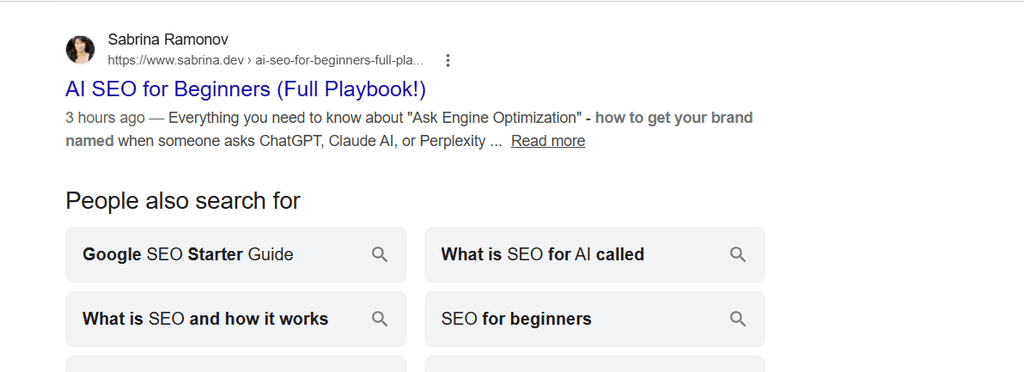
I found that fascinating. Three hours after publication, and it was already on page one.
Naturally, I started wondering how quickly new content could rank when the topic was relatively new and the competition wasn’t as intense as it is for established SEO topics.
But there was another reason this caught my attention.
I have my own article on a similar topic:
What Is AI SEO? A Beginner’s Guide
At that point, I was curious to see how my article was performing.
It wasn’t anywhere near the first page.
Then I checked again today
Today, out of curiosity, I searched for the same query again.
And this time, the situation was very different.
The article that had appeared on the first page just hours after publication was no longer there.
In fact, it wasn’t even showing up within the first three pages of the search results.
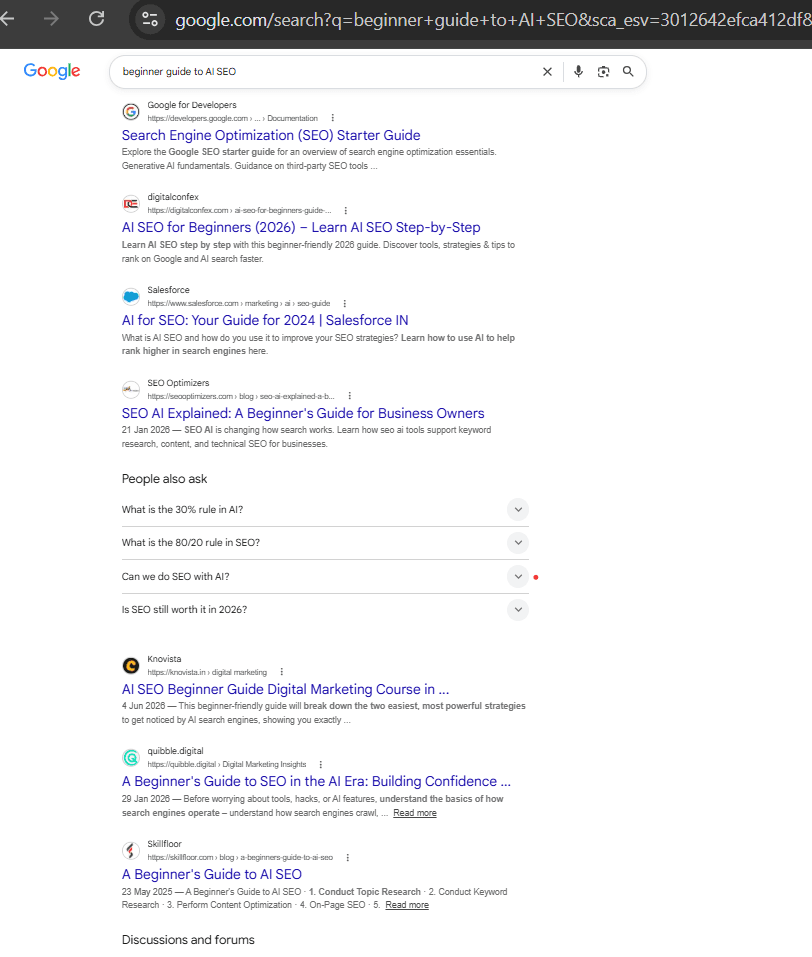
That was interesting.
What looked like an impressive ranking success just a few hours after publication had turned out to be much more temporary than I initially thought.
So, what actually happened?
This was a good reminder that an early Google ranking isn’t necessarily a permanent ranking.
Google may test newly published content in different positions to understand how well it satisfies a particular search query.
A new article can therefore appear surprisingly high shortly after publication and then move down once Google has more information or other pages compete for the same search.
In this case, that’s exactly what made the experience useful for me.
If I had only checked the search results three hours after publication, I might have concluded:
Publish early on an emerging topic and you can rank on page one almost immediately.
But checking again today tells a very different story.
What about my own article?
My article wasn’t on page one initially, and it still isn’t.
My article and the other article may target similar subjects, but ranking isn’t determined simply by whether you have included the same keyword.
Google has to determine which page best satisfies the specific search intent.
Factors such as content depth, structure, relevance, topical coverage, internal linking, authority and competition can all influence how a page performs.
And those signals don’t become clear within just three hours.
The Lesson I Took From This
In the end, this isn’t a competition between the two articles. It’s a small SEO study.
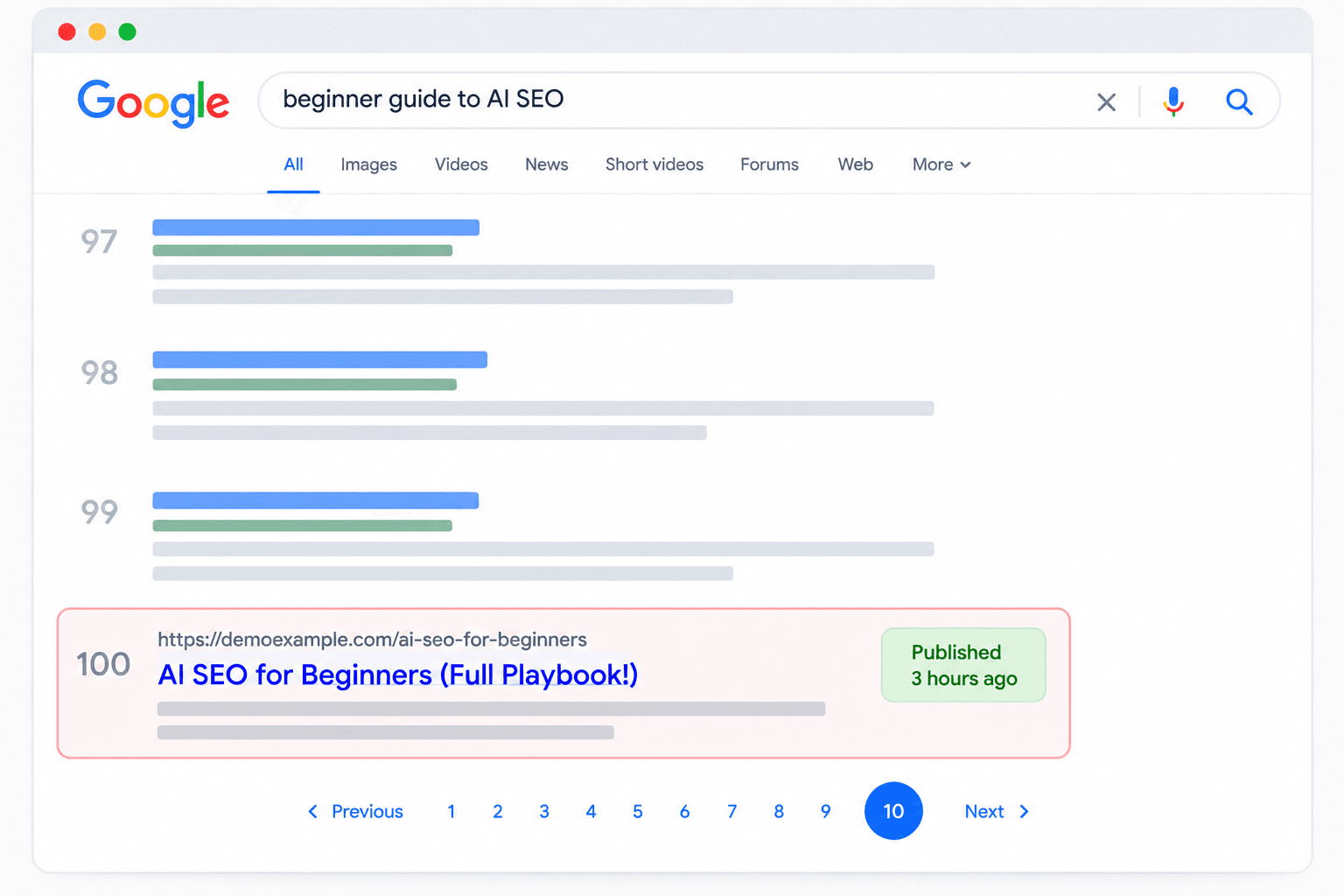
I compared the results out of curiosity. One article appeared on page one within three hours, while my article wasn’t there. But when I checked again a few days later, neither article appeared until page 10.
That made the comparison even more interesting.
SEO is an ongoing experiment. Publish, observe, compare, learn, and improve.
The lesson for me is simple: don’t judge an SEO result from one snapshot. Watch how it changes over time.