Why Google Business Profile matters for visibility, credibility, and reputation
Yesterday, a small business owner approached me to discuss a few issues he was facing with his Google Business Profile.
He runs a catering service focused on serving customers within about a 10 km radius. Like many small business owners trying to establish themselves, he was exploring every possible way to improve his online visibility and wanted to understand how important a Google Business Profile really is for his business.
As we discussed the problems he was facing, I noticed that there were a few areas that needed immediate attention.
These were also the reasons why Google continued to disapprove his Business Profile.
It reminded me of something important.
A Google Business Profile is not just another online listing. For a local business, it can be one of the first places where a potential customer encounters your business.
And even if you are not a local business, having accurate and consistent information about your business online contributes to visibility, credibility, and reputation.
Here are some of the things every business should keep in mind.
1. Choose the right business category
One of the first issues I noticed was the wrong category being entered.
This may look like a small detail, but it isn’t.
Google wants to provide accurate information to people using its search engine. If the category doesn’t accurately represent what the business actually does, it can create confusion and may affect the verification and approval process.
So don’t simply select a category because it sounds close to what you do.
Choose the category that most accurately represents your primary business.
For a small business owner who is doing everything himself, it can be tempting to select a category quickly and move on. But this is one of those areas where accuracy matters.
2. Your physical location and signage can matter during verification
The second issue was particularly interesting.
The business had started small and did not have a proper business signboard.
As part of the verification process, he was required to provide a live video, but the verification was repeatedly failing.
Initially, he thought the problem could be related to the distance between his workspace and the nearest landmark.
But when we looked at the situation more closely, the absence of clear business signage was another important factor to consider.
For a startup or small business that is just beginning to establish its physical presence, this can be challenging.
My suggestion was that he should have a proper business name board at the business location, clearly identifying the business.
For businesses trying to establish their footprint, even something as basic as signage can become important when you are trying to establish that a real business exists at a particular location.
3. Don’t create multiple profiles for the same business location
Another problem was that two profiles had been created for the same business location.
The business owner was trying different options to get his profile approved and fixed, but creating multiple profiles can create even more ambiguity.
Google needs to understand:
Who the business is
Where it is located
What it does
Which profile represents the actual business
When multiple profiles represent the same business at the same location, you can make that information less clear rather than solving the original problem.
My advice was simple:
Don’t keep creating new profiles to solve a problem with an existing profile. Find the underlying issue and fix it.
4. Keep your NAP information consistent
Another thing I suggested was maintaining consistent NAP information.
Your business name, address and phone number should be accurate and consistent wherever your business is listed online.
This includes your Google Business Profile and other important business directories and websites.
If your business name is written differently in different places, your address keeps changing, or different phone numbers are being used, it can make it harder for both customers and search engines to understand your business information.
For a small business trying to build trust, consistency matters.
5. Google Business Profile is not only about rankings
Small businesses often focus on one question: “Will Google Business Profile help me rank?”
Visibility matters, but so does credibility.
When someone hears about your business and searches for it on Google, what they find can influence whether they trust you enough to get in touch. A complete and accurate profile helps show that your business is real, active, and reachable.
6. It is particularly important for businesses serving a local area
For the catering business owner I spoke with, the target market is within a 10 km radius, making local visibility crucial. The same applies to restaurants, salons, plumbers, dentists, and other businesses serving a specific area. Being visible when local customers search for your services can make a real difference.
7. Your Google presence becomes part of your reputation
Your online reputation is shaped by what people see when they search for your business, including your information, photos, and reviews. That is why I see Google Business Profile as more than an SEO tool. It is part of digital reputation management.
Google reviews can also influence new customers’ decisions. The business owner I spoke with was concerned that he couldn’t add reviews yet. Reviews on a website may not carry the same weight because anyone can potentially add them. A review from an established Google account can provide an additional layer of credibility and help potential customers make a decision.
8. Don’t treat it as a one-time setup
Creating the profile is only the beginning. As your business changes, keep your phone number, hours, services, and location updated. An outdated profile can be as problematic as an incomplete one.
9. Is Google Business Profile still relevant in the age of AI?
This was another question the business owner asked me.
My answer is yes. AI is changing how people discover and compare local businesses. Someone can now ask ChatGPT, “Find a catering service near me,” and receive local business recommendations based on their location. ChatGPT can use location information to provide relevant local results. OpenAI Help Center
For example, someone in Austin, Texas, could ask for catering services nearby and receive a list of local businesses. This makes it even more important for a local business to have accurate, consistent information about its name, location, category, services, website and reviews across the web.
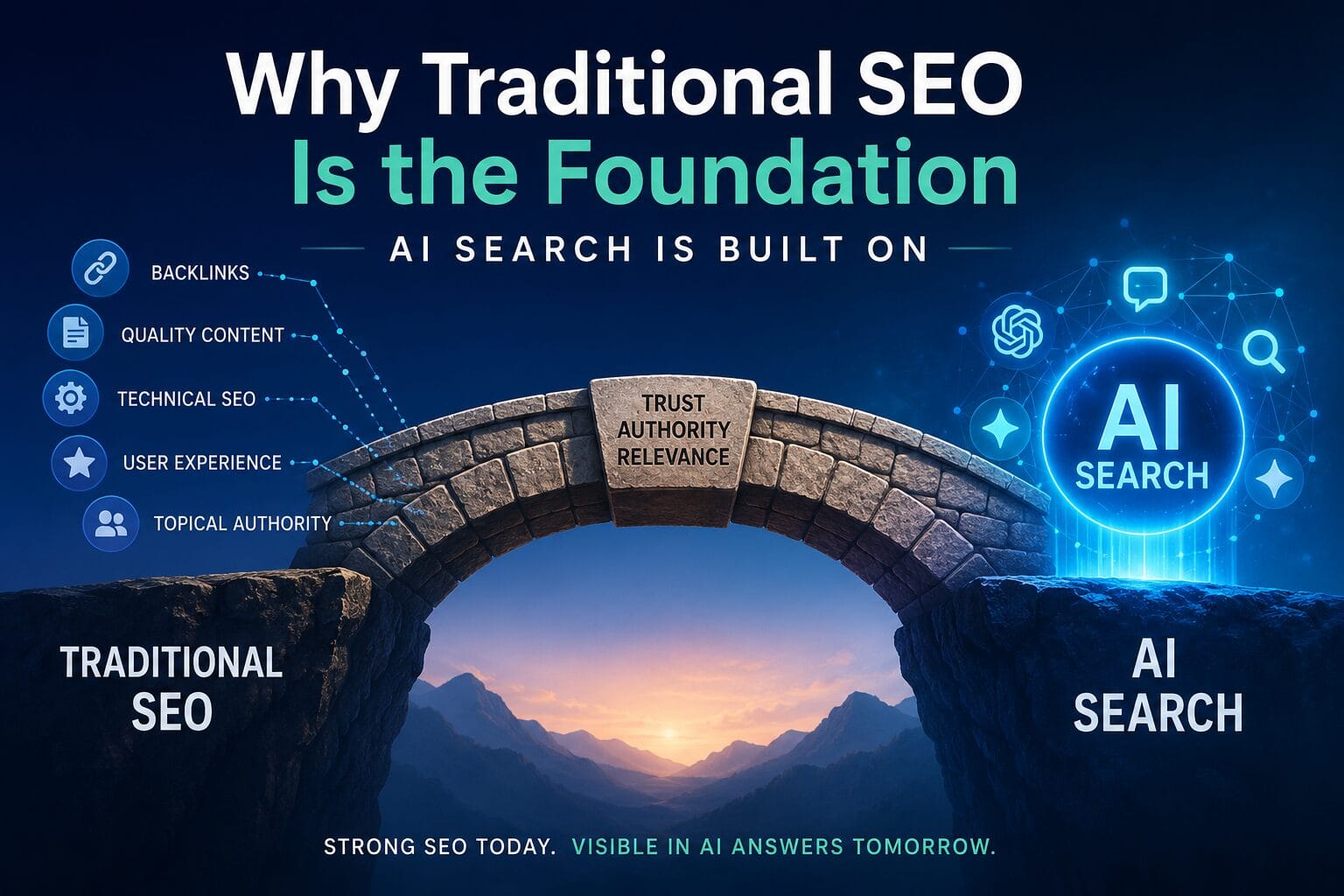
Your Google Business Profile is therefore not just about Google Search anymore. Your digital presence can also contribute to how your business is discovered in an increasingly AI-driven search environment.
Google Business Profile is still valuable because it forms part of your broader online presence, helping establish accurate and consistent information about your business across the digital ecosystem, including the platforms people increasingly use to discover local services.A small business can start small, but its online presence shouldn’t be careless
The conversation with this business owner reminded me that small businesses often have to manage everything themselves. But when building an online presence, accuracy matters from the beginning. Use the right category, avoid duplicate profiles, and keep your business information consistent and credible across the web.
Google Business Profile remains important primarily because it provides the underlying business information people and search systems use to understand the business.
Practical Example: Searching for Catering Services in Austin, Texas
Natural queries that a potential customer might actually ask:
“Find catering services near me in Austin, Texas.”
“Best catering services in Austin, Texas.”
“Catering companies near Austin, Texas.”
“I need a catering service for an event in Austin, Texas.”
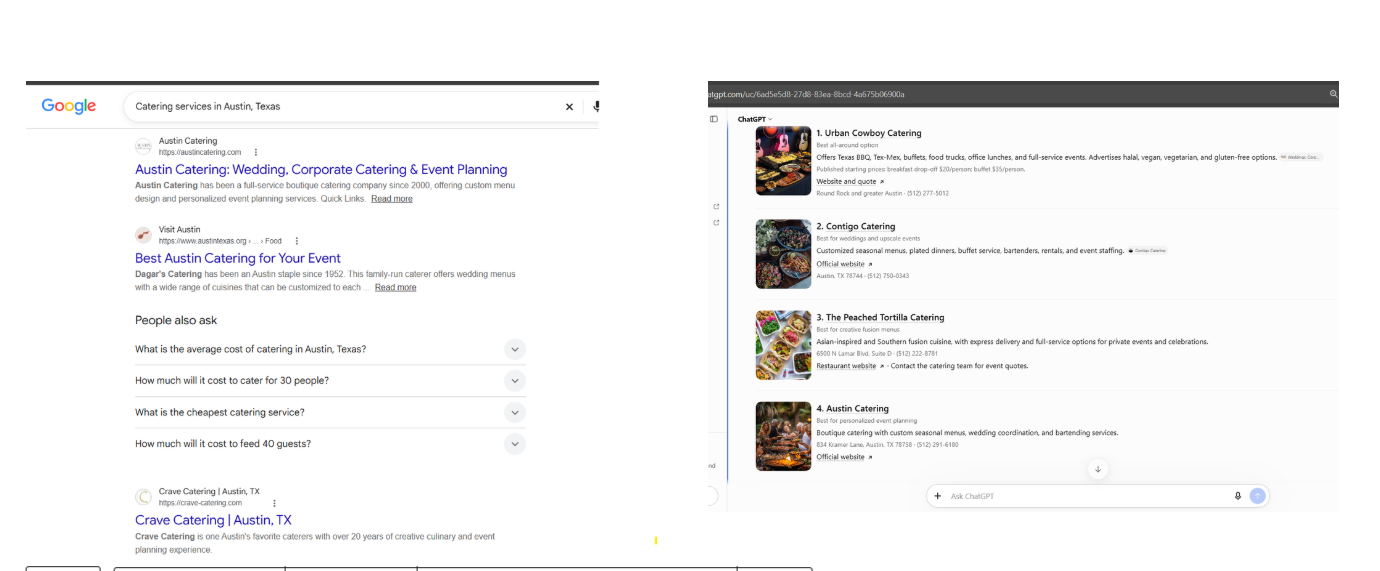
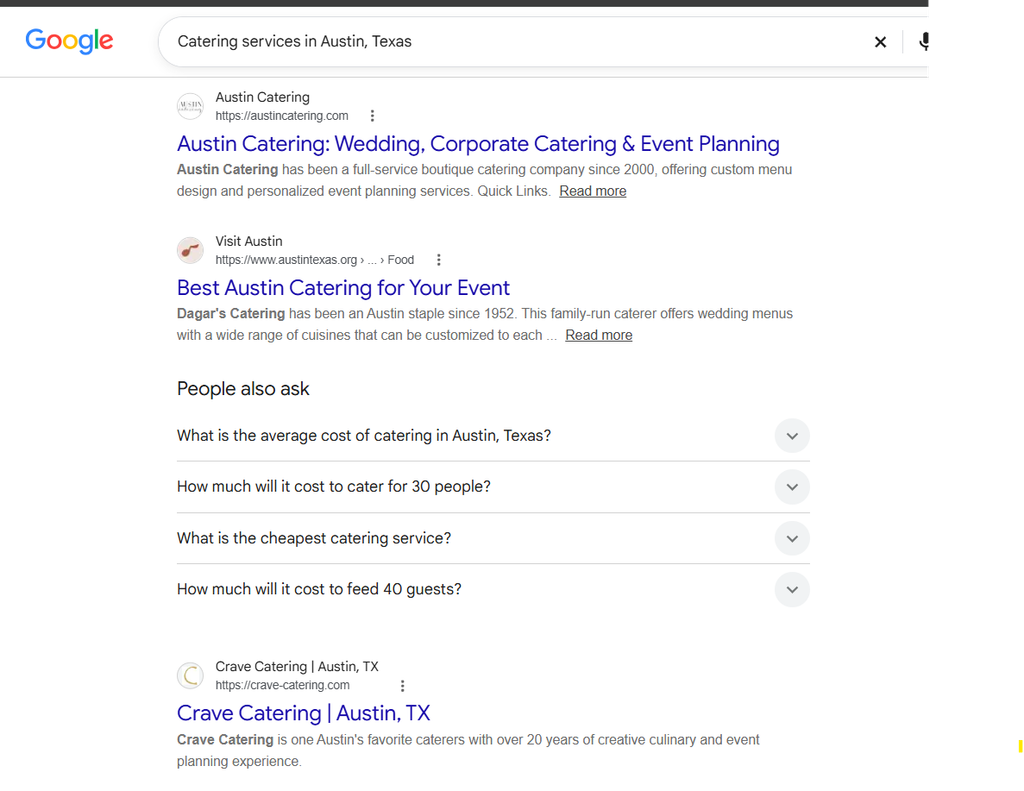
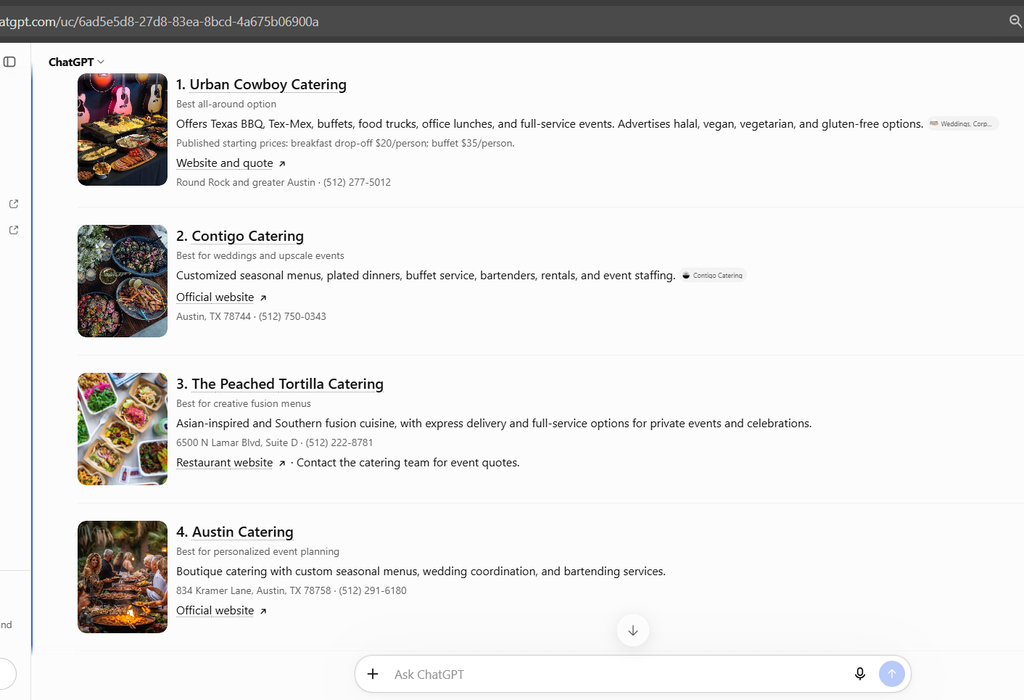
To see how local business discovery can work in an AI-driven search environment, I tried a simple search query:
“Catering services in Austin, Texas”
Interestingly, Austin Catering appeared first in my traditional search results and fourth in the AI-generated results. Its appearance in both sets of results suggests that the business has a strong and recognizable online presence, with information that can be found and understood across different search environments.
The results may differ between traditional search and AI-generated search, depending on factors such as the search query, location, timing, and how each platform evaluates and presents businesses.
The idea is simple. Instead of searching Google and going through multiple websites, a potential customer can ask an AI tool to find businesses that provide a particular service in a specific location.
I looked at the businesses returned for this query and the information available about them. This also shows why having accurate and consistent business information online still matters. Your business name, location, services, website, and other details should be clear and consistent across the web.
For a small local business, being discoverable is no longer just about ranking in traditional search. People are increasingly using AI to discover, compare, and research businesses before making a decision.
What This Means for Small Businesses
A Google Business Profile is more than a pin on Google Maps. For a local business, it can be one of the first points of contact with a potential customer.
Visibility gets you noticed. Accurate information builds confidence. Consistency builds credibility. And your reputation helps people decide whether to trust you.
You may be a small business today, but your online presence should still look professional from day one.
AI is also changing how people discover local businesses. Customers are increasingly using AI to find, compare, and evaluate services, making accurate business information more important than ever. A well-maintained Google Business Profile can contribute to your online visibility, credibility, and overall digital presence, even as the way people search continues to evolve.
In the AI-generated results, I did not see a single Google Business Profile listed directly. Instead, many of the results came from business listing and directory websites. This suggests that ChatGPT may not display Google Business Profiles directly, but the business information it surfaces can reflect the broader online presence of a business.
Contains information related to marketing campaigns of the user. These are shared with Google AdWords / Google Ads when the Google Ads and Google Analytics accounts are linked together.
90 days
__utma
ID used to identify users and sessions
2 years after last activity
__utmt
Used to monitor number of Google Analytics server requests
10 minutes
__utmb
Used to distinguish new sessions and visits. This cookie is set when the GA.js javascript library is loaded and there is no existing __utmb cookie. The cookie is updated every time data is sent to the Google Analytics server.
30 minutes after last activity
__utmc
Used only with old Urchin versions of Google Analytics and not with GA.js. Was used to distinguish between new sessions and visits at the end of a session.
End of session (browser)
__utmz
Contains information about the traffic source or campaign that directed user to the website. The cookie is set when the GA.js javascript is loaded and updated when data is sent to the Google Anaytics server
6 months after last activity
__utmv
Contains custom information set by the web developer via the _setCustomVar method in Google Analytics. This cookie is updated every time new data is sent to the Google Analytics server.
2 years after last activity
__utmx
Used to determine whether a user is included in an A / B or Multivariate test.
18 months
_ga
ID used to identify users
2 years
_gali
Used by Google Analytics to determine which links on a page are being clicked
30 seconds
_ga_
ID used to identify users
2 years
_gid
ID used to identify users for 24 hours after last activity
24 hours
_gat
Used to monitor number of Google Analytics server requests when using Google Tag Manager
1 minute
Google reCAPTCHA helps protect websites from spam and abuse by verifying user interactions through challenges.
Name
Description
Duration
_GRECAPTCHA
Google reCAPTCHA sets a necessary cookie (_GRECAPTCHA) when executed for the purpose of providing its risk analysis.
179 days
Marketing cookies are used to follow visitors to websites. The intention is to show ads that are relevant and engaging to the individual user.
Name
Description
Duration
sbjs_udata
Session
sbjs_session
30 minutes
sbjs_migrations
Helps SourceBuster handle changes or migrations between versions of its tracking/attribution system.
Session
sbjs_first_add
Stores additional first-visit/source attribution information
Session
sbjs_first
Records the visitor's first traffic source for attribution
Session
sbjs_current_add
Traffic-source/visit attribution
Session
sbjs_current
Tracks the visitor's current traffic/source information, such as where the visit originated.