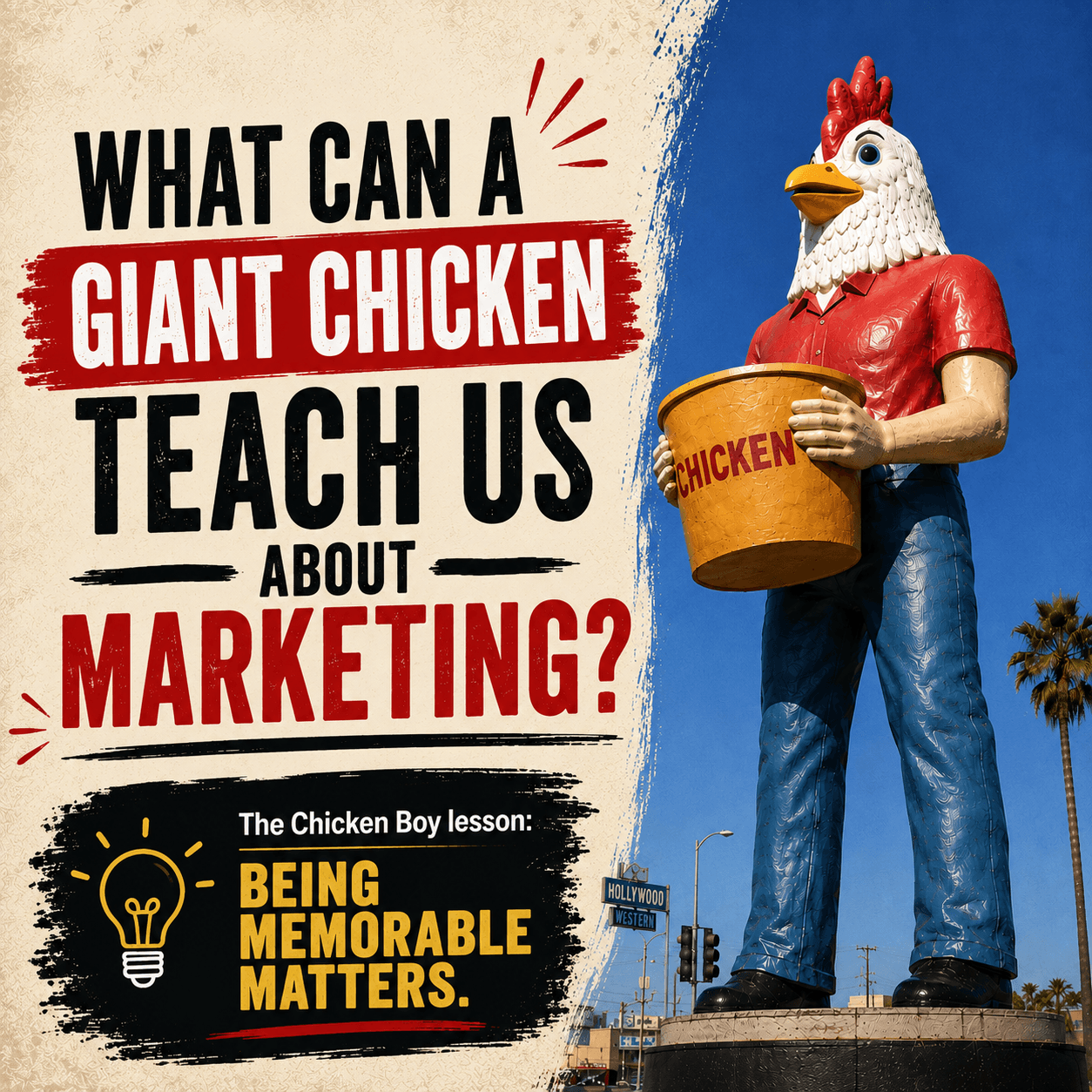
What Chicken Boy Can Teach Us About Being Memorable in Marketing
Share this article:
September 1 is marked as Chicken Boy Day, and upon a quick look, one may think that it is just another weird holiday that offers nothing of value to marketing studies.
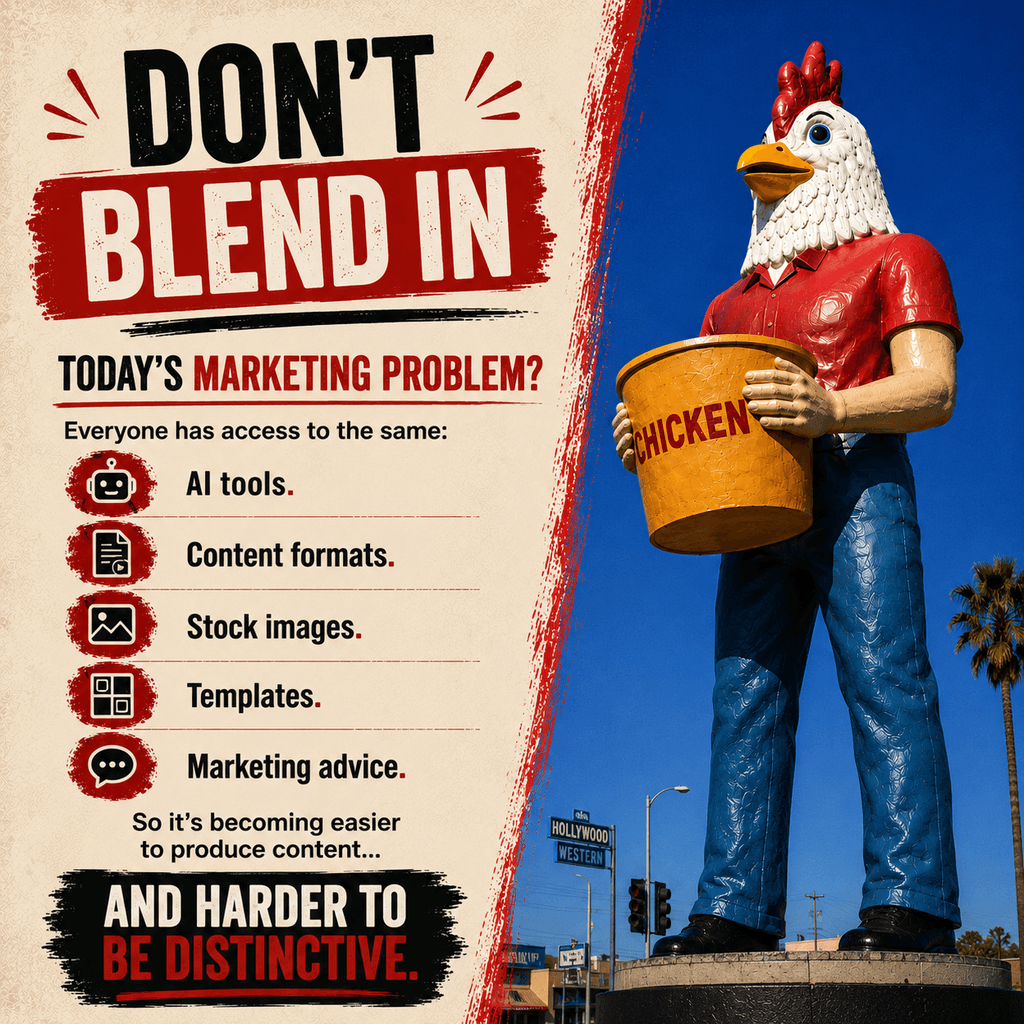
However, this bizarre 22-feet tall statue contains quite an important marketing lesson.
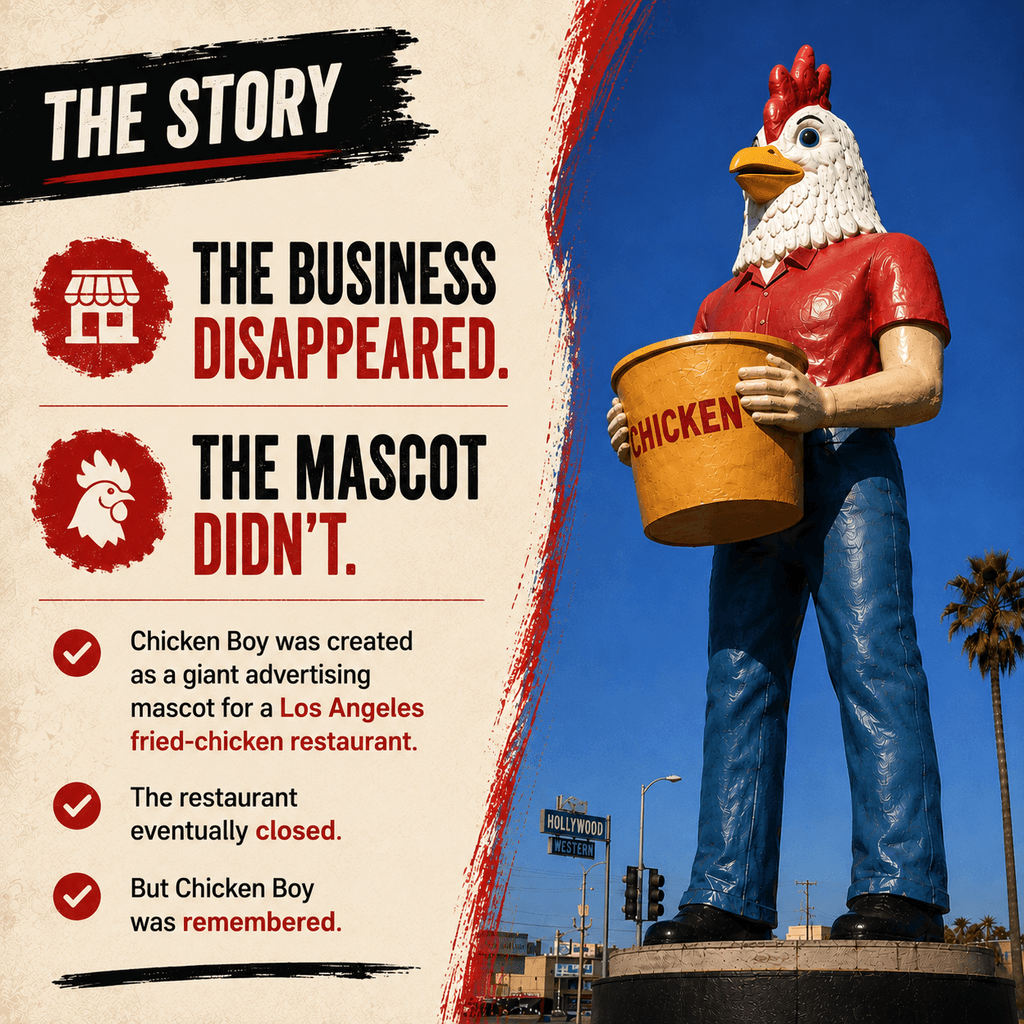
Chicken Boy was the huge advertising mascot that served to promote a restaurant of fried chicken in the heart of Los Angeles. This giant was standing on top of the restaurant, so he could not be overlooked. However, this restaurant was closed in 1984, leaving Chicken Boy in an uncertain future. (Los Angeles Times)
There have been various explanations as to why the restaurant closed down. However, that is not the aspect of this story that will interest me.
It is rather what transpired after the restaurant closed down that has captured my imagination.
The Business Disappeared. The Brand Was Remembered.
While the restaurant has become extinct, there were those who would not forget Chicken Boy.
This is precisely why the tale has such a compelling angle for marketing.
Following the shutdown of the restaurant, artist and graphic designer Amy Inouye managed to save the statue from destruction. What initially started out as an ad for a restaurant soon grew into something much more on its own. Chicken Boy soon came to represent products, catalogs, a short movie, media coverage, and even a part of Los Angeles’ popular culture.
Almost two decades after going into storage, Chicken Boy was eventually unveiled to the public again when it was placed on the rooftop of Future Studio in Highland Park in 2007.
People no longer remember Chicken Boy merely because he advertised fried chicken.
It’s because he was unique.
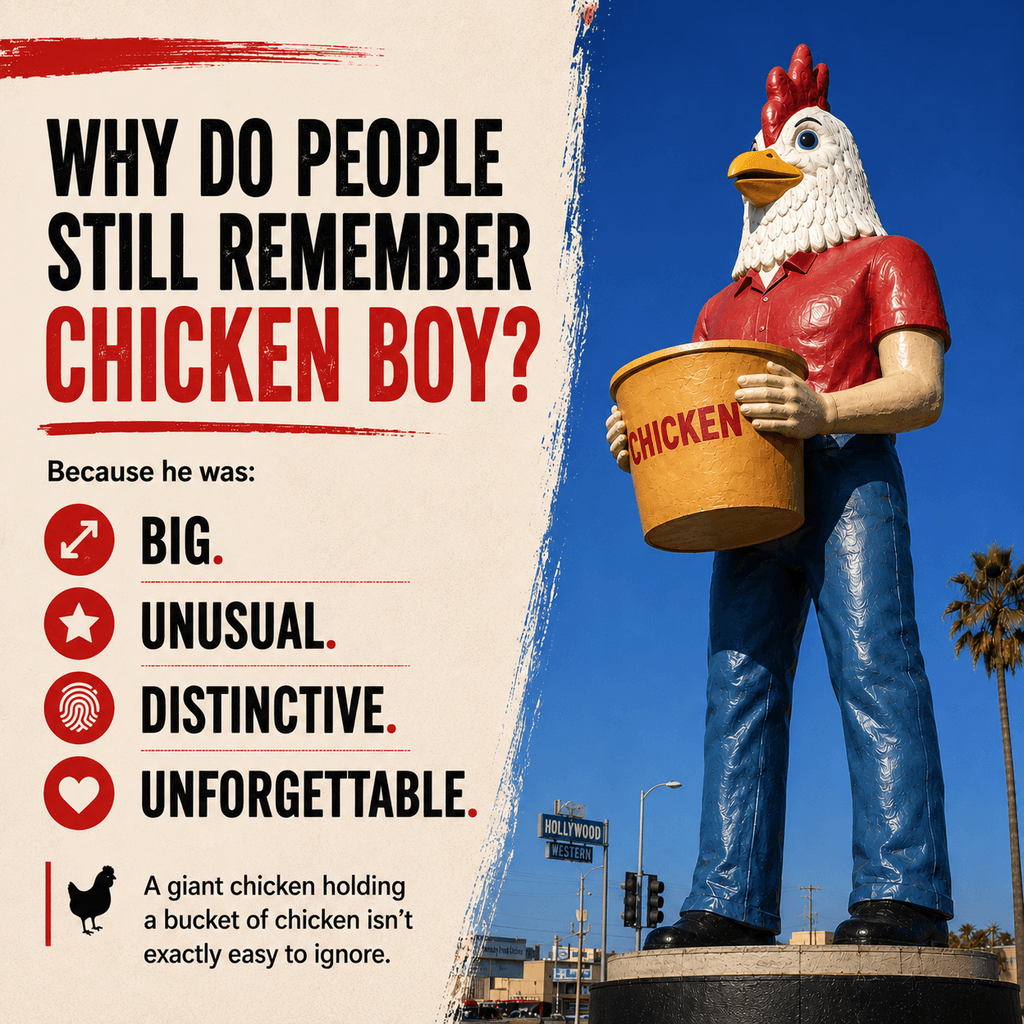
Why Did People Remember Chicken Boy?
Consider how many advertisements there are daily.
Billboards.
Social media advertisements.
Google ads.
Email marketing.
Videos.
AI-generated content.
Hundreds of them vie for our attention.
But most are quickly forgotten.
Chicken Boy was not.
He was odd. He was huge. He was surprising.
An image of a man having the head of a chicken standing on the roof with a bucket of chicken in his hand isn’t something that can be easily forgotten.
This is the first marketing lesson:
Memorability matters.
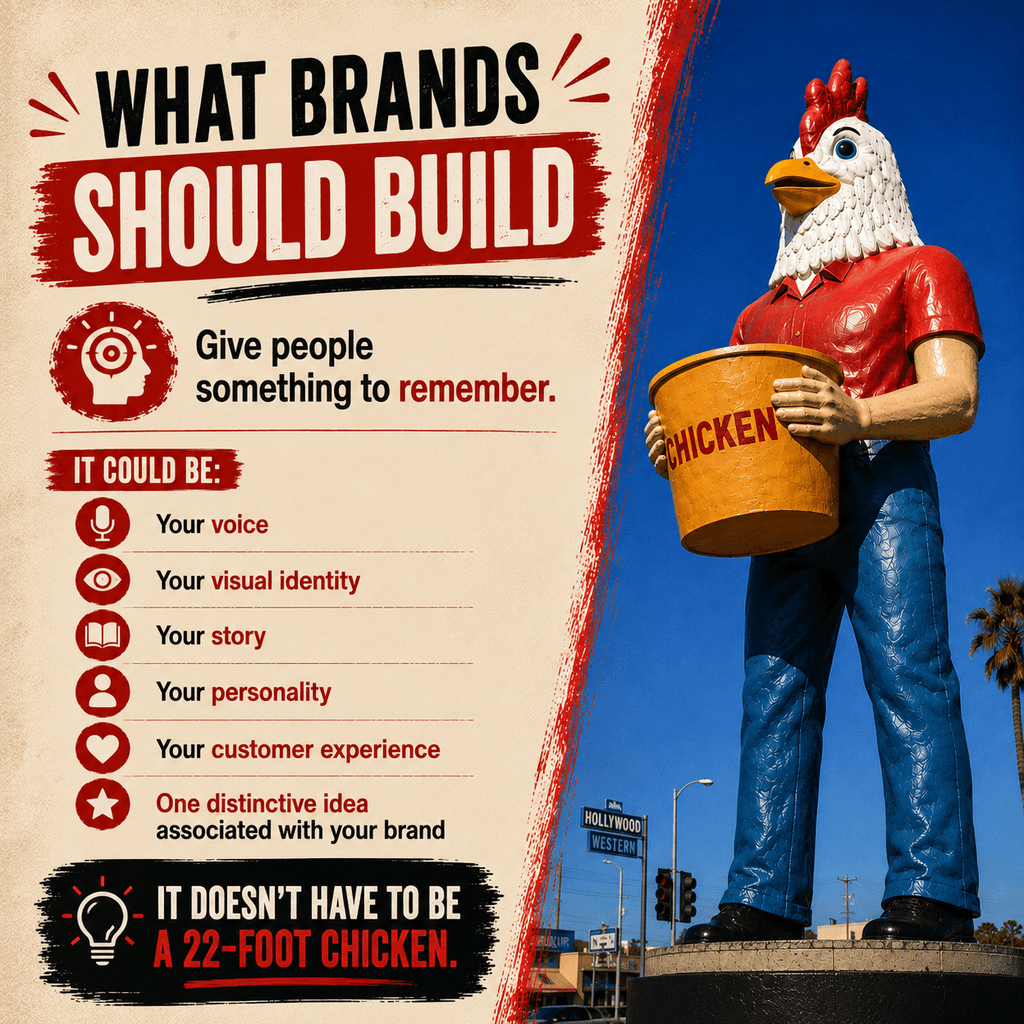
Your business doesn’t have to be unique just because it has to be unique. It must be distinct in some way that makes people see and remember it.
It could be:
Your branding.
Your voice.
Your story.
Your personality.
Your approach to customers.
Or even just one thing that can make your business memorable.
Chicken Boy Became More Than an Advertisement
This is probably the most interesting part.
Advertising has become Chicken Boy.
However, he gradually evolved into a character.
An emotional attachment has been created for him. As Amy Inouye noted, viewing Chicken Boy made her feel more at home in Los Angeles since she has just moved there.
Such an emotional attachment allowed the advertisement to become something important for people.
And it is another lesson which marketers could take from all of it.
People do not necessarily get attached to advertisements but rather to the story, personality and something that is important for them.
Don’t Let AI Make Your Brand Forgettable
This lesson rings true for today especially.
Because of AI, it has never been easier to create content.
Within minutes, we could create blog posts, social media copy, ads, pictures, emails, and even many more variations of the same.
However, there is a threat here.
As everyone uses the same tools and creates the same content, brands end up sounding eerily alike.
More content does not equate to more exposure.
Having more content does not necessarily mean people will remember.
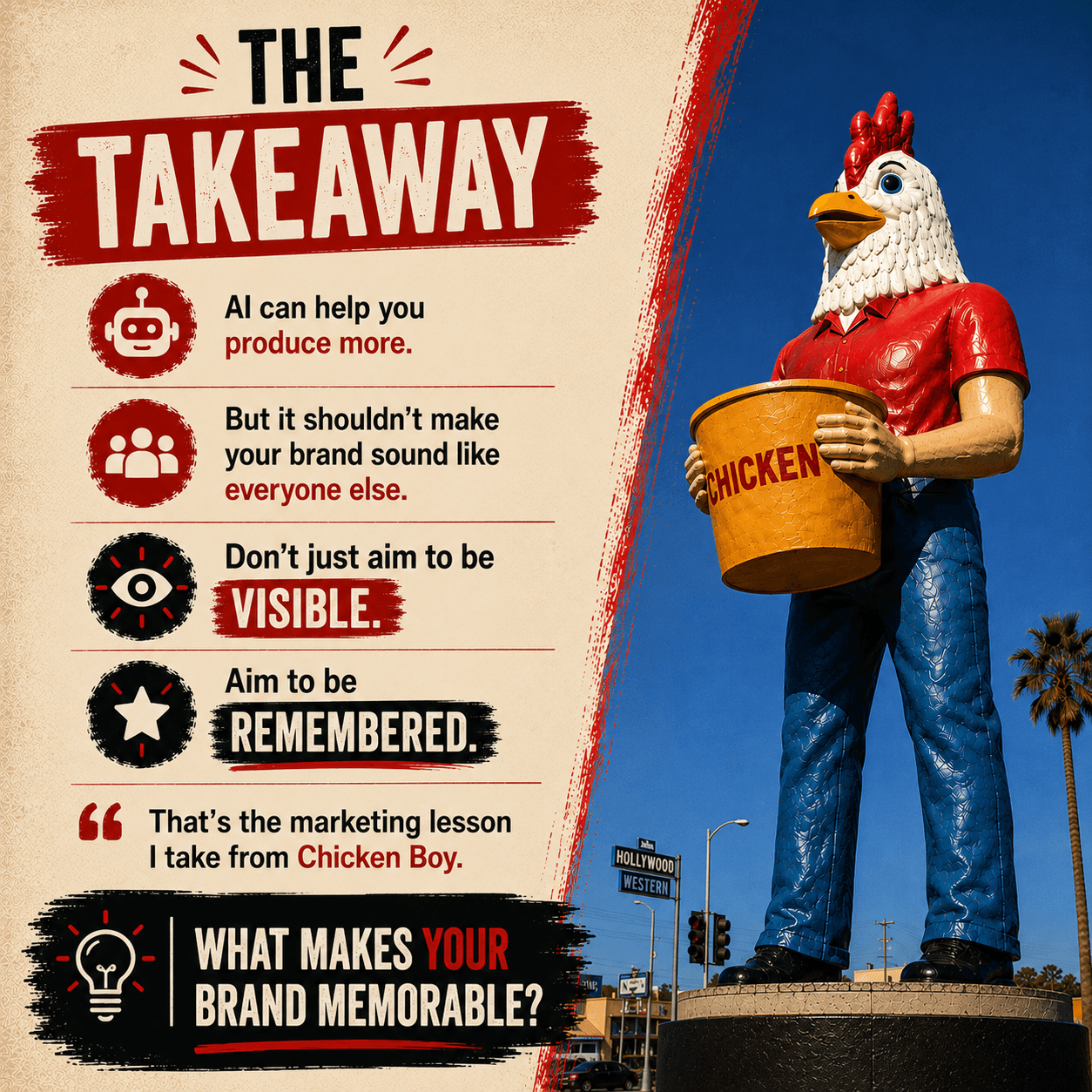
We should use AI to produce quicker.
But it should not make us all sound the same.
Those brands that stand out will continue to do so based on what they uniquely offer.
The Chicken Boy Marketing Lesson
However, I do not think the lesson learned here is that every company requires its very own giant statue.
It is a much simpler matter than that.
Provide a point of remembrance for people.
Develop an identity that transcends products and services.
Create something identifiable.
Narrate stories worth sharing.
Allow your personality to show through.
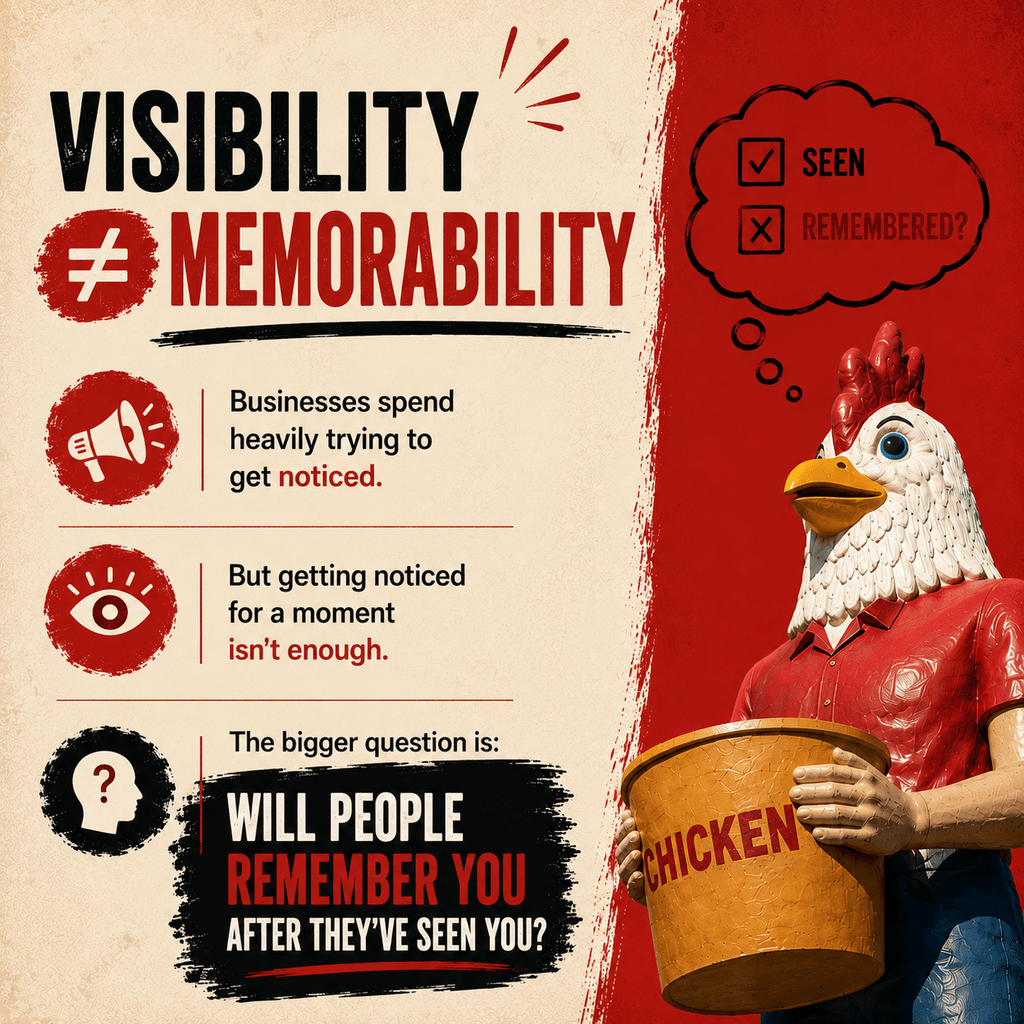
And most of all, do not mistake visibility for memorability.
The Chicken Boy was initially designed to draw attention to a particular restaurant.
After decades, when the restaurant itself has long been forgotten, people continue to talk about the chicken.
This kind of longevity in marketing should be the goal of every brand.
Not necessarily the largest.
Not necessarily omnipresent.
But definitely memorable.
And this is probably the most surprising lesson for every business to learn from a giant chicken.
According to The Los Angeles Times, the restaurant was closed down in May of 1984, although some historical sources suggest the cause for closure was the death of the owner.