Google Is Making AI Search More Connected to the Web: What Small Business Owners Need to Know
When I read Google’s latest announcement about AI Mode and AI Overviews, one thing immediately caught my attention.
Google is continuing to make the connection between AI-generated answers and the actual web more visible and useful.
And honestly, I am excited about this.
To me, it feels like AI Search and traditional SEO results are getting closer together. AI answers are increasingly connected to the same web pages, websites, and Search systems that power Google’s traditional results.
How AI Search Is Evolving
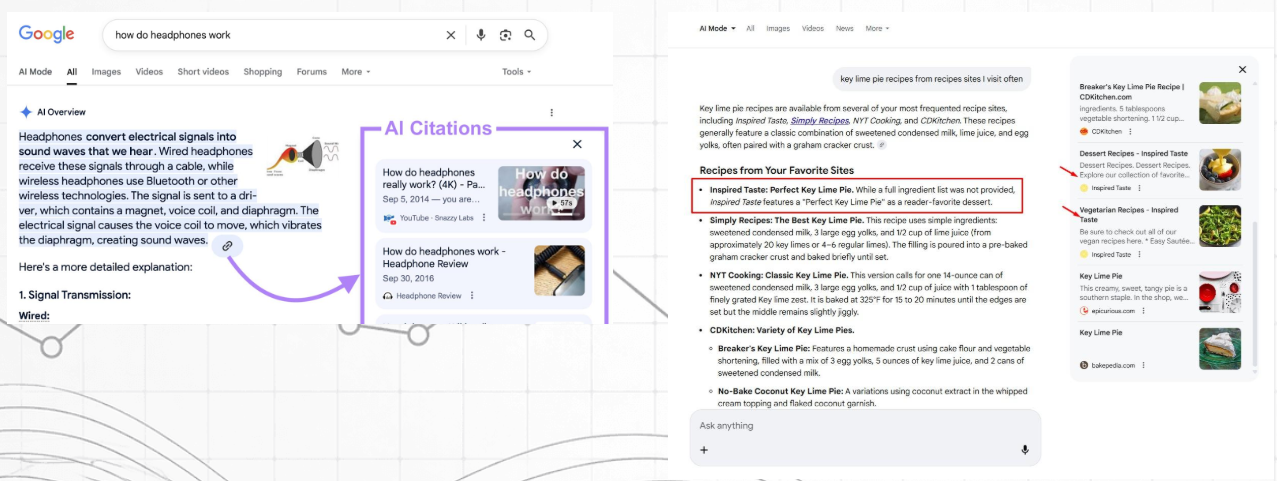
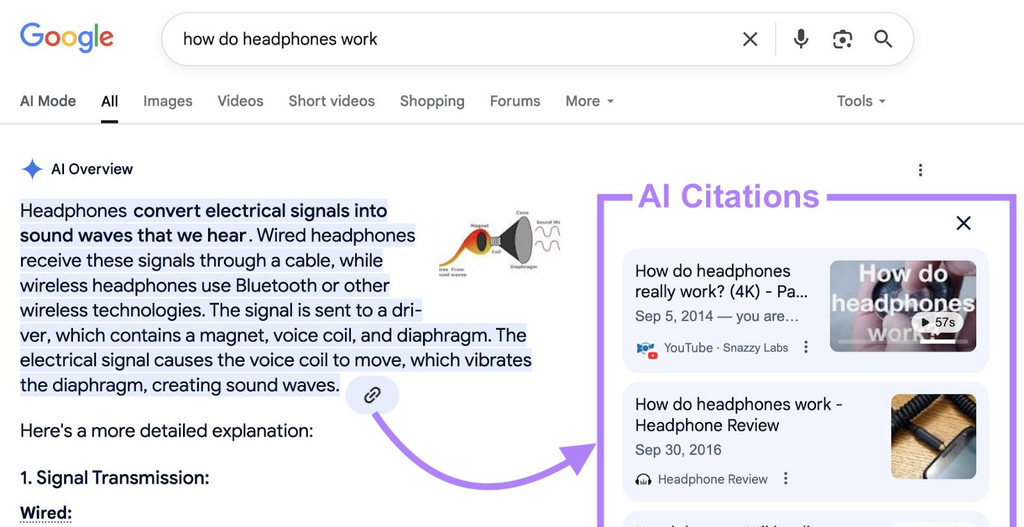
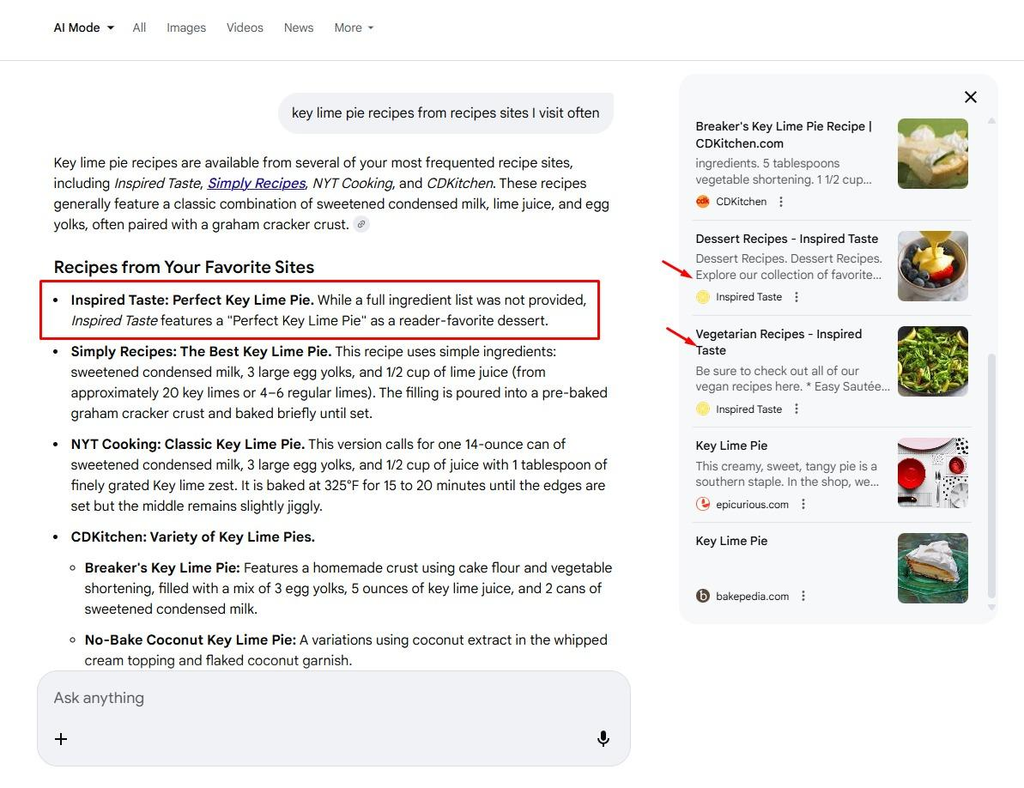
Links in AI Search are not new. We have already been seeing websites linked directly within AI-generated responses.
What is changing is how visible and useful those connections are becoming. Google is continuing to make it easier for users to move from an AI-generated answer to relevant websites, articles, official sources, and original content.
Here is a simple comparison of what we have seen before and where Google is heading now:
| Earlier AI Search | Latest Direction |
|---|---|
| Links were already available in AI responses | Inline links are being made more prominent and shown higher in responses |
| Users could explore cited websites | Google is creating clearer pathways to relevant websites |
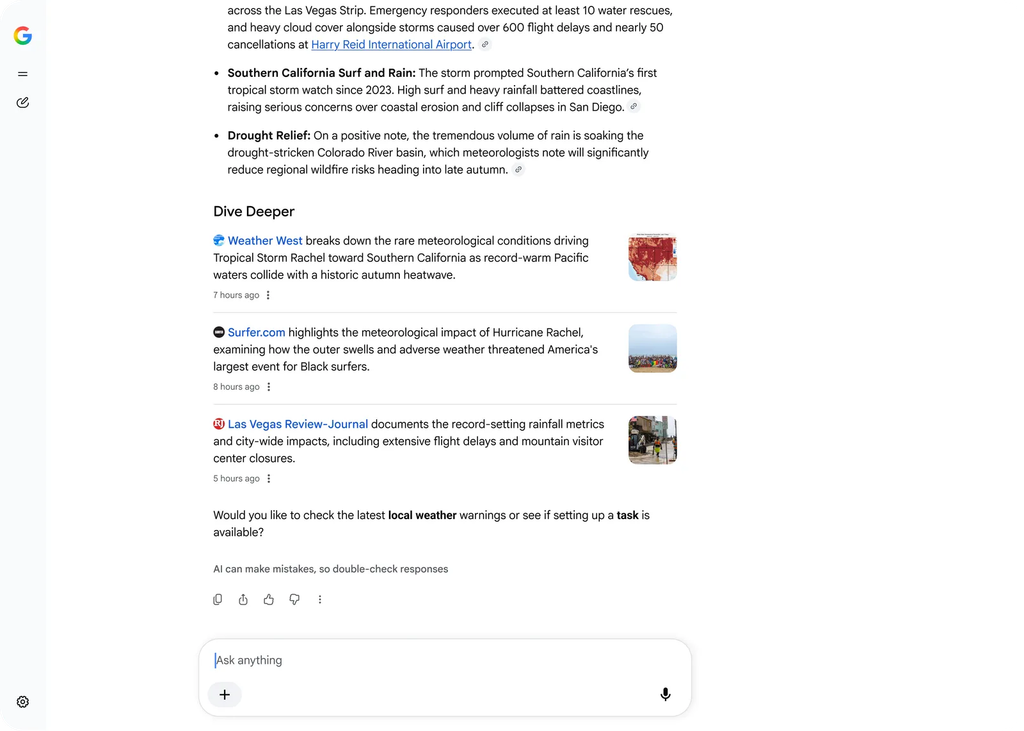
| Related content was available | Related articles are becoming more prominent and visual |
| Some timely content was surfaced | Timely article carousels are expanding |
| Sources were shown within AI answers | Google is testing more prominent official website visibility |
| AI answers could feel like an endpoint | Google is increasingly connecting AI answers back to the web |
For small businesses, the important point is not that links are suddenly new. The opportunity is that Google is making the connection between AI answers and the websites behind them more visible.
What Actually Makes the Update Interesting?
I have already been seeing links in AI-generated search results, so the links themselves are not new.
What caught my attention in Google’s latest update is the direction AI Search is moving in.
Google is continuing to make the connection between AI-generated answers and the actual web more visible and useful. This includes:
- Making inline links more prominent and placing them higher in responses more often
- Making related articles more prominent
- Expanding timely article carousels
- Testing ways to highlight official websites for certain queries
- Connecting users with creators and publishers more directly
For me, this is the interesting part.
Google isn’t simply giving users an AI-generated answer and expecting the search journey to end there. It is continuing to create pathways from the AI experience back to the web.
And I find that exciting not only for Simply Sansu, but for the many small businesses trying to build visibility online.
For a startup, local business, consultant, agency, ecommerce brand, or service provider, being discovered through AI Search could become another way to get in front of the right audience.
That doesn’t mean every business will suddenly see more traffic. Google hasn’t promised that.
But it does reinforce the importance of having a website with useful content, clear information, strong technical foundations, and genuine expertise.
If AI Search is increasingly connecting users with websites, then the question for businesses is no longer just:
“How do I rank on Google?”
It is also becoming:
“How do I make sure my business is understood, trusted, and worth visiting when people discover it through AI Search?”
That is the direction I am watching closely, both for my own business and for the businesses I work with.
What Did Google Actually Announce?
On October 15, 2026, Google announced several updates to how links and sources appear in AI Mode and AI Overviews.
One of the changes is that Google is making inline links more prominent and placing them higher in AI responses more frequently.
Google is also testing a dedicated section at the top of some AI responses when there are only one or two official websites that are particularly relevant to a task or question.
There are also changes to timely article carousels, related article links, and creator and publisher visibility.
In simple terms, Google is continuing to make it easier for people to explore the web from within an AI search experience.
And that is the part I find interesting.
Why Does This Matter to Small Businesses?
For many small businesses, getting discovered online is already a challenge.
You are competing with established companies, large publishers, big agencies, marketplaces, and businesses with much larger marketing budgets.
You may not be able to publish hundreds of articles every month.
You may not have a dedicated SEO team.
You may not have someone constantly monitoring every change in search.
But you do have something valuable:
Your own experience.
A small business owner can create content around the questions customers actually ask.
A consultant can explain problems they solve every day.
A service provider can share real examples from their work.
A startup can document what it is learning.
A local business can answer questions about its products, services, and customers.
That kind of first-hand information can give a website a reason to exist beyond simply targeting keywords.
And that matters as search becomes more conversational and AI-driven.
Google’s own guidance for AI features continues to emphasize the fundamentals of SEO, including crawlability, internal linking, helpful people-first content, good page experience, and making important content available in text. Google also says there are no special AI-specific technical requirements or special schema needed to appear in AI Overviews or AI Mode.
This Is Why I Am Excited About AI Search
I have been spending a lot of time understanding AI SEO and AI visibility because I don’t think search is going to remain exactly the way it was.
People are already asking AI systems questions instead of simply typing a few keywords into Google.
And now Google itself is making its Search experience more AI-driven.
For small businesses, I don’t think the answer is to abandon traditional SEO and suddenly chase every new AI trend.
Quite the opposite.
It makes the fundamentals even more important.
A website still needs to be accessible.
The content needs to be useful.
The site needs a clear structure.
Pages need to explain what the business actually does.
The website needs to demonstrate experience and expertise.
And the information needs to be clear enough for search systems to understand.
Small Businesses Have Something Bigger Websites Don’t Always Have
This is something I think about a lot.
A small business can talk about things it has actually done.
That can be incredibly valuable.
With Simply Sansu, for example, I can write about improving my own website performance, working through technical SEO issues, making my website more AI-friendly, and doing Digital PR and outreach.
I can also talk about the things that didn’t work.
I don’t need to pretend that Simply Sansu is a huge publication.
It is my business, my website, my experience, and my knowledge.
And the same principle can apply to other small businesses.
A photographer can share what they have learned from real projects.
A SaaS startup can explain a problem it has solved.
A marketing consultant can share lessons from client work.
An ecommerce business can answer genuine customer questions.
A local service business can explain what customers should know before buying.
This is content that comes from actually doing the work.
I think that first-hand perspective becomes even more valuable as search engines and AI systems try to surface useful information.
What Could This Mean for Small Businesses?
I don’t want to make exaggerated claims.
Google has not said that small businesses will automatically receive more traffic because of these updates.
And more visible links do not guarantee clicks.
But I see a potential opportunity.
If someone asks an AI-powered search experience a question related to a product, service, problem, or topic that a business genuinely understands, there is an opportunity for that business’s website to become part of the answer and the journey that follows.
That means content has another job.
It isn’t only about ranking for a keyword.
It needs to clearly communicate:
Who are you?
What do you know?
What problem do you solve?
Why should someone trust you?
What can they learn from your website?
That is where I think small businesses can compete.
Not necessarily by producing more content than the biggest websites, but by producing better, more useful, more specific, and more experience-led content.
It Also Changes How I Think About Content
I don’t want to create content simply because a keyword has search volume.
I want to create content that answers questions I have actually encountered.
Sometimes that means writing a technical SEO guide.
Sometimes it means explaining something I learned while working on my own website.
Sometimes it means sharing an opinion based on my experience.
And sometimes it means writing about a question that I personally cannot stop thinking about.
That is actually how my recent internal linking article started.
I was thinking about my two websites and asking myself whether Google really needs an internal link to discover every page.
That question became a blog post.
I think there is a lesson here for small businesses too.
Start with the questions you actually have.
Then create something useful from the answer.
AI Search Doesn’t Mean We Can Forget SEO
This is probably the most important point I would take from Google’s announcement.
I don’t see AI Search as a replacement for SEO.
I see it as another layer of search visibility.
Technical SEO still matters.
Crawling still matters.
Indexing still matters.
Site architecture still matters.
Structured data still matters.
Content quality still matters.
Internal linking still matters.
Google’s own documentation confirms that existing SEO fundamentals remain relevant for AI features. It specifically recommends making content findable through internal links, ensuring important content is available in text, and following technical and people-first SEO best practices.
And now I am paying even more attention to how clearly a website communicates who a business is, what it does, what it knows, and which topics it can genuinely speak about from experience.
Why This Matters Beyond Simply Sansu
I started Simply Sansu because I wanted to build something around the areas I have spent years working in.
But the more I work with websites and businesses, the more I realize that the challenges faced by small businesses are often similar.
They need visibility.
They need credibility.
They need people to understand what they offer.
They need their websites to work for them.
And they need to make the most of limited time and resources.
That is why I find the evolution of AI Search so interesting.
It isn’t just another Google feature for me to study.
It is another change that businesses need to understand.
Google says AI features are creating opportunities for brands, publishers, and creators to reach people, and that AI Search is designed to help people discover and visit websites.
For small businesses, that makes this worth watching closely.
My Takeaway
I am excited about where this is going.
Not because I expect AI Search to magically send traffic to Simply Sansu or any other small business.
I don’t.
But because the search journey is changing, and I would rather understand that change and adapt than wait until it becomes the new normal.
For a small business, every relevant discovery matters.
Every person who finds your website matters.
Every useful piece of content is another opportunity to demonstrate what you know.
And if Google is making AI Search more connected to the web, I want Simply Sansu, my clients, and other small businesses to be ready for that shift.
For me, this is not about chasing AI.
It is about building websites and content that deserve to be discovered, understood, trusted, and clicked.
And that is something I am genuinely excited to keep working on.
Related Reading