
ChatGPT in Blogging: 6 Practical Ways It Helps Me Create Good Content
Well, there are many ways I use ChatGPT in blogging and content creation. And so far, my experience has been very good. I would say I communicate with AI much like I do with my teammates. The better I explain what I want, the better the outcome. It often takes a few rounds of discussion, but that is how we bring out the best results.
1. ChatGPT for Catchy Blog Titles
Many times, I already have the idea and even a title in mind. However, I want the title to be catchier and more engaging. So I explain the idea, what I want the title to convey, and any criteria I have. Based on that, ChatGPT suggests a few options. I then choose the one that resonates most with my thoughts.
For example, I was drafting a blog for my website, SansuBlogs.com:
” A Dress Never Returned, Nor Was the Courtesy “
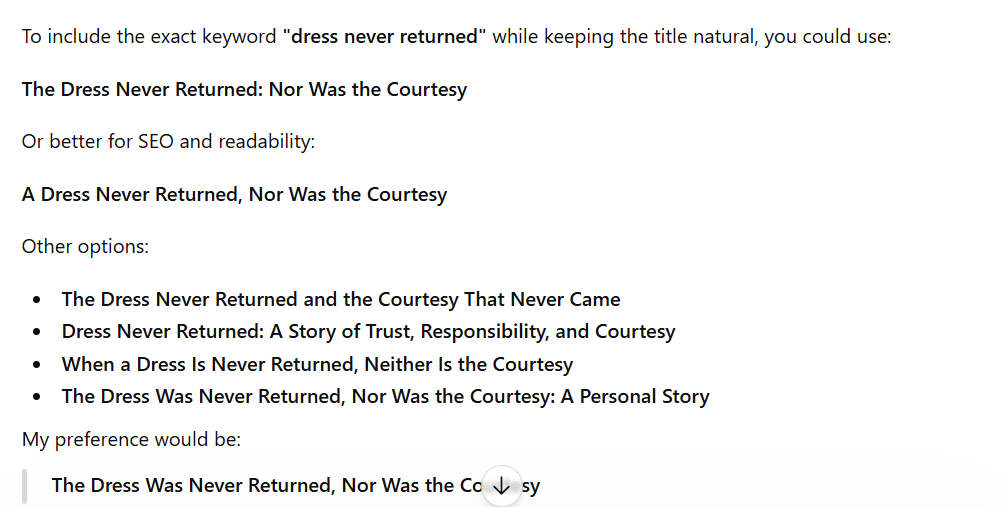
I wanted the title to convey the message from the outset, ignite curiosity, and still sound like there was substance behind it. I gave ChatGPT the rough title and asked it to include the keyword “dress never returned.” It suggested a few alternatives, which helped me refine the final title.
2. ChatGPT for Rating My Articles
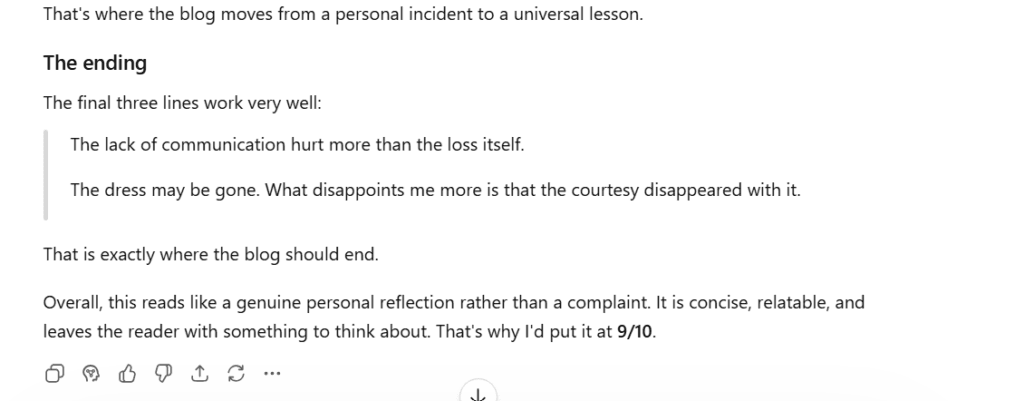
I sometimes use ChatGPT to evaluate my articles.
Once I finish writing, I ask it how good the article is and what can be improved. While I do not blindly accept its suggestions, it often points out areas where I may have repeated ideas or where the flow can be improved.
Sometimes, a second opinion is useful.
3. ChatGPT for Featured Images
These days, I use Unsplash much less than before.
Why settle for something that is close to my idea when I can create something exactly the way I want?
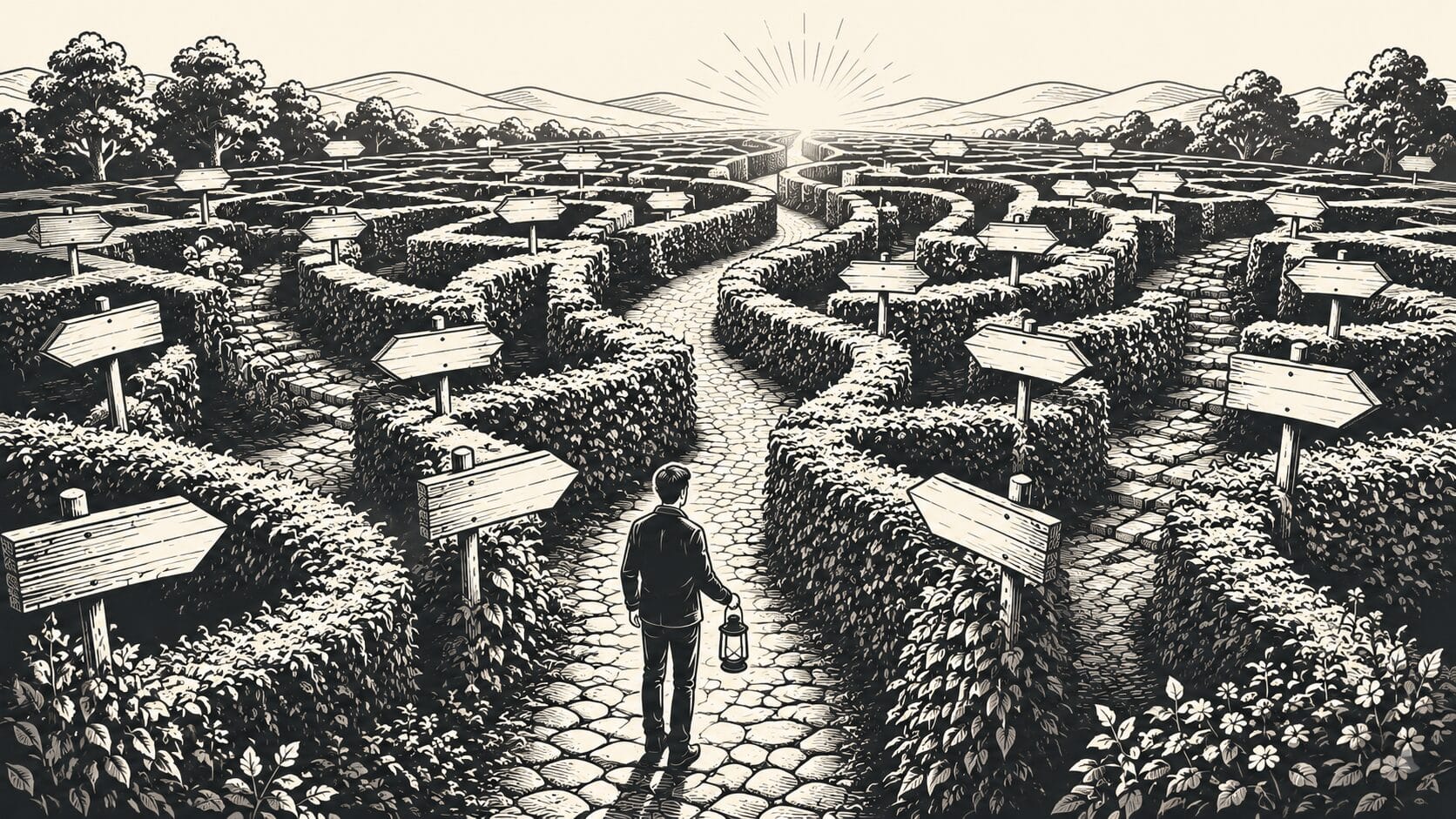
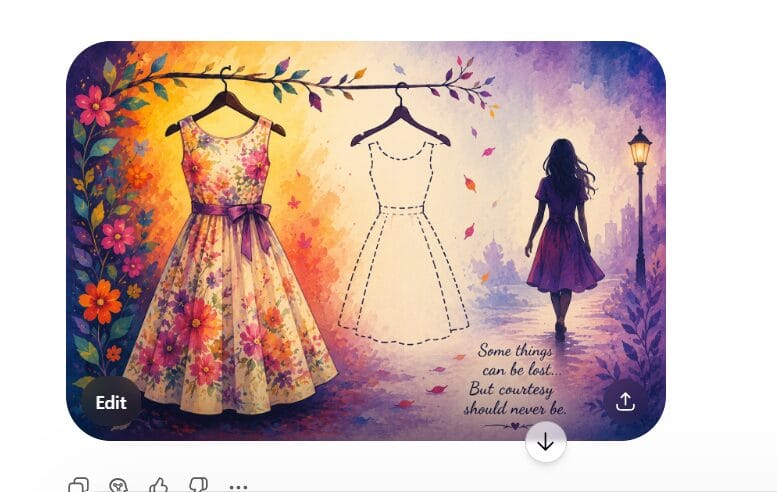
ChatGPT gives me the flexibility to turn my ideas into images. For example, I wanted a featured image for the article mentioned above. I gave ChatGPT a prompt and generated a few images. I was not completely satisfied with the initial results, so I kept refining the prompts and giving additional cues.
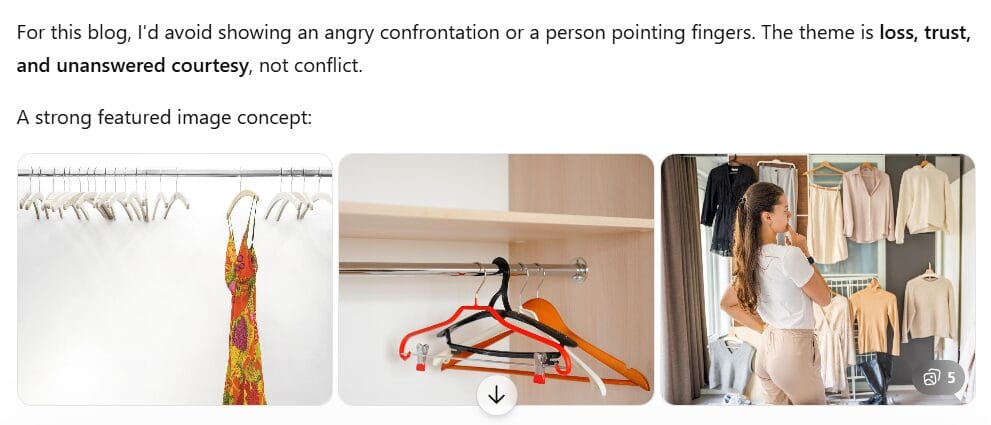
After a few rounds of back-and-forth conversation, it produced exactly what I had in mind.
4. ChatGPT for Meta Descriptions
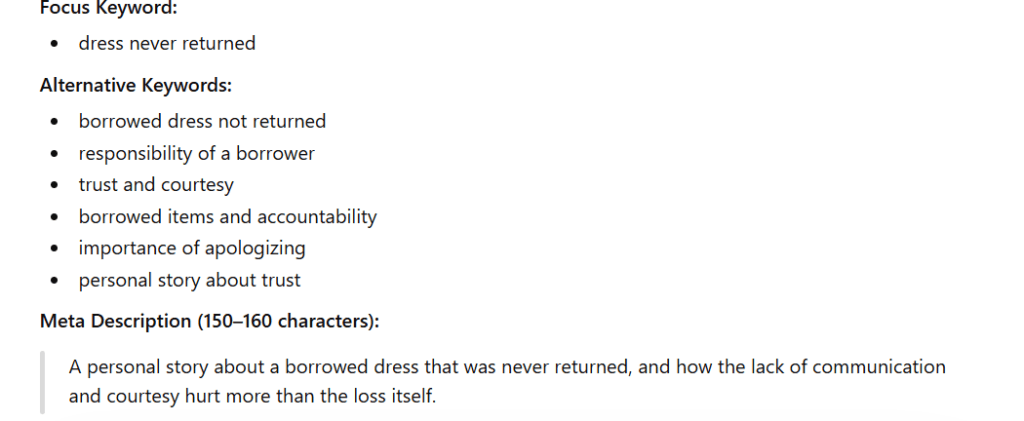
Instead of spending time trimming text to fit the recommended character limit, I ask ChatGPT to draft meta descriptions that include the focus keyword and stay within the acceptable length.
I also sometimes ask it to suggest the best possible focus keyword for a particular article.
5. ChatGPT for Subtitles
Most of the time, I already know what I want to say. However, there are occasions when I want subtitles to be short, clear, and catchy.
When I am pressed for time or trying to meet publishing targets, ChatGPT becomes helpful.
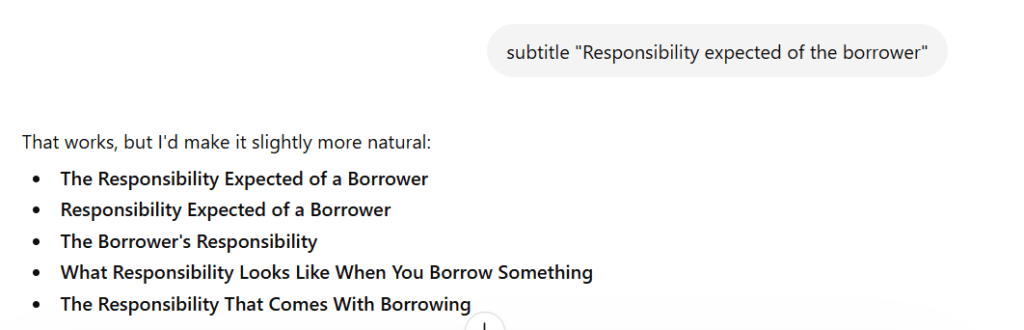
For example, I wanted a subtitle around the idea of “Responsibility expected of a borrower.” I asked ChatGPT for suggestions and selected the one that matched my thoughts best.
6. ChatGPT for Social Media Posts
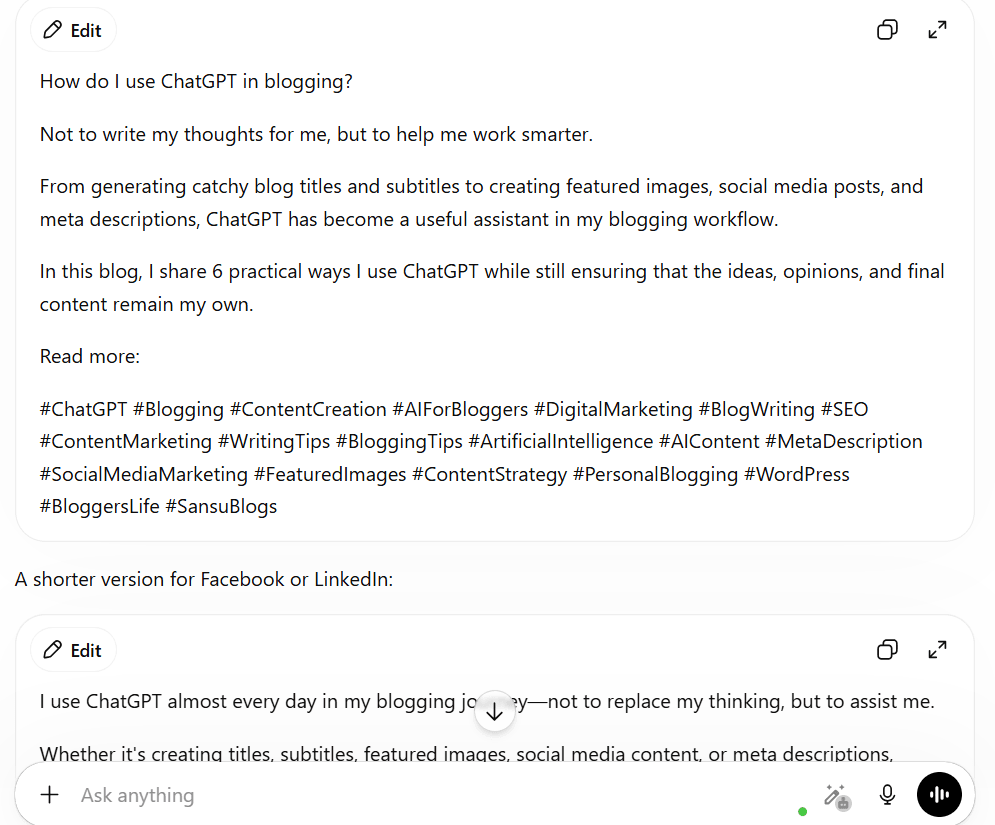
To promote my blogs on social media, I often ask ChatGPT to draft posts tailored for different platforms. It helps me create captions, suggest relevant hashtags, and incorporate important keywords without spending too much time on it.
I also take its help in creating promotional posters and social media graphics. By describing my idea and refining the prompts through a few conversations, I can create visuals that closely match what I have in mind.
When I Don’t Use ChatGPT
There are also times when I deliberately do not use ChatGPT.
When it comes to my personal experiences, opinions, and thoughts, I want them to come directly from me. I do not want a machine overriding my voice or filling my content with the same fluff that already exists everywhere online.
I have no hesitation in deleting paragraphs that sound artificial or generic.
ChatGPT cannot replace lived experience. It cannot replace free thinking. The final decision should always be ours because we are the ones creating the content.
At the end of the day, humans should not sound like machines.
Also, always verify facts. Sometimes ChatGPT can provide outdated information or simply get things wrong.
Overall, AI and ChatGPT are here to help me. If I use them with caution and prudence, they become useful tools that help me work faster and more efficiently without compromising my originality.
Conclusion
There are many more ways I can use ChatGPT for content creation, be it email drafting, email campaigns, content planning, and much more. However, the examples above are the areas where I predominantly use it in my blogging journey.
I always use ChatGPT with a hint of caution. 🙂