Share this article:
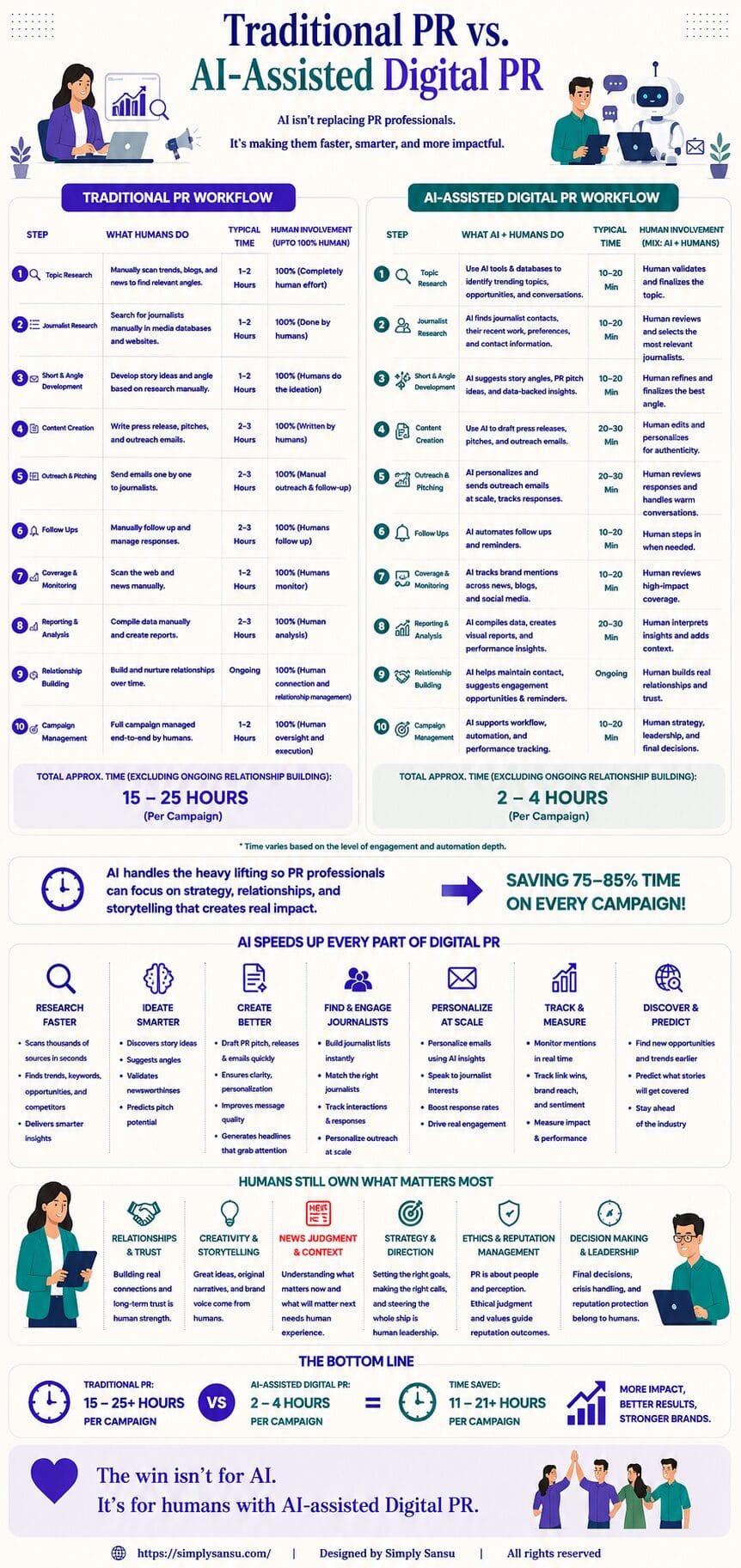
Halloween marketing is no longer just about pumpkins, costumes, and spooky social media posts. For brands, it is an opportunity to experiment with storytelling, launch limited-edition products, create memorable customer experiences, and find new ways to connect with audiences.
But putting a ghost on a product or adding a Halloween filter to an Instagram post does not automatically make a campaign interesting.
The brands that caught attention during Halloween 2026 approached the occasion differently. Some turned everyday customer interactions into entertainment. Others used local cultural references, interactive technology, unusual product ideas, or community participation.
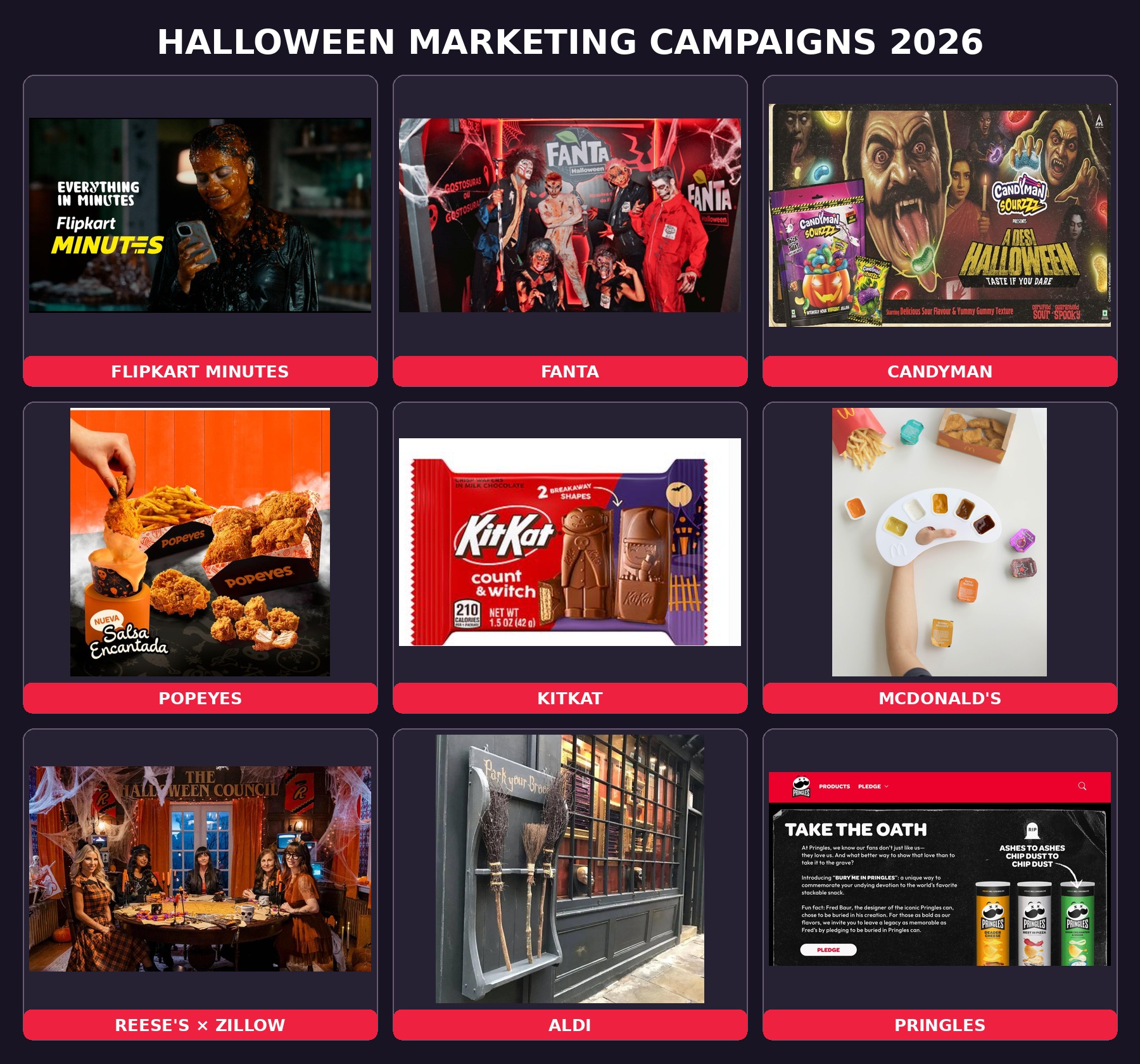
I looked at nine campaigns from India, the US, and the UK that offer useful lessons in creative marketing.
Let’s explore what these brands did, why their ideas worked creatively, and what small businesses can learn from them.
1. Flipkart Minutes: Turning delivery waiting time into a horror series
The strategy: Turn an existing customer touchpoint into entertainment | Entertainment marketing
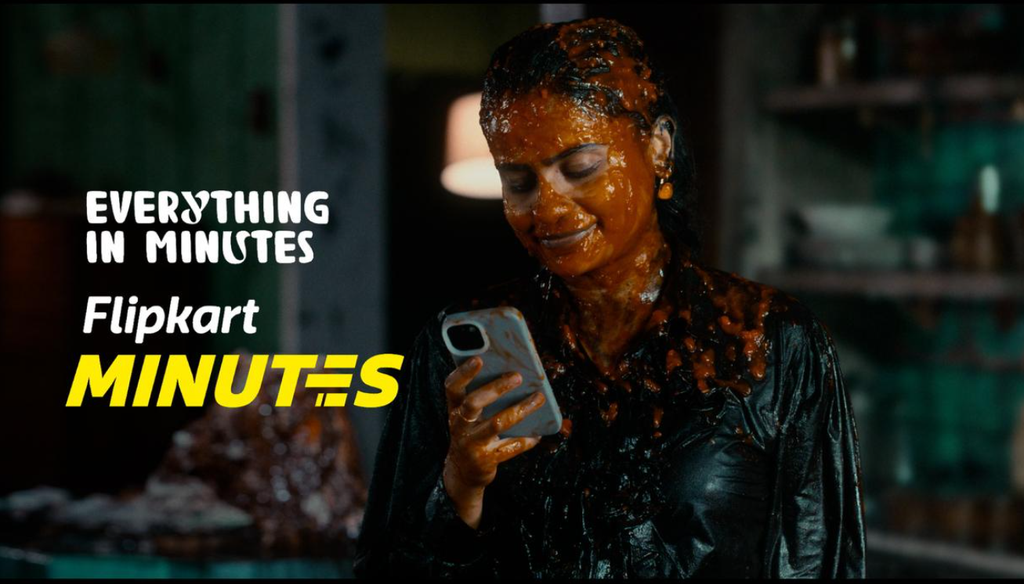
What do customers usually do while waiting for a quick-commerce order? They check the delivery status, sometimes repeatedly.
Flipkart Minutes found a creative way to use that moment. The brand partnered with the Ramsay Brothers and McCann India to create The Last Delivery, a three-part horror mini-series.
Each episode runs for approximately 10 minutes, matching the service’s delivery proposition. Customers can watch the series through the Play screen in the Flipkart Minutes app after placing an order.
The story follows a delivery agent whose ordinary shift takes an unsettling turn. Each episode ends on a cliffhanger, giving viewers a reason to continue watching.
Why this campaign stood out
Instead of interrupting customers with another advertisement, Flipkart Minutes used a digital touchpoint customers were already visiting. The Ramsay Brothers collaboration also brought a familiar name from Indian horror cinema into the campaign.
What small businesses can learn
Look at the places where customers already interact with your business. Your order confirmation page, booking emails, website dashboard, or delivery updates can become opportunities to share useful or entertaining content.
You do not always need another platform to reach your audience. Sometimes, the opportunity is already within your customer journey.
Campaign coverage: ETBrandEquity.
2. Fanta: Building an entire haunted universe
The strategy: Turn a seasonal campaign into a recognizable brand world | Brand storytelling and experiential marketing
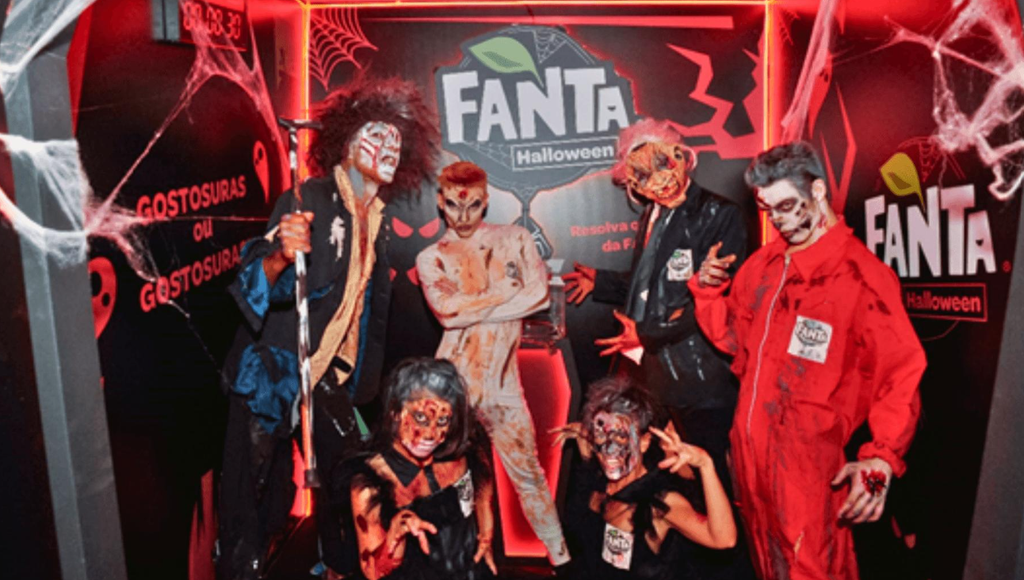
Fanta took Halloween beyond the usual limited-edition packaging with its Fanta Haunted Universe campaign.
Developed with entertainment studio GRAiL, the campaign introduced four original characters inspired by classic horror archetypes: vampires, werewolves, supernatural spirits, and futuristic horror.
Rather than relying entirely on existing horror franchises, Fanta created its own characters, stories, and visual identity.
In India, the campaign extended into an augmented reality experience through Snapchat. Limited-edition Ghostface cans connected consumers to interactive lenses, while the brand also brought the experience offline through Halloween photobooths in Mumbai, Delhi, and Bengaluru.
Why this campaign stood out
Fanta created more than a seasonal advertisement. It developed a fictional world that could extend across packaging, digital content, interactive experiences, and physical activations.
The campaign gave audiences several ways to encounter the brand.
What small businesses can learn
Build a campaign concept that can work across multiple channels. A single idea can become a social media series, a website feature, an interactive quiz, a customer contest, and an email campaign.
Consistency across these touchpoints helps people recognize and remember your brand.
Campaign coverage: The Coca-Cola Company and ETBrandEquity.
3. Candyman: Giving Halloween a distinctly Indian identity
The strategy: Localize a global occasion | Cultural storytelling
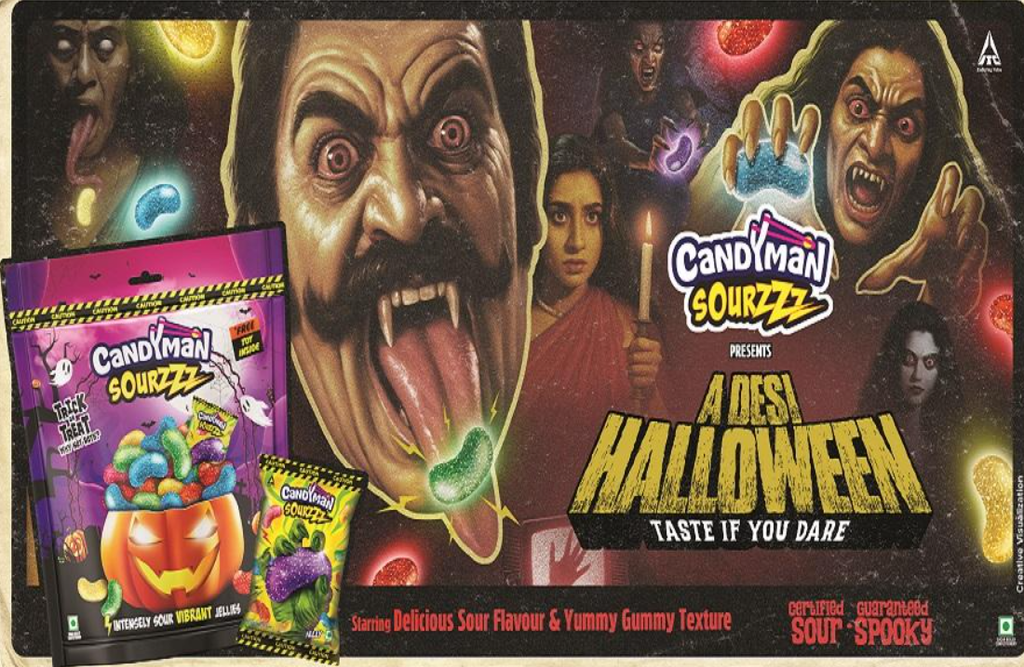
Halloween has its roots in Western traditions, but Indian brands do not have to copy international campaigns to participate.
ITC’s Candyman took a different route with its A Desi Halloween campaign, built around its Sourzzz range.
The campaign featured Tangy Tantrik, a ghost who struggles to frighten people. Instead of presenting fear as something that drives people apart, the film explores how it can bring people together.
Its central message was:
“Darr sirf bhagane ke liye nahi, logon ko paas lane ke liye bhi hota hai.”
The campaign extended beyond the film through a partnership with quick-commerce platform Zepto, spooky masks featuring its characters, special product packs, social media content, and on-ground activities.
Why this campaign stood out
Candyman did not simply reproduce familiar Halloween imagery. It adapted the occasion using Indian characters and storytelling that felt closer to its audience.
The campaign also connected the creative idea to the brand’s confectionery products.
What small businesses can learn
Understand your audience before adapting a trend. Local language, familiar references, regional humor, and cultural context can make a campaign feel more relevant.
A trend becomes more valuable when you give it your own identity.
Campaign coverage: ETBrandEquity.
4. Popeyes India: Giving a menu a Halloween makeover
The strategy: Connect seasonal marketing directly to a product | Limited-edition product marketing
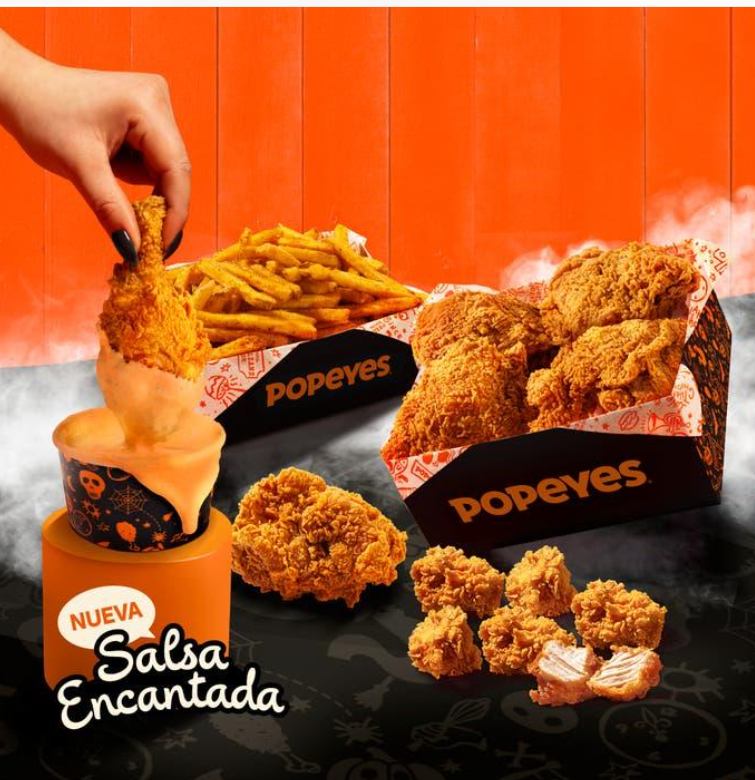
Popeyes India took a product-led approach to Halloween with its black Haunted Sauce.
The limited-period menu featured the sauce in three offerings: a Halloween Burger, Wings, and Dip. The brand also hosted a Haunted Sauce party featuring games, costumes, and influencer challenges.
Rather than treating Halloween as a completely separate advertising activity, Popeyes connected the occasion to its food offerings and customer experience.
Why this campaign stood out
The unusual black sauce gave the campaign a distinctive visual element. It also gave customers something tangible to try, photograph, and discuss.
The brand used the seasonal theme to bring attention to its menu rather than relying only on Halloween-themed posts.
What small businesses can learn
Seasonal marketing can be an opportunity to give an existing product a fresh presentation.
A restaurant could introduce a themed menu. A beauty business could create a seasonal bundle. An online store could offer a limited-edition product presentation.
The important thing is to connect the occasion to something customers can actually buy or experience.
Campaign coverage: ETBrandEquity.
5. KitKat: Making packaging part of the Halloween experience
The strategy: Use packaging as a marketing asset.
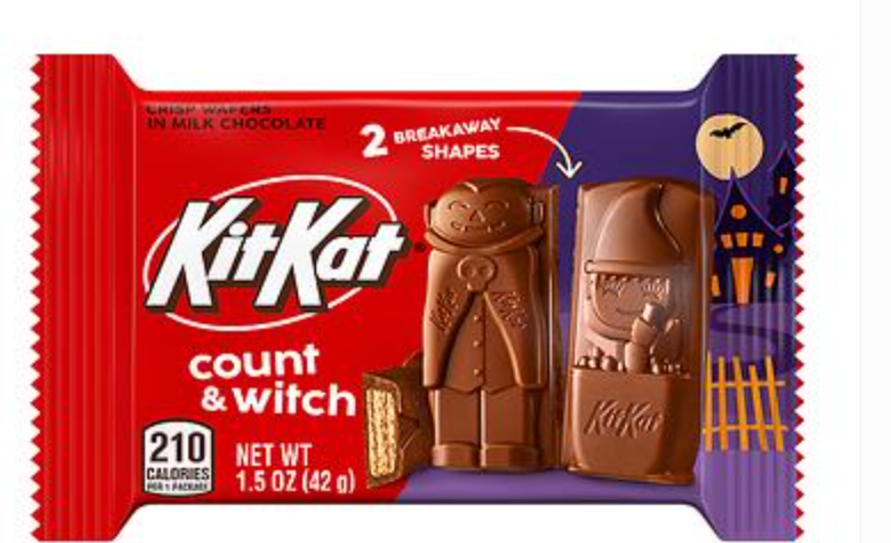
Not every Halloween campaign needs a large event, an elaborate video, or a celebrity collaboration.
KitKat took a simpler approach with a ghost-shaped cutout pack for Halloween. Instead of relying on conventional horror imagery, the brand gave its familiar red packaging a seasonal makeover.
The idea was straightforward: make the product itself part of the Halloween experience.
Why this campaign stood out
Packaging is often the first physical interaction customers have with a product. A seasonal design can make an everyday purchase feel more relevant to an occasion.
The campaign also demonstrates that brands can participate in cultural moments without building an entirely new product or marketing platform.
What small businesses can learn
Think about the physical and digital presentation of your products.
A small bakery could introduce Halloween-themed boxes. A gift shop could create seasonal wrapping. An online store could design limited-edition packaging or add a themed message to its deliveries.
Sometimes, a small change in presentation can give an existing product a new reason to attract attention.
Campaign coverage: ETBrandEquity.
6. McDonald’s UK: Turning dipping sauces into Halloween face paint
The strategy: Find an unexpected use for an existing product.
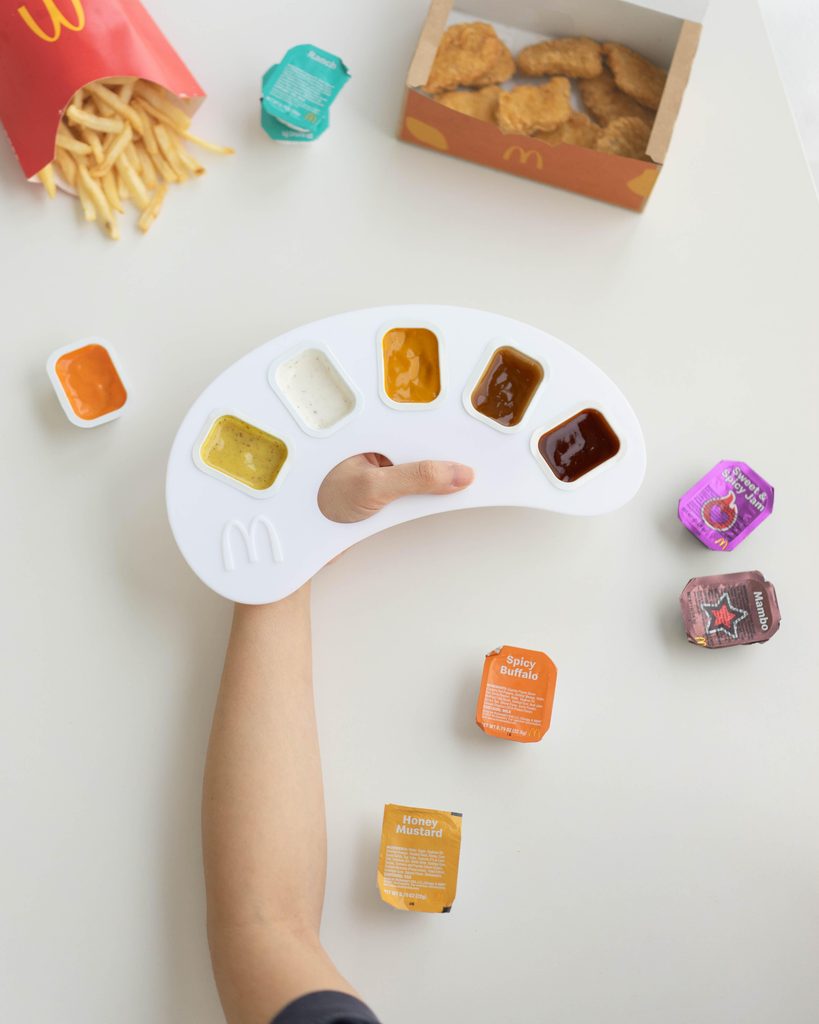
McDonald’s UK gave its dipping sauces a Halloween twist by reimagining six sauces as Spooky Sauces face paints.
The concept encouraged creators to use the sauces as inspiration for Halloween looks and share their transformations on social media.
It was an unusual way to bring attention to an everyday product category. Rather than simply advertising the sauces as food, the brand used them as part of a Halloween beauty and costume concept.
Why this campaign stood out
The idea was unexpected and visual. It gave creators a format they could interpret in their own way, making the campaign suitable for short-form social content.
It also showed how a familiar product can become part of a completely different seasonal experience.
What small businesses can learn
Look beyond the obvious use of your products.
A stationery brand could create Halloween-themed desk setups. A clothing store could demonstrate costume combinations using its existing collection. A home decor business could show customers how to transform everyday items into seasonal decorations.
A fresh use case can make an ordinary product more interesting.
Campaign coverage: ETBrandEquity.
7. Reese’s: Using data to find America’s best trick-or-treating street
The strategy: Combine data with community participation.
For many American families, trick-or-treating is one of the most recognizable Halloween traditions.
Reese’s and Zillow built a campaign around this behavior with the search for America’s Trick-or-Treatiest Street.
The campaign combined candy and costume purchasing data with neighborhood information and resident input to identify 150 potential streets.
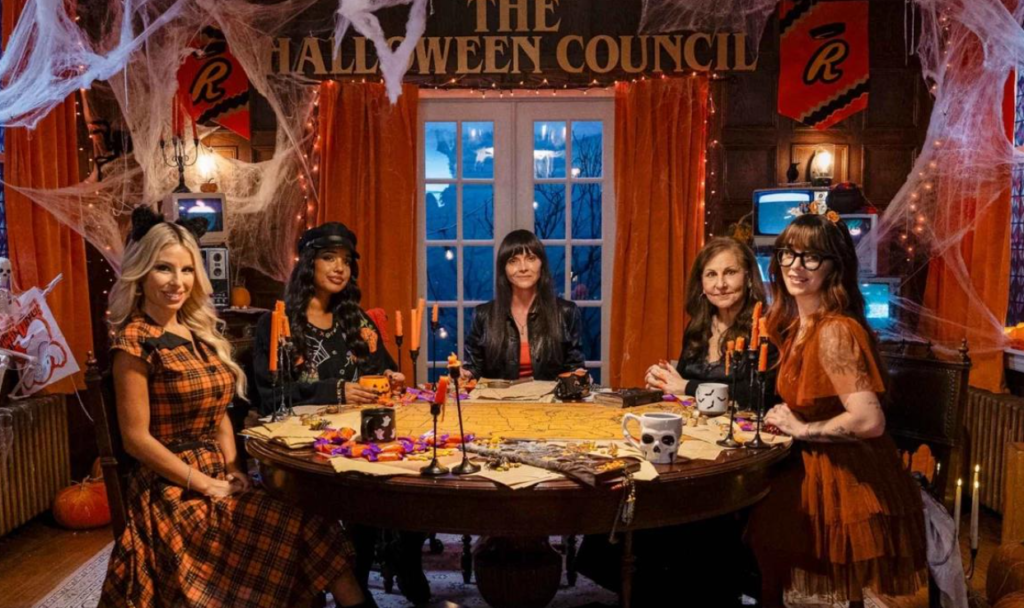
A Halloween Council, which included Christina Ricci and Kathy Najimy, helped select the winning location: East Dudley Avenue in Westfield, New Jersey.
The winning neighborhood received a Halloween celebration featuring Reese’s candy and a block party.
Why this campaign stood out
The campaign connected two brands with a shared seasonal interest: neighborhoods and Halloween celebrations.
It also gave people a reason to participate. Instead of simply watching an advertisement, residents could engage with the search and support their communities.
What small businesses can learn
Make your customers part of the campaign.
Invite them to nominate a favorite product, share a local recommendation, vote for a winner, or submit a story. A customer contest or community poll can give people a reason to interact with your brand.
Participation can create a more meaningful connection than simply asking people to like or share a post.
Campaign coverage: The PR Insider.
8. Aldi: Creating a broomstick parking bay in York
The strategy: Turn an ordinary physical location into a seasonal talking point.
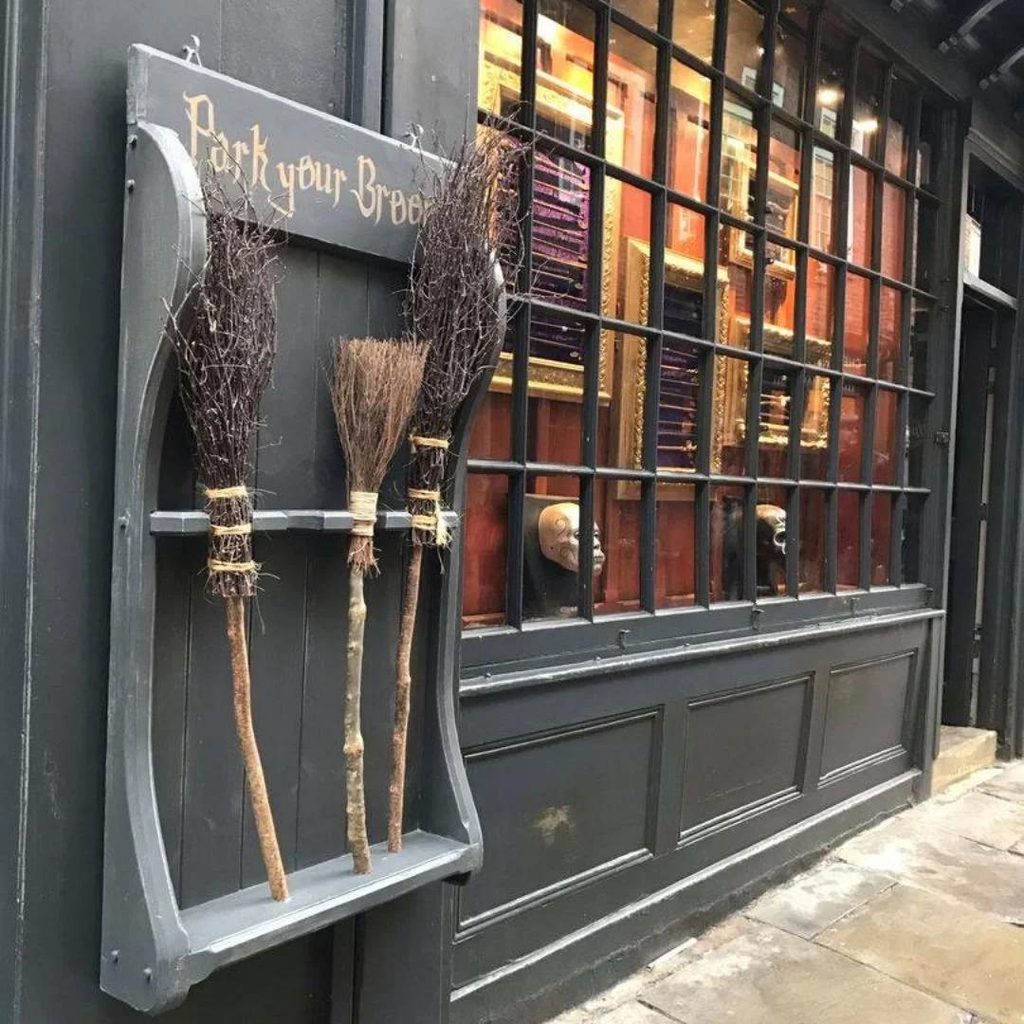
Aldi in the UK found a simple way to attract attention during Halloween.
The supermarket created a broomstick parking bay at its Water Lane store in York. The installation included a dedicated broom rack and floor markings, giving witches a place to park their fictional transport.
The location was particularly relevant because York is known for its historic associations with ghost stories and haunted locations.
The activation ran through Halloween and connected the playful idea to Aldi’s seasonal product range.
Why this campaign stood out
The idea was easy to understand, visually distinctive, and relevant to the location. It gave shoppers something amusing to notice, photograph, and potentially share.
It also showed that a memorable customer experience does not have to be complicated.
What small businesses can learn
Think about how you can use your physical space creatively.
A themed storefront, seasonal display, photo corner, or small in-store activity can give customers a reason to visit and share their experience.
For businesses with a local customer base, a creative installation can also become a talking point for local media.
Campaign coverage: The PR Insider.
9. Pringles: A can-shaped urn makes an unexpected Halloween campaign
The strategy: Use an unusual brand story to create conversation.
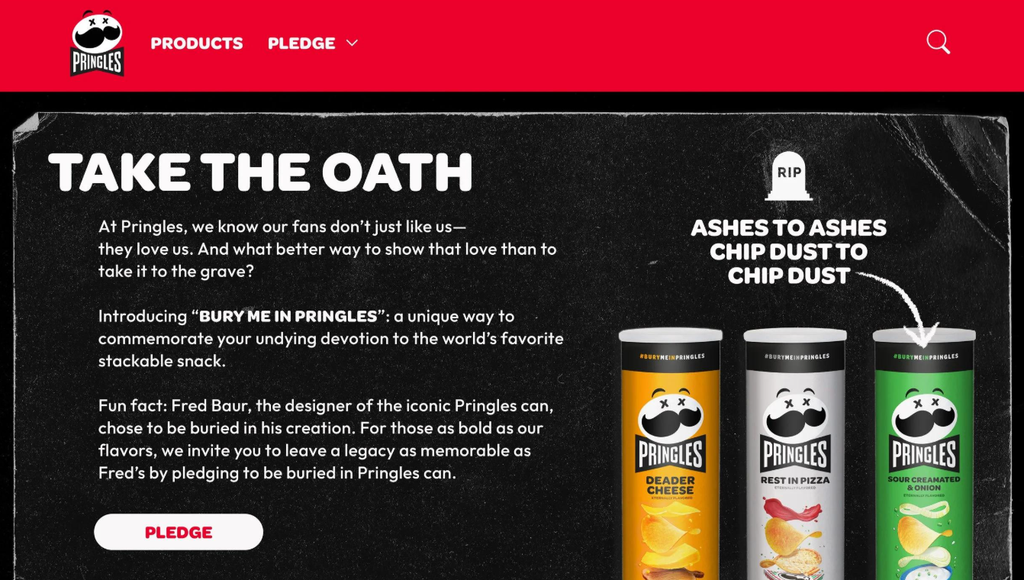
Pringles came up with one of the more unusual Halloween ideas of 2026.
Its Once You Drop campaign drew inspiration from the real story of Fredric Baur, the designer of the Pringles can. After his death in 2008, some of his ashes were buried in a Pringles can.
The brand turned that story into a competition. Participants in the United States could enter for a chance to win a custom metal urn shaped like a Pringles can, along with $28,080 in cash. The amount represented the equivalent of one can a week for 200 years.
The campaign was developed with BBDO New York and Weber Shandwick.
Why this campaign stood out
The concept was unusual, humorous, and directly connected to the product’s most recognizable feature: its packaging.
It was not a random Halloween stunt. The idea came from a story already associated with the brand.
What small businesses can learn
You do not need an extravagant budget to create an unusual campaign.
Look at your product, brand history, customer habits, or a familiar feature of your business. An unexpected idea can attract attention, but it should still make sense for your brand.
Campaign coverage: The PR Insider.
What made these nine Halloween campaigns interesting?
The campaigns were different in execution, but several marketing principles appeared repeatedly.
1. They started with an idea, not a decoration
A Halloween theme alone is not a strategy. The stronger campaigns had a clear concept, whether it was a horror mini-series, an original fictional universe, a community competition, or a product transformation.
2. They understood where their audiences already spend time
Flipkart Minutes used its app. Fanta used Snapchat. Candyman connected its campaign to quick commerce. These brands considered the platforms and interactions their audiences were already familiar with.
3. They encouraged participation
From augmented reality experiences to neighborhood competitions and creator-led content, these campaigns gave people something to do rather than simply something to watch.
4. They stayed connected to their brand identity
Pringles used its iconic packaging. Fanta built on its association with Halloween. Candyman adapted the occasion to its Indian audience. KitKat used its packaging as the seasonal creative element.
The seasonal idea worked because it had a connection to the brand.
5. They created opportunities for earned media and social sharing
Unusual concepts, local activations, recognizable characters, and interactive experiences can give journalists, creators, and customers a reason to talk about a campaign.
This is where creative marketing and Digital PR can work together. A campaign with a strong story can attract attention beyond a brand’s own social channels. However, media coverage and backlinks are never guaranteed.
How small businesses can apply these strategies without a big budget
You do not need a national advertising campaign or a celebrity partnership to make seasonal marketing work.
Here are five practical ideas you can adapt.
| Marketing idea | How to implement it |
|---|---|
| Create a themed content series | Publish three short Halloween videos around a product, service, or customer problem. |
| Run a customer contest | Ask customers to share Halloween-themed photos or stories and select a winner. |
| Give an existing product a seasonal twist | Introduce a limited-time bundle, menu, offer, or themed product presentation. |
| Create a local experience | Set up a photo corner, themed display, or small in-store activity. |
| Build a PR-friendly story | Develop a campaign with an unusual angle that local publications or industry websites may find interesting. |
For example, a small bakery could introduce a limited-edition Halloween dessert, invite customers to name it through a social media poll, and share the winning entry in a short video.
The bakery could then pitch the story to local food and lifestyle publications. This creates several opportunities from one idea: customer participation, social media content, product promotion, and potential media coverage.
The budget can remain modest. The concept, execution, and relevance to the audience matter more than the scale.
Do not just join a trend. Make it relevant to your brand.
Halloween 2026 showed that seasonal marketing can be much more than a collection of themed advertisements.
Flipkart Minutes turned delivery waiting time into entertainment. Fanta built a fictional universe. Candyman localized a global celebration. Popeyes gave its menu a seasonal twist. KitKat and McDonald’s used familiar products in unexpected ways. Reese’s invited neighborhoods to participate. Aldi created a location-specific experience, while Pringles used an unusual brand story to spark conversation.
The common thread was not the size of the marketing budget. It was the ability to find an interesting idea and connect it to the audience and the brand.
That is what businesses should take away from these campaigns:
Do not just join a trend. Find a way to make the trend relevant to your brand.
At Simply Sansu, I help businesses build online visibility and authority through SEO, Digital PR, and strategic digital marketing. If your business needs a marketing strategy that goes beyond posting content, let’s discuss how to make your brand more visible.
Sources and Campaign References
The following publications provide additional campaign details, creative examples, and industry perspectives on Halloween marketing in 2026.
- ETBrandEquity: How Brands Are Conjuring Up Halloween Magic
Coverage of campaigns by Flipkart Minutes, Fanta, McDonald’s UK, Popeyes India, Candyman, KitKat, Reese’s, and other brands. - Respondology: What Halloween 2026 Taught Us About Bold, Brand-Safe Marketing
Audience sentiment analysis and campaign observations involving Reese’s, Pringles, and PetSmart. - The PR Insider: 10 Best Halloween PR and Marketing Campaigns of 2026
Examples of creative PR and marketing campaigns, including Pringles, Aldi, Reese’s, and Hydralyte. - Event Marketer: Halloween Experiential 2026
A roundup of experiential campaigns, brand activations, pop-ups, immersive experiences, and Halloween events. - BestMediaInfo: From Tantriks to Haunted Deliveries, Brands Give Halloween a Desi Twist
Coverage of Indian Halloween campaigns, including Flipkart Minutes and Candyman.
Editorial note: The campaigns featured in this article were launched or activated for Halloween 2026. They are selected as interesting examples of creative marketing and brand engagement, not presented as a verified ranking of the year’s highest-performing campaigns. Any audience sentiment or engagement figures are attributed to the publications or research that reported them and should not be interpreted as independently verified sales results.