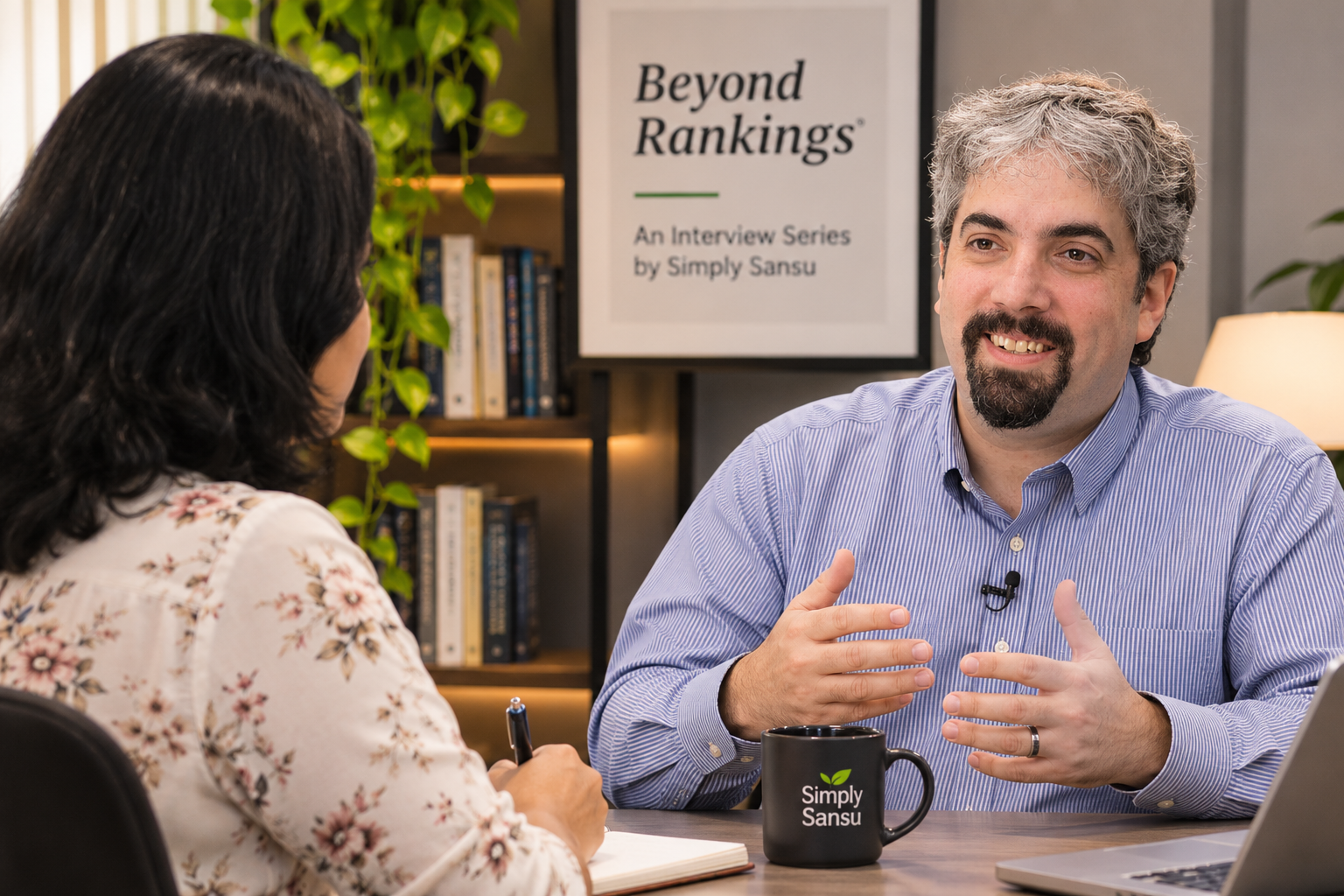

Paid advertising is not everyone’s cup of tea. When working on client campaigns, there’s always the pressure of delivering ROI, making every advertising dollar count, and ensuring campaigns perform as expected. This is why staying updated with what’s happening in PPC is so important, especially as platforms continue to evolve and AI becomes increasingly integrated into advertising.
With AI changing how ads are created, optimized, targeted, and managed, this interview comes at the right time. Who better to talk about PPC, paid advertising, and the changing advertising landscape than Igor Ivitskiy (Doctor Ads)?
In this interview, Igor shares his perspective on PPC, the role of AI in advertising, and what marketers and businesses need to understand as paid media continues to evolve.
Who is Igor Ivitskiy?
Igor (Doctor Ads) Ivitskiy is a PPC expert, mathematician, and international speaker with a PhD in Mathematical Modeling. He specializes in applying science and AI to advertising, particularly in managing and optimizing campaigns with large budgets.
With over $770 million in Google Ads spend behind him, Igor brings a data-driven perspective to paid advertising. He also claims recognition among the world’s top 10 PPC experts and has been associated with Europe’s best Google Ads case.
Igor is also the author of Magic of Google, a course designed for entrepreneurs, helping them understand and navigate Google Ads.
The Interview
Q. You are the Founder of Doctor Ads, where you focus on helping businesses understand the real performance and profitability of their advertising accounts. What inspired you to establish Doctor Ads, and what gap in the digital advertising industry did you want to address?
Igor Ivitskiy (Doctor Ads):
I founded Doctor Ads to answer a question advertising reports often avoid: did the advertising produce profit for the business?
After years of auditing Google Ads accounts, I kept seeing the same gap. The platform could report strong conversion growth and a healthy return on ad spend while the owner saw weak cash results. Standard account analysis explains clicks, bids and attributed conversions. It does not establish the margin on each sale, the quality of leads after sales follow-up, the effect of refunds, or whether revenue has had time to mature.
Doctor Ads exists to close that gap. My Profit Forensics approach reconciles what the platform claims with what the business actually earned, then identifies which campaigns, products or lead types explain the difference. The purpose is a defensible decision: scale, correct the measurement, change the offer, or reduce spend.
A useful first check is simple. Select one period and compare platform-attributed revenue with real orders and their margin. Then investigate every material difference. Until those figures can be reconciled, a better-looking dashboard is not evidence of a healthier business.
Q. You are known for combining mathematical modeling and scientific analysis with Google Ads expertise. How does your academic background and experience as a mathematician influence the way you approach advertising strategy, campaign audits, and optimization?
Igor Ivitskiy (Doctor Ads):
My scientific training makes me treat every advertising claim as a hypothesis that must survive measurement. I have a PhD in mathematical modeling, more than 200 scientific publications, three monographs and over 50 patents. The useful part of that background is the discipline of definitions, rather than the volume of mathematics.
In an audit, I first establish the denominator. What action is counted as a conversion? How often can one buyer be counted? What is that action worth after margin and refunds? Over what period should revenue be observed? Without those answers, a precise-looking average can support a bad decision.
I then decompose the result. A change in campaign conversion rate may come from the page, the device mix, the locations served, or the intent of the queries. Each explanation implies a different test. I state the expected mechanism before comparing segments, and I look for evidence that would disprove my own interpretation.
The same approach guides optimization. Automation is a mathematical process, so its output depends on the objective and input data. Write down the mechanism behind every major recommendation, the metric that should move, and the commercial result that would confirm success. If the result contradicts the hypothesis, change the hypothesis rather than inventing an explanation.
Q. You have been working with Google Ads since 2007, with experience across more than 50 industries and over $770 million in advertising spend managed. Could you take us through your professional journey and some of the experiences that shaped your approach to paid advertising?
Igor Ivitskiy (Doctor Ads):
My professional path runs from mathematical research to teaching, then to repeated examination of advertising accounts and business outcomes. I began applying mathematics to Google advertising in 2006 while working at Kyiv Polytechnic. Research taught me to build models. Teaching for eight years there taught me to explain a decision without hiding behind technical language.
Paid search gave me a different kind of evidence. Recommendations had to survive auctions, sales processes and financial results. Over time, I have completed more than 2,000 Google Ads account audits, and my insight base was built on more than $770 million of ad budgets under my management. From 2022 to 2024 I also worked in the UK as a research engineer at PPC Protect (Lunio) on real-time click-fraud detection, which taught me to ask whether the traffic in a report is even real. That breadth helps me distinguish a normal account pattern from a problem that needs investigation.
Building an online school with a global community of more than 100,000 people also shaped my approach. Students rarely needed another list of platform features. They needed a way to decide which problem deserved attention first. Writing my Google Ads book, published in three languages and listed as a number one new release on Amazon US, required the same discipline.
The lesson is consistent: account structure should follow buyer intent, bidding should follow economic value, and every important conclusion should connect to a business outcome. I record what changed after an analysis, because accumulated comparisons teach more than isolated success stories.
Q. You have received international recognition, including the award for Europe’s Best PPC Case at AdWorld Experience 2024, and have been ranked among the world’s leading PPC experts. Which projects or professional milestones have been particularly significant in your career, and what did they teach you about building profitable advertising campaigns?
Igor Ivitskiy (Doctor Ads):
The ADworld Experience 2024 award was significant because it recognized a substantial case result and the explanation I presented to a professional audience. My B2C SaaS case won the PPC Caesars Award at ADworld Experience 2024, top-rated as Europe’s best PPC case, with 30x conversion growth. Gianpaolo Lorusso, the conference founder, also called me “the first speaker ever at ADworld Experience to gather only 5 stars ratings”.
Two later milestones mattered for different reasons. In 2026, I was ranked number 6 in The Top 50 Most Influential PPC Experts in The PPC Survey, based on votes from 1,306 people. I was also ranked number 2 in the Thinkers360 Global Top 50 Thought Leaders in Predictive Analytics. One recognizes current PPC practice; the other connects my scientific work with the direction of measurement.
The professional lesson is to make growth explainable before making it larger. A conversion increase needs a clear definition of the conversion, evidence about its value and a mechanism that can be checked. Otherwise, a case study proves only that a number changed.
When I assess a campaign now, I ask what created the result, whether it remains valid after refunds and lead qualification, and which part can be repeated. Profitable scaling comes from preserving those conditions as volume grows.
The Changing Landscape of Paid Advertising
Q. Google Ads has increasingly embraced AI-powered features such as Smart Bidding, Performance Max, and automated campaign optimization. Based on your experience, how should advertisers balance Google’s automation with human expertise and strategic control?
Igor Ivitskiy (Doctor Ads):
Advertisers should automate auction-level execution and keep human control over the objective, the conversion values and the conditions for stopping. Smart Bidding and Performance Max can react to signals inside an auction faster than a person. They cannot independently determine whether a form fill became a qualified lead or whether a reported sale retained its margin after a refund.
The balance starts with measurement. Define each primary conversion separately, remove actions with no commercial meaning, and import qualified or closed outcomes where the sales cycle allows it. Give the system values that reflect business economics. Then set budgets and targets from the result the company can afford, rather than from a recommendation to increase activity.
Human review should also cover boundaries. Check search term and placement evidence where available, separate brand demand from new customer acquisition, and inspect whether automation is buying cheaper actions by lowering their quality. A rising conversion count can be a warning if closed sales do not follow.
Before expanding automation, I ask a practical question: which business result will prove that this system is working? If the team can answer in terms of closed sales and margin, automation has a sound objective. If it can answer only with platform conversions, the account needs measurement work before it needs more automated scale.
Q. Many businesses struggle to identify why their advertising campaigns generate leads but fail to deliver profitable results. What are the key factors you examine when diagnosing an underperforming Google Ads account?
Igor Ivitskiy (Doctor Ads):
When leads arrive but profit does not, I first test whether the conversion column mixes actions with very different commercial value. A form submission, a click on a phone number and a visit to a contact page can all be labeled as leads. Automated bidding will then favor the cheapest action, even if it rarely produces a sales conversation.
Next, I check counting and duplication. For lead generation, I check whether the setting counts every repeat submission instead of one conversion per click. I also compare platform leads with the CRM, because a report can count events that the sales team never received.
The decisive test is downstream quality. I join campaigns and search terms to lead acceptance, closed sales and revenue. Then I compare acquisition cost per real customer, not cost per form fill. A campaign with expensive leads can be sound if those leads close well. A campaign with cheap leads can be losing money because the wrong people are responding.
Finally, I examine the sales process. Slow follow-up, weak qualification rules and an unclear offer can make advertising look ineffective. Those issues require different corrections from a bidding change.
The practical starting point is to select one campaign and reconcile every reported lead with its CRM outcome. That reconciliation usually shows whether the next problem is measurement, traffic quality or sales handling.
Q. In your experience, how important is conversion tracking and attribution in understanding the true impact of Google Ads? What measurement mistakes can lead businesses to make poor advertising decisions?
Igor Ivitskiy (Doctor Ads):
Tracking and attribution errors become budget errors because they distort both the reported result and what automated bidding learns to buy. The harmful mistakes often preserve a plausible-looking account while changing its meaning.
Duplicate purchase events can inflate revenue. Static lead values can turn an assumption into reported return. Button clicks can be mistaken for completed inquiries. Last-click attribution can give excessive credit to brand searches or retargeting without showing whether those ads created new demand. Each error can point a larger budget toward the wrong activity.
Timing is another major error. In one purchase path I analyzed, 68.8% of leads were registered on the day of the click, compared with 22.4% of orders. Also, 35.6% of orders arrived more than 14 days later, and 20.0% arrived after 30 days. A 30-day window therefore missed a fifth of the result. A fast lead signal cannot substitute for matured order revenue.
I deal with this by reconciling events with source systems, separating brand from non-brand activity, and evaluating cohorts after enough time has passed. Values should come from observed economics, not convenience.
Before changing bids, rebuild one period from actual leads and orders. Compare it with the platform report, including duplicates, values and timing. That provides a measurement basis for the decision instead of another attribution assumption.
Q. How should businesses approach landing page optimization and user experience to turn paid traffic into actual customers? What elements make the biggest difference in conversion performance?
Igor Ivitskiy (Doctor Ads):
The biggest conversion gains usually come from making the page continue the exact buying conversation started by the search and the ad. The first screen should identify the problem being solved, the intended customer and the next step. Pricing expectations, availability, proof and delivery details should appear where the buyer needs them, rather than being buried in general company copy.
Mobile speed also deserves attention because it has measurable support. In a cross-sectional comparison I analyzed, landing pages with mobile speed scores of 1 to 5 converted clicks at 1.28%. Pages scoring 6 to 8 converted at 1.93%, and pages scoring 9 to 10 converted at 3.65%. It was the only one of four Google metrics I checked that behaved as claimed across the page groups. This was a comparison between pages, not a before-and-after test of one page. It does not promise the same improvement from changing an individual site.
After message match and speed, remove avoidable effort. Ask only for information the sales process needs, make forms usable on a phone, and keep the primary action visible. Test changes by segment, because a page can improve for high-intent visitors while average performance stays flat.
My practical test is to open the page from your own ad on a phone. If you cannot confirm relevance, trust and the next action quickly, the page is asking paid visitors to do too much work.
When Advertising Strategies Meet Real-World Challenges
Q. The sudden performance drop
Imagine a business has been running profitable Google Ads campaigns for six months. Suddenly, conversions drop by 40%, but the budget, keywords, and ad creatives remain unchanged. How would you investigate the situation, and what would you examine before making any major campaign changes?
Igor Ivitskiy (Doctor Ads):
I would preserve the campaigns initially and establish whether the drop is real, where it occurred and what changed around it. A 40% fall in conversions with unchanged budgets, keywords and ads is not enough evidence for a bidding or creative decision.
First, I verify measurement. I submit test inquiries or transactions, check recent website releases and consent changes, and compare Google Ads with analytics, the CRM and the sales ledger. I also check whether offline conversion imports stopped. If orders held steady while platform conversions fell, the advertising problem may be a reporting problem.
Second, I separate traffic from conversion rate. A click decline points toward auction presence, demand or eligibility. Stable clicks with fewer conversions point toward the page, offer, traffic mix or lead handling. I compare equivalent days and break the change down by campaign, query, device, location and landing page.
Third, I inspect change history and auction conditions. Auto-applied recommendations, a disapproval, a feed issue, a new competitor or a price promotion elsewhere can alter results without the team editing keywords.
Only then do I consider intervention. The first change should address the supported cause and have a measurable reversal condition. If sales held but lead quality shifted, for example, rebuilding keyword bids would treat the wrong problem. My rule is to write each possible cause beside the evidence that confirms or rejects it before touching campaign structure.
Q. The competitor with a bigger budget
A small business is competing against an established brand that spends five times more on Google Ads. Instead of trying to outbid the competitor, what alternative strategies would you use to help the smaller business win customers?
Igor Ivitskiy (Doctor Ads):
I would compete where the larger budget has less advantage: specific intent, focused coverage and a higher rate of converting visits into profitable customers. Outbidding an established brand on its broadest terms usually buys expensive traffic before it buys learning.
I begin with queries that reveal a concrete problem, use case, location or urgency. These narrower groups can support ads and pages with a precise answer. I would rather win a small set of relevant searches profitably than appear everywhere with a generic message.
Next, I apply geographic and time controls only where evidence supports them. A local service business may have areas with strong delivery economics and reliable sales coverage. Concentrating there can be more useful than copying the competitor’s national footprint.
The offer and sales response matter just as much as the ad. Clear proof, a sensible guarantee, fast follow-up and an easy buying step can offset a click-price disadvantage. I also track closed sales by query group, because apparently cheap clicks are irrelevant if they produce few qualified buyers.
The financial boundary comes first: calculate affordable acquisition cost from margin and expected close rates. Then expand only the segments that remain profitable at the next increment of spend. The smaller business should choose its auctions carefully and extract more value from each suitable visit. Matching the competitor’s visibility is unnecessary.
Q. The misleading success story
An advertising campaign reports an impressive ROAS, but the business owner says the company is still losing money. What could explain this disconnect, and how would you help the business understand whether its advertising is genuinely profitable?
Igor Ivitskiy (Doctor Ads):
A strong reported ROAS can coexist with losses because it usually divides attributed revenue by advertising cost. Product costs, fulfillment, fees, refunds and margin differences may be missing. Conversion values can also be assumptions rather than money received.
In an account I analyzed, doubling the default lead value from £100 to £200 in January 2025 raised reported ROAS by 23.2%. Real order-based ROAS also rose over those years, from 5.37 to 7.46. Those changes must be separated. The setting alone inflated the reported figure, while genuine commercial improvement was happening too.
Brand demand creates another gap when campaigns receive credit for existing intent and total business sales barely change. Lead quality creates a similar problem if reported leads never become opportunities.
My Profit Forensics approach rebuilds the result from transactions and sales outcomes. I calculate campaign margin, include refunds and cancellations, allow revenue to mature, and compare brand with non-brand contribution. For a large decision, a controlled holdout can help estimate caused revenue.
The owner needs two views: what the platform attributed and what the business kept. Their difference shows whether to correct values, change campaign mix or question incrementality. Scaling should wait until both views support the same decision.
Q. The million-dollar decision
If you were given a substantial advertising budget to enter a completely new market where the business has no brand recognition, what would your first 90 days of advertising look like? What would you test, measure, and prioritize before scaling?
Igor Ivitskiy (Doctor Ads):
For the first 90 days, I would treat the budget as a controlled investigation of demand, economics and sales lag. Scaling would start only after real transactions support the acquisition cost.
During days 1 to 30, I would set the financial target and verify measurement: margin by product or service, affordable acquisition cost, deduplicated conversions and a route for qualified leads or closed orders to return to the account. I would launch focused search campaigns around clear category intent. With no brand recognition, the pages must explain the offer and reduce buyer risk without relying on reputation.
During days 31 to 60, I would test a small set of intent groups and positioning angles. Search terms, geography and sales quality would be reviewed together. I would measure qualified outcomes and begin cohort analysis of delays, cancellations and refunds. Segments with failing economics would be paused rather than hidden by an account average.
During days 61 to 90, I would expand only groups with credible matured economics. Budget increases would follow marginal acquisition cost. Automated bidding would be introduced where values and volume support it. I would also protect cash flow because ad cost is immediate while customer payment can be delayed.
After 90 days, the business should know which demand exists, what a real customer costs, how long revenue takes to arrive and which assumptions still require testing.
The Person Behind the PPC Expert
Q. You have built a career around numbers, strategy, and performance. What initially drew you to this field, and was becoming a leading PPC expert something you envisioned when you started?
Igor Ivitskiy (Doctor Ads):
I was drawn to this field when I saw that advertising could be studied as an applied mathematical system with immediate commercial consequences. My background was research and teaching at Kyiv Polytechnic, not a plan to enter marketing. I began applying mathematical thinking to Google advertising in 2006 and found auctions, user behavior and measurement problems that could be investigated with the same discipline I used in science.
Becoming a leading PPC expert was never my original ambition. I wanted to understand why a result occurred and whether it could be repeated. That aim still guides me. A ranking or award is welcome, but the more interesting achievement is explaining a business result clearly enough that someone can make a better decision. My career developed by following that problem from research into audits, teaching and writing.
Q. Working with large advertising budgets and making decisions that influence business outcomes must come with considerable responsibility. How do you handle the pressure when the stakes are high?
Igor Ivitskiy (Doctor Ads):
I handle pressure by making decisions testable and limiting the cost of being wrong. Before recommending a significant budget change, I write down the expected mechanism, the evidence supporting it, the downside and the result that would make me stop. This turns a stressful judgment into a defined review process.
I also separate confidence from evidence. If tracking is incomplete or revenue has not matured, I say so and narrow the recommendation. I would rather stage spending than present false certainty. A large budget increases the consequences of an error, so the denominator, assumptions and cash implications need more scrutiny.
My responsibility is to give the business an honest finding, including a finding that spend should fall or that no major change is justified. I do not need to defend a preferred tactic. I need to show what would validate or disprove the decision. That discipline removes much of the emotional pressure.
Q. What is one professional setback or difficult experience that changed the way you approach your work today?
Igor Ivitskiy (Doctor Ads):
The difficult experience that most changed my work was moving from academic research into commercial decision-making. In research, I could define a question carefully and build a model around it. In advertising, I repeatedly encountered decisions built on questions that were already flawed: a conversion was treated as revenue, or revenue was treated as profit.
I had to learn that technical correctness cannot rescue a wrongly defined objective. That changed the order of my work. I now challenge the business definition before I defend the calculation. I state the denominator, the assumptions and the decision the analysis is meant to support. I also identify evidence that would overturn my conclusion.
The lesson was intellectual humility. A sophisticated model can still give management a precise answer to the wrong question. My work became more useful when I started examining that question first.
Q. Outside the world of PPC and advertising, what interests or experiences help you stay curious, creative, and motivated?
Igor Ivitskiy (Doctor Ads):
Outside advertising, my strongest source of curiosity is artificial intelligence as a thinking tool. I built a personal research system where several AI models answer the same hard question independently, and then I study where they agree and where they break. It is the same habit I bring to audits: never trust a single source, and look closely at the disagreement.
Mathematical modeling also remains a pleasure in itself. I can investigate a structure, test an assumption and follow an unexpected result without a campaign target attached. That keeps my thinking flexible.
Teaching keeps me motivated too. My online school and conference talks force me to explain an idea simply enough that someone can use it the next day. If I cannot explain it that way, I usually do not understand it well enough yet.
Looking Ahead: Igor’s Perspective
Q. What is one widely accepted belief about PPC advertising that you disagree with, based on your experience?
Igor Ivitskiy (Doctor Ads):
I disagree with the belief that Google’s Optimization Score and Ad Strength reliably indicate account quality. They can help with platform housekeeping, but they do not establish whether advertising produces profitable demand.
In a dataset of advertising accounts I analyzed, a 99.1% Optimization Score coexisted with 18.7% wasted spend, while a score of 48.8% appeared alongside 8.9% waste. Among results with scores at or above 85%, wasted spend ranged from 1.3% to 31.3%. That threshold did not separate good and bad states.
Ad Strength deserves similar caution. Where Excellent and Average responsive search ads could be compared on click-through rate, Excellent won in only 55% of cases. That is close to a coin flip, not a dependable quality signal.
The mechanism is straightforward. These scores reflect relationships to Google’s recommendations or ad completeness. Business performance depends on query intent, margin, lead quality and revenue maturation, which the score does not reconcile.
Use the scores as optional diagnostic prompts. Review a recommendation when it has a commercial reason, and reject it when it only raises the meter. Evaluate the account using wasted spend, qualified sales and contribution margin. A lower platform score can be entirely compatible with a better business result.
Q. If you could introduce a completely new feature or capability into Google Ads, what would it be, and what problem would it solve?
Igor Ivitskiy (Doctor Ads):
I would add a native profit objective to Google Ads, built from verified transaction and sales data rather than a manually assumed conversion value. The platform should be able to optimize toward contribution margin after product costs, fees, refunds and, for lead generation, the actual probability and value of a closed sale.
This would solve a basic instruction problem. Automated bidding currently pursues the values advertisers supply. A revenue value can make a low-margin sale look attractive. A default lead value can make an unqualified inquiry look equivalent to a real opportunity. The system can execute perfectly while the business target is wrong.
The feature would need an audit trail. Each value should show its source, its maturity and whether refunds or offline outcomes have been included. Advertisers should see both platform-attributed profit and a reconciliation status before choosing a profit target. That would make missing financial inputs visible instead of hiding them behind a single return percentage.
Until such a feature exists, businesses can apply the same principle manually. Import qualified and closed outcomes, update values from real economics, and assess budget changes using marginal profit after refunds. The aim is to give automation an objective that finance can verify. Better bidding cannot compensate for a value that was never connected to the business.
Q. What do you think will distinguish a truly exceptional PPC professional from an average campaign manager five years from now?
Igor Ivitskiy (Doctor Ads):
Five years from now, the exceptional PPC professional will be able to prove what commercial result the advertising caused. Interface operation will remain useful, but automation will keep absorbing routine bidding, targeting and asset production.
The first distinguishing skill will be economic judgment. A specialist must translate margin, sales capacity, refunds and payment delay into acquisition targets. The second will be data architecture: knowing whether a conversion event, an offline import and a customer record describe the same outcome. The third will be experiment design, including when an account lacks enough volume to support a confident claim.
Communication will matter as much as analysis. An exceptional professional will explain uncertainty, recommend a smaller budget when appropriate, and distinguish a platform reporting issue from a weak business model. An average manager can show that conversions increased. The stronger specialist can show whether profit increased and what evidence supports causation.
My advice to PPC professionals is to learn finance and research method alongside the platform. Learn to read a profit and loss statement, then follow a lead through the CRM. Before claiming incrementality, design a holdout or state the limits of the evidence. These abilities transfer across interface changes. The person who defines the objective and verifies the outcome will remain valuable even when Google performs most of the execution.
Q. What advice would you give to business owners who want to invest in paid advertising but are unsure whether they are ready to compete in today’s digital marketplace?
Igor Ivitskiy (Doctor Ads):
You are ready to invest when you can afford a customer, trace advertising to real sales and fund the delay between paying for clicks and collecting revenue. If any of those is unknown, begin with a small test budget rather than a large scaling commitment.
First, calculate acquisition capacity from contribution margin. Include product or delivery costs, expected refunds and the sales team’s close rate for leads. Second, verify that the account records genuine purchases or qualified inquiries and that those outcomes can be matched to source systems. Third, set a cash limit and a stopping rule before launch. A campaign can appear promising while immature revenue or delayed payments still create risk.
Readiness also includes the ability to fulfill demand. Limited stock, slow follow-up or an unclear offer can make a technically sound campaign unprofitable. Fix those constraints before paying for additional volume.
Keep an independent view of the numbers. Platform reports are useful inputs, but owners should reconcile them with orders, margin and cash collection. I describe my diagnostic approach at thedoctorads.com, including the reconciliation used in Profit Forensics.
The best first objective is reliable evidence. Define what result would justify the next budget increase and what result would make you stop. That gives a new advertiser control without pretending the first tests will be certain.
The Final Word: An Unpopular PPC Truth
Q. What is one unpopular truth about PPC advertising that you believe more businesses and marketers need to hear, even if it challenges conventional wisdom or goes against popular industry practices?
Igor Ivitskiy (Doctor Ads):
Many businesses should reduce or pause advertising while they repair measurement and unit economics. More traffic cannot fix a false conversion value, poor lead quality or negative margin; it can only produce more activity around the same problem. Profit has to be established before scale. Then the business needs evidence that advertising caused additional demand, rather than merely receiving credit for existing sales. A smaller account with reconciled numbers and verified incremental profit is healthier than a large account whose impressive reports disappear when compared with real orders and cash.
My Takeaway
What stood out to me most in Igor’s answers is his emphasis on profit over performance metrics. A campaign may look successful in Google Ads, but conversions, ROAS, and clicks don’t necessarily translate into actual profit.
A few key lessons from this interview:
- Measure profit, not just ROAS. Revenue is not profit, and ad performance should be evaluated against real business outcomes.
- Don’t blindly trust automation. AI and automated bidding work best when conversion data and business objectives are accurate.
- Fix tracking before optimizing. Bad data leads to bad decisions, no matter how sophisticated the campaign.
- Quality over quantity. More leads or clicks don’t necessarily mean more customers.
- Compete smarter, not bigger. Smaller businesses can win by targeting specific intent, refining their offers, and focusing on profitable customer segments.
- Know when to stop spending. Sometimes the smartest advertising decision is to reduce or pause campaigns until the underlying problems are fixed.
For me, the biggest takeaway is that advertising success shouldn’t be measured by how good the dashboard looks, but by how much it actually contributes to the business.
Connect With Igor
You can connect with Igor Ivitskiy and explore more of his insights on PPC, Google Ads, paid advertising, and AI-driven marketing through his professional profile.
- LinkedIn: Igor Ivitskiy
- Company: Ivitskiy Ads Lab
Follow Igor for more insights into PPC, paid advertising, and the evolving landscape of digital marketing.
Coming Up Next
My next interview features Chandu Thomas, Founder of Search Ally Agency, a Digital Marketing Solution Architect specializing in SEO, Paid Media, CRO, and technical execution for agencies across the US and Canada.
Stay tuned for more insights from digital marketing professionals.