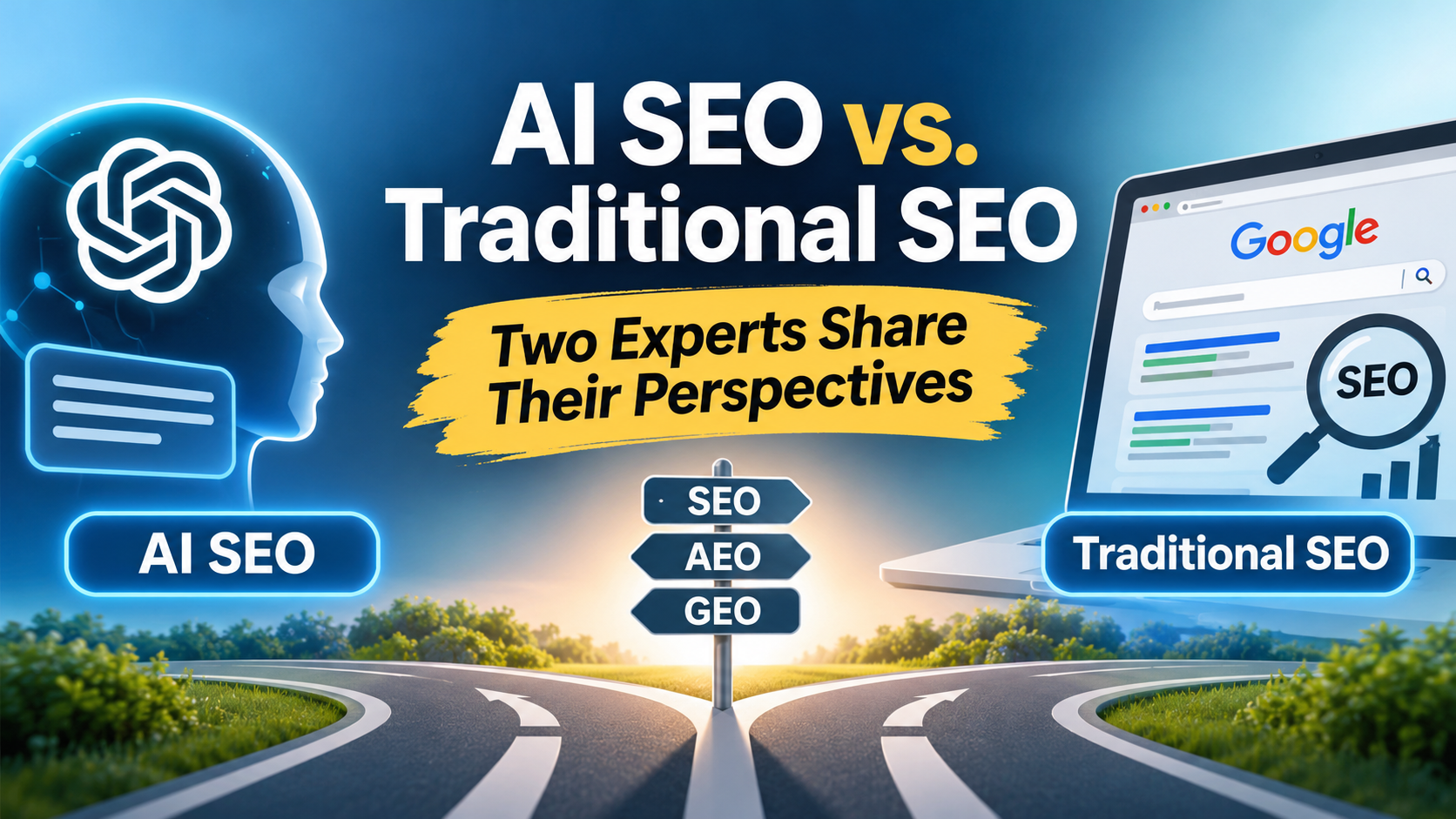
The growing adoption of AI-powered search is changing how people discover information online. But does this mean traditional SEO is losing its importance?
I recently raised this question on Quora to two experts, Swapan Kumar and Khalid Shaikh, inviting them to share their perspectives on the growing shift towards AI search.
Both offered valuable insights into how businesses should approach this transition, why traditional SEO still matters, and what strategies can help brands maintain visibility across evolving search platforms.
Here are their perspectives.
1. Swapan Kumar: The Future Is an Integrated SEO Strategy
Swapan Kumar, Founder of Adwen Plus SEO & AI Search (AEO, GEO) Consultant
“Businesses should definitely pay attention to AI-powered search, but I wouldn’t say traditional SEO is becoming obsolete.”
Swapan points out that AI platforms like ChatGPT, Google AI Mode, Gemini, Perplexity, and Claude are changing how people discover information. Users increasingly expect direct answers rather than having to visit multiple websites.
He recommends combining traditional SEO with AI search optimization through the following practices:
- Continue investing in technical SEO, page speed, indexing, and high-quality content.
- Create content that directly answers user questions in a clear and structured way.
- Build topical authority by covering subjects in depth.
- Strengthen your brand with original research, case studies, and expert insights that AI systems are more likely to reference.
- Ensure AI crawlers can access your website through proper robots.txt and sitemap configuration.
Swapan emphasizes that businesses should not treat AI SEO and traditional SEO as competing strategies.
“In my view, the future is not AI SEO versus traditional SEO. It’s an integrated strategy where SEO, AEO (Answer Engine Optimization), GEO (Generative Engine Optimization), and emerging AI optimization techniques work together to maximize visibility.”
2. Khalid Shaikh: Businesses Need to Prepare for a Different Search Ecosystem
Khalid Shaikh, Former CEO at K.S. Enterprises
“Yes, we should be concerned about the shift, but we should not panic or abandon traditional SEO. We should prepare for a different search ecosystem in which Google is no longer the only important gateway to information.”
Khalid highlights how customer discovery journeys are changing. Previously, customers might visit several websites to compare products and services. Today, they can ask ChatGPT, Gemini, or Perplexity and receive a ready-made answer without visiting multiple websites.
He also makes an important distinction between search volume, website traffic, and brand visibility. The reported 20% figure should not be interpreted as ChatGPT capturing 20% of Google’s market share. These are different measurements.
What should businesses do differently?
Khalid recommends developing a dual SEO strategy, with six important priorities.
1. Stop writing content exclusively for keywords
Create content that answers the actual questions people ask, rather than simply repeating target keywords.
2. Become an authoritative information source
Publish original research, real-world examples, case studies, expert opinions, verified statistics, and practical comparisons.
3. Build your brand beyond your website
Strengthen your presence across industry publications, reputable review platforms, news websites, relevant community discussions, professional directories, and independent product comparisons.
4. Make your content easy for AI to understand
Use clear headings, descriptive page titles, structured information, comparison tables, and straightforward explanations. Maintain proper technical SEO, internal linking, crawlability, and structured data where appropriate.
5. Develop topical authority
Demonstrate genuine expertise across your subject through comprehensive coverage of related topics rather than publishing unrelated articles.
6. Start measuring AI visibility
Look beyond traditional SEO metrics and monitor how frequently your brand appears in AI answers, whether AI platforms cite your website, which pages receive AI referrals, and which competitors are recommended.
Khalid’s suggested 70:30 strategy
Khalid suggests an initial resource allocation of:
- 70%: Traditional SEO, technical optimization, keyword research, content quality, and Google rankings.
- 30%: AI visibility, brand authority, original research, citations, and content structured for AI discovery.
He clarifies that these are suggested starting allocations, not industry benchmarks. Businesses should adjust the balance according to actual traffic and customer behavior.
What Do These Two Expert Perspectives Tell Us?
Both experts agree that businesses should not abandon traditional SEO. Instead, they need to strengthen their technical foundations, publish useful and original content, establish topical authority, and build brand credibility across the web.
Swapan emphasizes an integrated approach where SEO, AEO, and GEO work together. Khalid highlights the need to prepare for a changing search ecosystem by building authority beyond the website and measuring AI visibility.
The common message is clear: online visibility is no longer just about ranking on Google’s first page. Businesses also need to become credible sources of information that AI platforms can discover, understand, reference, and recommend.
My Takeaway
I believe the conversation around AI SEO should move beyond whether it will replace traditional SEO. The more important question is whether businesses are adapting their visibility strategies to match changing user behavior.
Technical SEO, quality content, topical authority, brand mentions, and digital PR continue to matter. What is changing is how these elements contribute to discovery across traditional search engines and AI platforms.
The next competitive advantage may belong to businesses that consistently publish useful, original, and trustworthy information rather than simply producing more content.
The future is not about choosing between traditional SEO and AI SEO. It is about building a strategy that supports visibility across both.
About These Expert Perspectives
The insights featured in this article were shared by Swapan Kumar and Khalid Shaikh in response to a question I raised on Quora.